

Speed That Makes the Difference
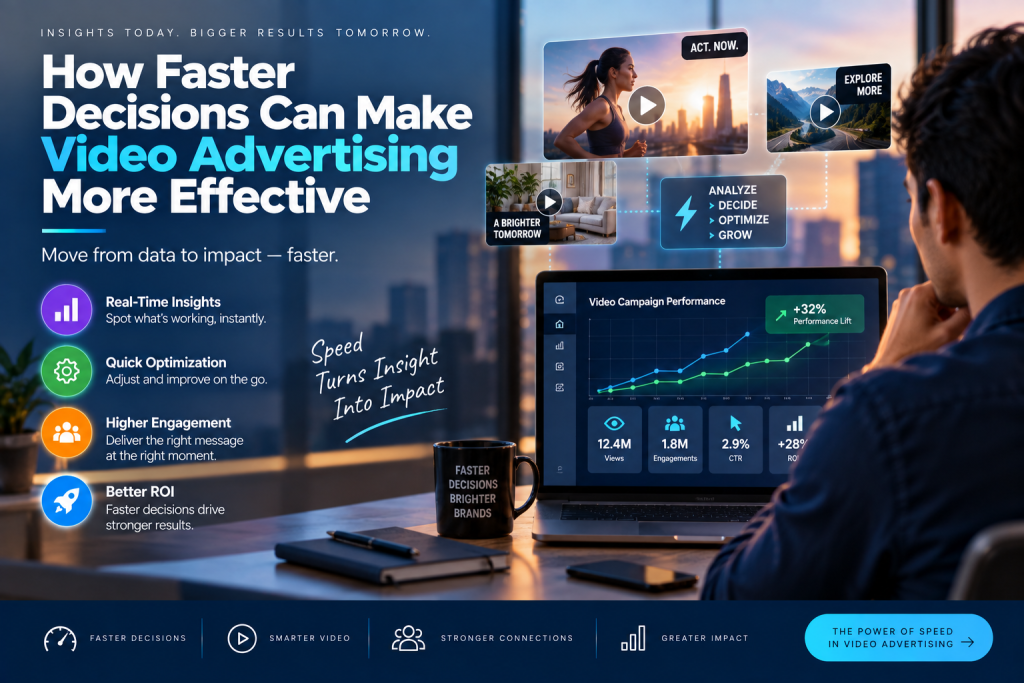
How Faster Decisions Can Make Video Advertising More Effective
Video advertising is one of the most engaging ways for a brand to tell its story. But in today’s digital advertising environment, simply having a good video is not enough. Advertisers also need to reach the right audience, make decisions quickly, and respond to opportunities as they appear.
Why Speed Matters in Digital Advertising
Digital advertising moves quickly. Audience behavior can change, inventory becomes available and disappears, and advertisers may need to adjust campaigns based on performance. A platform that helps marketers work efficiently can make campaign management easier and more responsive.
The idea behind “Speed That Makes the Difference” is simple: speed is not only about how fast technology works. It is also about helping marketers make informed decisions faster and keeping campaigns moving.
From a Simple Idea to a Video Campaign
The original campaign began with a clear goal: to communicate the value of the platform in a way that customers could easily understand. Instead of only describing product benefits, the team chose video to show the experience.
The campaign was built around customer feedback. After gathering opinions from users, the team identified speed as one of the qualities customers valued. That insight became the central message of the campaign.
Why Video Works for Brand Awareness
Video can combine visuals, sound, storytelling, and branding in one format. This makes it useful for introducing a brand or explaining an idea in a memorable way.
- It can communicate messages quickly.
- It can make complex ideas easier to understand.
- It gives a brand a stronger storytelling format.
- It can help create awareness before a customer is ready to take action.
Building a Simple Video Campaign Strategy
A successful video campaign starts with a clear purpose. Before launching, advertisers should decide what they want the audience to remember or do after seeing the video.
- Define the goal: Choose one main objective, such as brand awareness, product education, website visits, or lead generation.
- Understand the audience: Identify who the campaign is intended to reach and what matters to them.
- Create a clear message: Keep the main idea simple. Viewers should understand the value of the product or service quickly.
- Use strong creative: Build a video that is easy to follow, visually engaging, and consistent with the brand.
- Reach the right people: Use relevant audience and contextual signals to improve the chances of reaching interested viewers.
- Measure performance: Track useful metrics and use the results to understand what is working and where improvements are needed.
The Role of Data and Technology
Technology can help advertisers manage campaigns on a scale. In programmatic advertising, automated systems can help marketers evaluate available opportunities and make buying decisions efficiently.
For video campaigns, this means marketers can focus not only on creative ideas but also on how, where, and when the video is delivered. Better technology can reduce unnecessary manual work and give teams more time to focus on strategy.
Speed Should Not Mean Rushing
Fast execution is valuable, but speed should always be supported by good information. The goal is not to make decisions without thinking. The goal is to make informed decisions without unnecessary delays.
A strong campaign therefore combines three things: a clear message, useful data, and technology that helps marketers act efficiently.
What Marketers Can Learn from the Campaign
- Listen to customers: Customer feedback can reveal the strongest benefit to communicating.
- Keep the message simple: A focused message is easier for audiences to understand and remember.
- Show don’t just tell: Video can demonstrate a product experience instead of relying only on written claims.
- Connect creativity with strategy: Good creative works best when it supports a clear campaign objective.
- Use technology wisely: Automation and data can help marketers respond efficiently while maintaining control of the campaign.
A Practical Framework for Your Next Video Campaign
For brands planning their next video campaign, a simple framework can make the process easier:
- Start with the business objective.
- Identify the audience and their needs.
- Find one strong idea that connects the audience with the brand.
- Create short, clear, and engaging video content.
- Plan where the video should appear and who should see it.
- Launch, monitor, learn, and optimize.
- Use campaign insights to improve future creative and media decisions.
Conclusion: Speed Can Create an Advantage
The “Speed That Makes the Difference” campaign shows how a simple customer insight can become a clear and engaging brand story. In modern digital advertising, speed can help marketers respond to opportunities, improve efficiency, and stay competitive.
But the real advantage comes from combining speed with strategy. When a strong creative idea is supported by customer insight, data, and efficient technology, video advertising can become more than an ad, it can become a clear way to communicate what makes a brand different.