

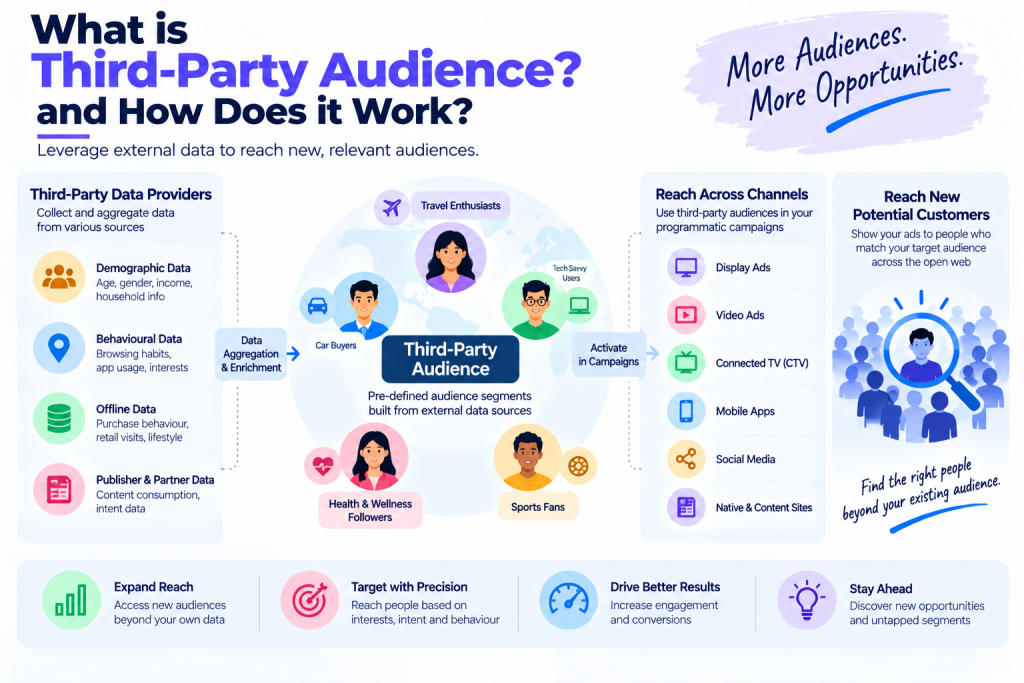
Third-party Audience is a group of users identified using data collected by a company or source other than the business running the marketing campaign.
How does a Third-Party Audience Work?
Let’s understand with the simple example. Suppose a new company sells running shoes. The company has just launched its website, so it does not have much customer data yet.
- An external company collects data A third-party data provider collects the information from various sources and uses it to create audience segments to applicable laws and permissions.
- The data is organized into audience groups The external provider may create different audience segments. Based on their interest and people who frequently shop online.
- The Business Select a Relevant Audience The company is trying to reach people who may have an interest in its products, even though those people may not have previously visited its website.
- The Audience Is Used in Marketing The goal is to make the campaign more relevant than simply showing the advertisement to a completely random audience.
- People See the Advertisement Potential customers may see advertisements for running shoes while browsing websites, apps or other digital platforms.
Third-Party Audience vs First-Party Audience
The information collected directly from this customer can be used to create first-party audience, subject to appropriate permissions and privacy requirements.
Now the company wants to reach people who have never visited its website. It may use an available third-party audience from an external source, where permitted
So:
- First Party Audience: Data comes directly from your own interactions with customers or users.
- Third Party Audience: Audience information comes from an external company or source
Why Do Marketers Use Third Party Audience?
Third Party audience have traditionally been useful for business that want to reach new potential customers.
- Reaching New users: A business can potentially reach people who have never interacted with its website or app
- Finding Relevant Audience: External audiences provide may offer segments based on interest, behaviors or other characteristics
- Supporting Customer Acquisition: A business launching a new product may use external audience segments to help introduce the product to potential customers
- Expanding Marketing Campaigns: If a company has a relatively small first-party audience, external audience sources may historically have helped expand its reach.
- Data Quality: The accuracy and freshness of audience information can vary depending on the source.
Conclusion
A third-party audience is essentially an audience sourced from an external company or data source rather than collected directly by the business using it. It has traditionally helped marketers reach new potential customers based on interests, behaviors and other audience factors. It has traditionally helped you reach people you don’t directly know.