

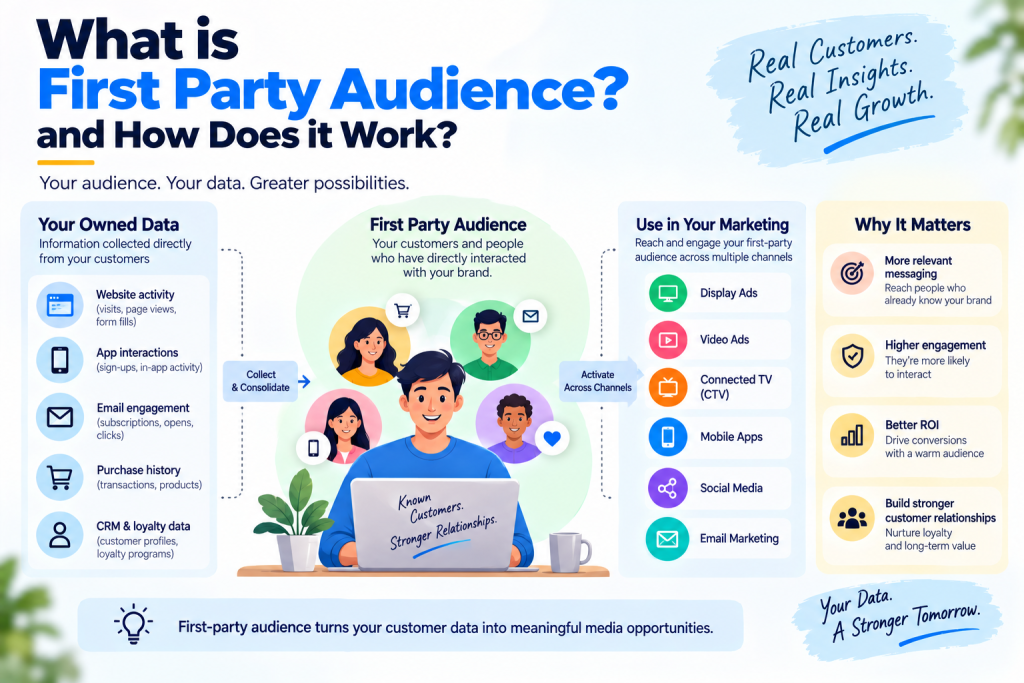
First party Audience is a group of users whose information a business collects directly through its own websites, apps, stores or other digital channels.
What Kind of Information Is First-Party Data?
- Website activity: You can learn which pages people visit, which products they view and what actions they take on your website.
- Purchase history: You can see what customers bought, how often they buy and how much they spend.
- Email interactions: If someone subscribes to your newsletter, you may know whether they opened your emails or clicked on a particular link.
- App activity: If your business has a mobile app, you can understand how users interact with it.
How Does a First-Party Audience Work?
Example users enter a website:
- Users visit the Website: Users visit the website and look at several products.
- User Create an Account: Users create an account using his email address. Now the business has a direct way to communicate with them.
- User Adds the Product to His Cart: User adds his product to his shopping cart but leaves the website without completing the purchase.
- User Becomes Part of an Audience: The business can create an audience of people who added products to their cart but did not purchase them.
- Business Sends a Relevant Message: The business could send a reminder to the user about his cart or show them relevant marketing messages through an advertising platform.
Why Are First-Party Audiences Important?
First party audiences are becoming increasingly important because digital advertising is changing. As a result, businesses are paying more attention to the data they collect directly from their own customers.
How Are First-Party Audiences Used in Digital Marketing
There are several ways marketers can use first-party audiences:
Retargeting
Suppose someone visits your website but does not make a purchase. You can create an audience of eligible visitors and use it for retargeting campaigns, subject to platforms rules and the user consent choices.
Personalized Recommendations
If a customer has previously purchased some product based on that they will recommend the relevant products.
Is First-Party Data the Same as Personal Data?
Not necessarily. First-Party data describes where the data comes from – directly from the business own interactions with its audiences.
Some first-party data may be personal data, while other information may be aggregated or otherwise non-personal.
Conclusion
First party audience may sound like a complicated digital marketing concept, but the basic idea is quite simple. A website visitor, email subscriber, app user or customer can potentially become part of a first party audience.
Marketers can then use these audiences to create relevant campaigns, improve customer experiences, understand buying behavior and build stronger relationships.