

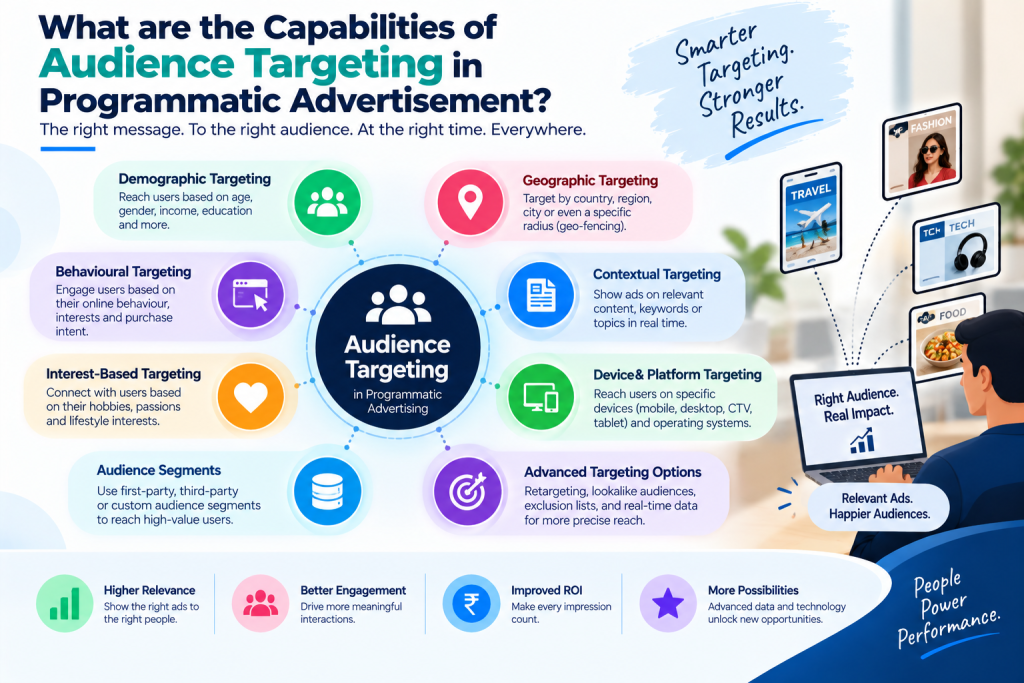
Audience targeting helps advertisers decide who should see an advertisement based on different characteristics, interests and behaviors and other available signals.
When this targeting is combined with programmatic advertising, advertisers can automatically buy digital advertising space and show ads to selected audience at scale.
What is Audience Targeting
Audience Targeting means selecting a specific group of people for an advertising campaign instead of showing an advertisement to everyone.
The Advertiser can create an audience based on available data and target signals. Audience targeting helps advertisers show the right message to a relevant group of people.
How does Audience Targeting work in Programmatic Advertising
Suppose a company wants to advertise smartwatches to people who may be interested in fitness.
- The advertiser Defines the Audience: The Advertiser decides who they want to reach.
- The Audience Is Built Using Available Signals: The advertising platform can use different signals to help identify suitable users or advertising opportunities. The signals can include things such as: First party data, website/app interactions, Location, Device information and other factors.
- The Programmatic System Finds Opportunities: When a suitable advertising opportunity becomes available, the programmatic system evaluates whether it matches the advertiser’s campaign requirements.
- The Advertisement is Shown: If the opportunity meets the campaign targeting and bidding requirements the advertiser can compete for the advertising space. If the advertiser wins the auction, the advertisement is displayed to the user.
Key Capabilities of Audience Targeting
- Demography Targeting: Demographic targeting allows advertisers to reach audience based on characteristics such as age or gender where those signals are available and permitted.
- Geographic Targeting: Geographic Targeting allows the advertiser to focus on the specific location.
- Interest-Based Targeting: Interest-Based targeting focuses on what people may be interested in.
- Behavior Targeting: Behavior Targeting uses available signals about a user’s previous interaction or activities.
- Contextual Targeting: It is slightly different Instead of focusing primarily on who the user is contextual targeting focuses on what content the user is viewing.
- First-Party audience targeting: Advertisers can use information collected directly from their own customers or users to create first-party audience.
- Retargeting: Have you ever visited an online store, looked at a product and noticed advertisements for the same brand later? This is commonly known as retargeting.
- Lookalike Audience Targeting: Some advertising platforms can help advertisers find new people who share characteristics or signal with an existing audience.
- Device Targeting: Programmatic advertising can also use device-related targeting.
- Audience Segmentation: Audience targeting allows advertisers to divide a large audience into smaller groups.Example:
- Audience 1: New website visitors
- Audience 2: Existing customer
- Audience 3: Customer who haven’t purchased recently
- Audience 4: People interested in particular products
Combining Multiple Targeting Capabilities
One of the biggest advantages of programmatic advertising is that advertisers can often combine different targeting segments. However, more targeting is not always better. If an audience becomes too narrow, the campaign may have difficulty reaching enough people or archiving efficient results.
Why Audience Targeting Is Important?
Without audience targeting an advertiser may show advertisements to a very broad audience.
Many people who see advertisements may not have interest in that product.
With audience targeting, the advertiser can focus its budget on audience that are more relevant to its campaign, this will help your business by reaching the relevant customers.
The future of Audience Targeting
Audience Targeting is changing as the digital advertising industry becomes more privacy focused.
The future of programmatic advertising is not simply about collecting more data. It is about using better signals, better technology and responsible data practices to deliver useful and relevant advertising.
Conclusion
Audience targeting is one of the most important capabilities of programmatic advertising.
It helps advertisers decide who they want to reach, where they want to reach them, and how they want to communicate with them.
Programmatic advertising automates the buying of digital advertising, while audience targeting helps determine audience and advertising opportunities are relevant to the campaign.