

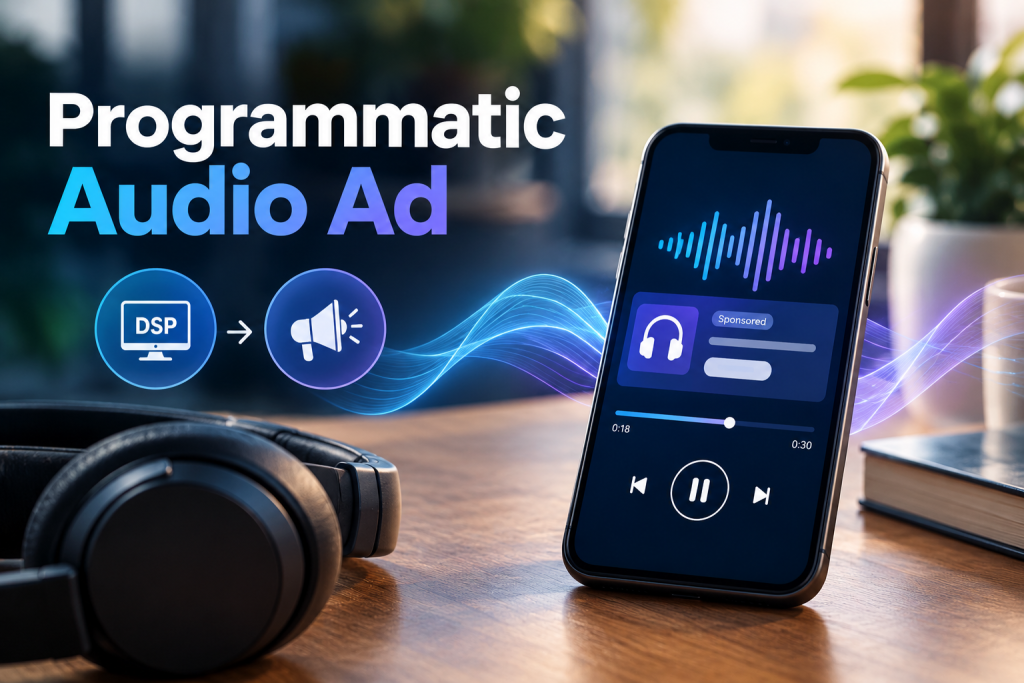
Programmatic Audio campaign simple guide
Programmatic Audio advertising helps brands reach relevant audiences while they listen to music, podcasts, digital audios, and other online audio content. Unlike traditional radio, programmatic audio uses digital technology to help advertisers targeting audiences, manage budgets, and measure campaign performance.
What is programmatic Audio Advertising?
Programmatic audio is the automated buying and selling of digital audio ad placements. The basic process is: Advertisers à DSP à SSP/Exchange à Audio publishers à Listener The advertisers set the campaign objective, audience, budgets, and targeting. The DSP then finds suitable audio ad opportunities and bids on them automatically.
How to Create a Programmatic Audio Ad
- Define Your campaign Goal Start by deciding what you want to achieve. Common goals include:
- Brand awareness
- Website traffic
- App downloads
- Lead generation
- Sales and conversion A clear goal helps determine the right audience, creative, and performance metrics.
- Select your target Audience Choose an audience that is relevant to your product or service. Depending on the platform, targeting may include:
- Demographics
- Location
- Interests
- Behaviours
- Context
- First-party audiences
- Device
- Create a simple Audio Script A good audio ad should communicate the main message quickly. Keep the scripts:
- Short
- Clear
- Engaging
- Brand-focused
- Action-oriented
- Produce the Audio Creative Record the script using a clear and engaging voice. You can also use background music or sound effects, but they should not overpower the voice. Before uploading, make sure the audio file meets the required format, duration, quality, and technical specifications of the DSP or publishers.
Launching the campaign
- Set up the Programmatic audio campaign. Once the creative is ready, configure the campaign in your DSP. Set:
- Campaign objective
- Audience
- Location
- Inventory
- Budget
- Bid strategy
- Creative
- Tracking
- QA before launch Check everything before the campaign goes live:
- Audio quality
- Creative duration and format
- Targeting
- Budget and bid
- Landing page
- Tracking
- Call to action A proper QA helps to prevent delivery and tracking issue
- Launch and Monitor After launch, monitor the campaign regularly to understand how it is performing. Important matrices include:
- Impression: Number of times the ad was served.
- Reach: Number of unique listeners reached.
- Frequency: Average number of times a listeners heard the ad.
- Completion rate: percentage of ads played to completion.
- CTR: Percentage of impressions that resulted in click.
- CPM: Cost of every 1000 impressions.
Best Practices
Keep the message Simple Listeners should understand the main message quickly.
Use strong call to action Tell the listeners exactly what to do next.
Test Different Creative Try different message, voice and call to action.
Manage Frequency Avoid showing the same ad too many times to the same listener.
Optimize regularly Review performance and adjust audience, inventory, bids, and budget based on results.
Final takeaway
Creating a programmatic audio campaign can be summarized in six simple steps: Define à Target à Create à QA à Launch à Optimize With the right audience, a clear message, quality creative, and continuous optimization, Programmatic audio can help brand reach listeners effectively and become an important part of broader digital advertising strategy.