

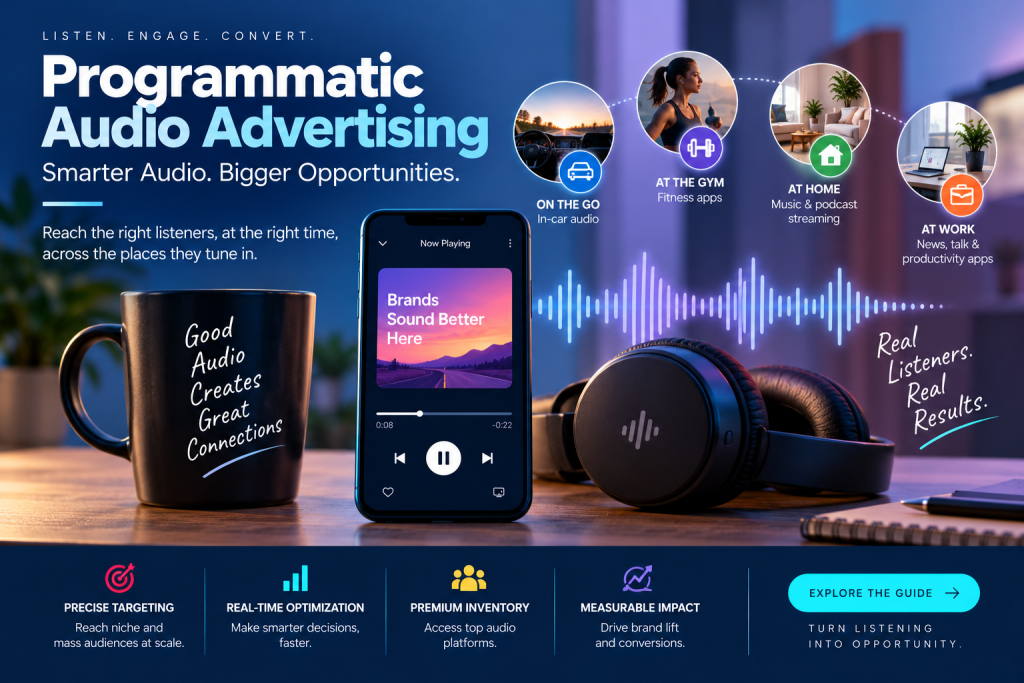
You know how Instagram and YouTube show you ads based on what you like, where you live and what you are browsing? Programmatic audio advertising does the same thing but with audio ads that play on platforms like Spotify, Apple Music, podcasts and internet radio.
Programmatic audio advertising is the automated buying, selling and placement of audio advertisements within digital audio content.
Advertiser can use single platform to access inventory from multiple audio publishers and deliver ads to audiences across different devices.
The key difference between radio and programmatic audio advertising is targeting.
Why Is Audio Advertising So Effective?
One of the biggest strengths of audio is its ability to capture attention without requiring a screen.
When someone listens to a podcast or musical playlist, they are actively paying attention to what they hear. This creates an opportunity for brands to build a more personal connection.
How Programmatic Audio Can Improve Campaign Performance
Adding audio to a media plan can strengthen a campaign in several ways.
- It creates a more personal Brand Experience. Think about listening to someone speak through your headphones. Their voice feels much more direct and personal than a banner sitting on a webpage. A friendly and related voice can make a brand feel approachable while an energetic, soundtrack can create excitement.
- It Enable Precise Audience Targeting. Programmatic audio is not simply about playing an advertisement to anyone who happens to be listening. Advertiser can use audience and content data to create more relevant campaigns.
Depending on the available data and platform, targeting can include factors such as:
- Location
- Demographics
- Online behaviour
- Household income
- Interests
- Music genres
- Playlists
- Moods and moments
For example, a sports brand could focus on audience interested in fitness and sports.
Why Millennials and Gen Z Are Important for Audio Advertising.
Younger consumers, particularly Millennials and Gen Z are highly engaged with digital audio.
Music streaming, podcast and other forms of digital audio have become part of their everyday media habits. These audiences are also becoming increasingly important to brand as their purchasing power grows.
Creating An Audio Ad That People Actually Remember.
Programmatic technology can help you reach the right audiences, but targeting alone cannot make a campaign successful. Here are four important principles to keep in mind.
Keep It Brief
Audio advertisements are commonly produced in 15-30 seconds format. Focus on what really matters.
Keep The Message Simple
Audio script should clearly communicate:
- What are you offering?
- Why should the listener care?
- What should they do next?
Avoid unnecessary details and complicated language.
Include a Strong Call to Action
Every good advertisement should tell the audience what to do next – CTA Example:
- Shop now
- Learn more
- Download the app
- Book today
- Visit our website
Make It Conversional
Your audio ad should sound like belongs in the environment where it is being heard.
Programmatic Audio vs Traditional Radio
Traditional radio typically focuses on purchasing advertising spot within a particular station or program.
Programmatic audio focuses more heavily on audience targeting and digital measurement.
Conclusion:
Programmatic audio allows brands to reach relevant audiences while they are listening to music, podcast, playlists and other digital content. Unlike traditional radio, it can provide sophisticated audiences targeting, detailed measurement and opportunist for real time optimization.