

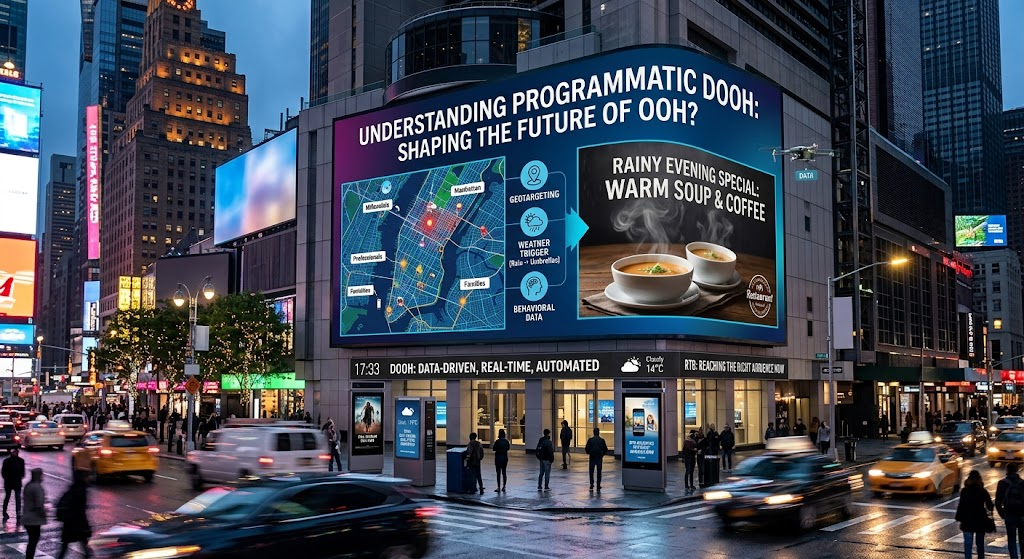
Understanding Programmatic DOOH: How is it Shaping the Future of OOH?
Digital Out-Of-Home (DOOH) Advertising
Programmatic digital out of home (DOOH) brings traditional outdoor advertising into the digital world. It uses software, data, and automation into the digital billboards and screen in public places.
As technology has developed, outdoor advertising has changed too. Traditional printed billboards have been joined by digital screens, creating what we now call digital out of home advertising or DOOH.
What is Programmatic DOOH?
Programmatic DOOH is the automated buying and deliver of digital outdoor advertising. In traditional OOH advertising, an advertiser usually works directly with a media owner to book a billboard or other physical advertising space. The advertiser chooses allocation, agrees on a schedule and price and then the creative is produced and installed.
Programmatic DOOH changes this process by using advertising technology to automate much of the busying and campaign management. Advertisers can use programmatic platforms such as a demand side platform, to choose digital screens, locations, audiences, schedules & budgets. They can also use data such as location, time of day, weather, traffic or nearby events to decide when an ad should appear.
The main idea is simple: instead od showing the same advertisement all the time, programmatic DOOH allows brands to make outdoor advertising more relevant and flexible.
What are the differences between traditional OOH, DOOH and Programmatic DOOH?
Traditional OOH & DOOH both help brands reach people in public spaces. The biggest difference is how the advertising is delivered and managed. Traditional OOH normally uses printed formats such as posters, billboards and building wraps. Once the creative is installed, changing it usually requires producing and installing a new physical advertisement.
DOOH uses digital screens, so advertisers can show videos, animations, multiple creatives and changing messages without physically replacing the advertisement. Programmatic DOOH adds another layer: automation and data. Advertiser can use software to decide which screens to use, when ads should run and what type of audience or situation they want to reach.
| Feature | Traditional OOH | Programmatic DOOH |
| Creative | Printed posters, billboards, wraps | Digital, dynamic and video |
| Buying method | Mostly manual and booked in advanced | Automated, real-time or guaranteed deals |
| Targeting | Mainly based on location and estimated traffic | Location, audience and contextual signals |
| Speed | Slower because production and installation are required | Faster because creatives can be uploaded digitally |
| Optimization | Limited once the ad is installed | Campaigns can be adjusted while running |
| Measurement | Mainly estimated impressions | Reach, visits, lift and other performance measures |
| Flexibility | Lower | Higher |
Benefits of Programmatic DOOH
Programmatic DOOH combines the broad reach of outdoor advertising with the flexibility of digital advertising. Some of the biggest advantages are below:
More Precise Targeting
Traditional billboards are mainly selected based on where they are located. Programmatic DOOH allows advertisers to go further. Advertisers can use information about audiences, locations, movement patterns and context to decide where and when and ad should appear.
For example, a sports brand could target areas where fitness-focused audiences are likely to be present. A travel company could focus on airports and other locations where travellers spend time. Advertisers can also combine targeting with signals such as weather and time of the day to make their messages more relevant.
Greater Campaign Flexibility
One of the biggest advantages of digital advertising is that campaigns can be changed quickly. Programmatic DOOH brings these advantages to outdoor advertising. Advertisers can launch, pause, change or adjust campaigns without physically replacing a billboard. For example, a clothing brand could promote rain jackets when the weather changes or increase advertising during a particular shopping period. This flexibility is especially useful for brands running campaigns across several cities or markets.
High Visibility and Consumer Impact
One major advantage of outdoor advertising is visibility. Unlike online ads, DOOH ads cannot simply be locked with an ad blocker. Digital screens are also much larger than most online advertising formats, making then difficult to overlook. Because DOOH appears in real-world environments, it can create strong brand awareness while people are travelling, shopping, commuting or spending time at public venues.
Measurable Foot Traffic and Sales Impact
Outdoor advertising is not limited to awareness. It can also encourage people to visit physical locations. This type of measurement is often called football attribution. It helps advertisers understand whether their outdoor campaigns are actually influencing real-world behaviour, such as store visits, restaurant visits, or attendance at an event.
Privacy Friendly Precision
Programmatic DOOH can provide relevant targeting without needing to identify individual people in the same way that some digital advertising channels do, instead, campaigns can often reply on information such as location, context, audience patterns, traffic, weather and time of the day. This makes DOOH an interesting option for advertisers looking for useful targeting while keeping privacy considerations in mind.
Expanded Inventory Across New Environments
Digital screens are no longer limited to large roadside billboards. Today. Advertisers can find DOOH screen in many different environments like shopping malls, airports, gyms, gas stations, transit locations, etc. This gives advertisers more opportunity to reach consumers at different points during their day.
Interactive Engagement
DOOH can also encourage people to action. An advertisement can include QR code that send the viewers to a website, product page, app or special offer. Touchscreens and other interactive formats can also turn a simple outdoor advertisement into a more engaging experience.
Better Budget Allocation
Programmatic buying can help advertisers make better use of their budgets. Instead of committing all their money to fixed placements, advertisers can adjust spending based in campaign performance and availability. If certain screens, locations or environments are performing better, advertisers can put more of their budget toward those opportunities. This can help reduce wasted spend and improve campaign efficiency.
Flexible Buying Options
Programmatic DOOH can give advertisers access to multiple screen networks and media owners though one platform. This can make the buying process easier because advertisers do not necessarily have to negotiate separately with every media owner. At the same time, programmatic DOOH can support different types of deals, including automated buying and guaranteed inventory.
Improved Measurements and Insights
Traditionally, one of the more challenging aspects of outdoor advertising was measurement. That’s now changing, thanks to programmatic DOOH providing advertisers with advanced reporting capabilities. Depending on the platform and partners involved, advertisers can analyse metrics including reach, frequency, impressions, foot traffic, conversions and brand lift.
Enhanced Omnichannel Capabilities
There’s no reason why programmatic DOOH needs to be utilized as a standalone medium. Instead, DOOH can be complemented by other digital advertising formats such as display, native, video, CTV and audio.
One might view a DOOH ad while traveling around a city and later receive a follow-up ad on another device or channel. This creates a seamless customer experience allowing DOOH to play a role in omnichannel marketing strategies,
How Programmatic DOOH Works?
To get the concept of programmatic DOOH, one should start with the technology behind it. Advertisers use programmatic platforms to identify available digital screens, set campaign parameters and send targeted advertising campaigns automatically.
The Role of DSPs in Programmatic DOOH
Demand-side Platform (DSP) is one of the key platforms that advertisers use for buying programmatic advertising. If you are not familiar with programmatic advertising, then you may regard the DSP as a single platform for managing media buying campaigns.
With the help of DSP advertisers can:
- Set campaign objectives
- Select locations
- Choose types of screens
- Set budgets
- Upload creatives
- Set targeting criteria
- Select campaign dates and times
- Manage campaign performance
DSPs connect the supply side of the advertising ecosystem that includes such entities as SSPs, ad exchanges, media owners and other supply partners. Modern DSPs make the process of discovering the available DOH inventory much easier than before. Advertisers can use maps and filters to browse screens by different attributes such as location, type of venue, media owner, etc.
Programmatic DOOH Formats
Programmatic DOOH can take various screen types. Popular formats are:
- Large formats: Large outdoor digital boards placed along highways, urban centres, airports and other highly trafficked locations. Mostly intended to serve as a mass awareness tool.
- Place based: Screens located either inside or near places like gym, shopping malls, gas stations, sports stadiums and even medical offices. These allow advertisers to target people in specific places.
- Transit: Screens located in airports, subway stations, bus shelters, taxis and other fomrs of transit locations. Effective for targeting commuters and travellers.
- Point of purchase: Screens located near retail locations, checkouts, store entrances and products displays. Influential in impacting people during the buying process.
- High Impact: Extremely large screens meant to create brand experience through their size.
Targeting in Programmatic DOOH
One of the reasons why advertisers get excited about programmatic DOOH is targeting. Rather than simply selecting an ad placement and relying on chance, advertisers may consider various signals for reaching a proper time.
Some targeting techniques include the following:
- Location targeting: Advertisers can select countries, regions, cities or even postcodes where their ads should show up.
- Contextual Targeting: Advertisers can select certain environments such as airports, gyms, shopping centres, gas stations depending in where their target audience is most likely to be located.
- Dynamic Targeting: Ads can be changed dynamically depending on weather, time of the day, sports results, traffic or local events.
- Media owner targeting: advertisers can select certain media owners or screen networks.
- Audience Targeting: Using audience and mobility data, advertisers may reach certain screens that are more likely to serve a proper audience.
- Retargeting: Individuals who were exposed to the DOOH advertising campaign might also be targeted via other digital platforms such as display, CTV or audio.
How is Programmatic DOOH measured?
While with digital advertising one can measure clicks and conversions immediately, when it comes to outdoor advertising, it can be hard to make connections between seeing a billboard and entering the store later. However, new measurement solutions help to solve the problem.
Footfall Attribution
Footfall Attribution tries to establish a correlation between people who saw a DOOH ad and their visit to a physical location afterwards. For instance, if a person saw an ad in a certain place near a shopping centre and visited the store later, then this connection can be established by the measurement partner through location-based signals.
Brand lift research
Brand lift studies help determine whether a marketing effort has resulted in changes In consumers’ awareness, consideration, recall and intent to buy. Usually, in such a research, it is compared whether those who saw the ad have different attitudes towards a brand compared to a similar audience that did not see the ad.
Sales Lift
The sales lift research goes even further and helps understand whether there is a connection between the ad exposure and purchases made. Thus, sales lift helps determine whether DOOH marketing campaign has helped increase sales and not just views or awareness.
The Future of DOOH Advertising Is Programmatic
OOH advertising has always been highly effective due to the fact that brands have had the opportunity to address a large audience in the physical world through this medium. DOOH advertising has enhanced the format even more by substituting static ads with screens.
Programmatic DOOH technology goes even further than that. With the use of automation, data, targeting, dynamic creative and measurement, programmatic DOOH provides advertisers with greater level of control over their outdoor campaigns’ planning and delivery. It is also possible to integrate DOOH into other digital advertising channels like display, video, audio and CTV advertising.