First-party Audience: What Is It and How It Works

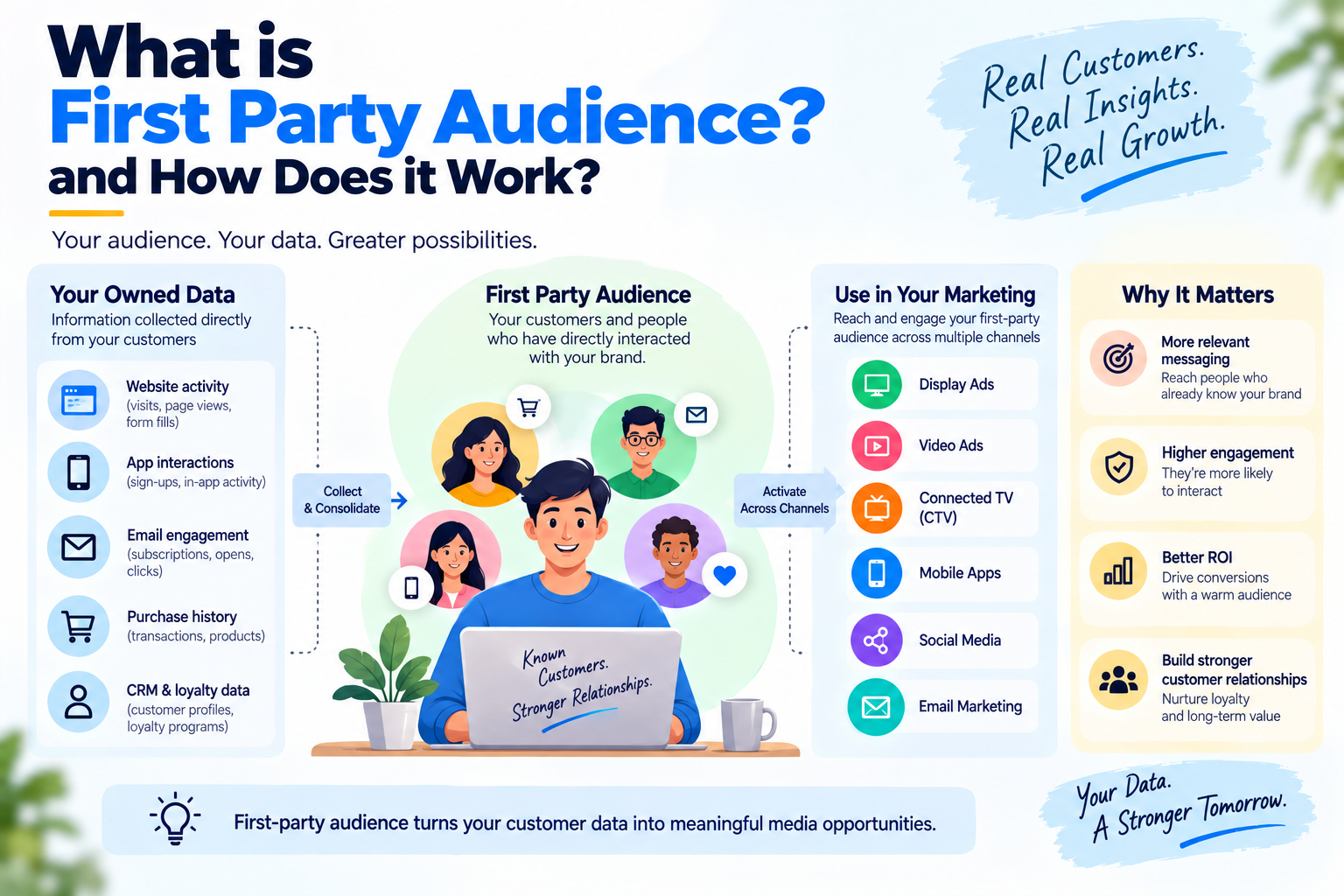
First party Audience is a group of users whose information a business collects directly through its own websites, apps, stores or other digital channels.

What Kind of Information Is First-Party Data?

  • Website activity: You can learn which pages people visit, which products they view and what actions they take on your website.
  • Purchase history: You can see what customers bought, how often they buy and how much they spend.
  • Email interactions: If someone subscribes to your newsletter, you may know whether they opened your emails or clicked on a particular link.
  • App activity: If your business has a mobile app, you can understand how users interact with it.

How Does a First-Party Audience Work?

Example users enter a website:

  1. Users visit the Website: Users visit the website and look at several products.
  2. User Create an Account: Users create an account using his email address. Now the business has a direct way to communicate with them.
  3. User Adds the Product to His Cart: User adds his product to his shopping cart but leaves the website without completing the purchase.
  4. User Becomes Part of an Audience: The business can create an audience of people who added products to their cart but did not purchase them.
  5. Business Sends a Relevant Message: The business could send a reminder to the user about his cart or show them relevant marketing messages through an advertising platform.

Why Are First-Party Audiences Important?

First party audiences are becoming increasingly important because digital advertising is changing. As a result, businesses are paying more attention to the data they collect directly from their own customers.

How Are First-Party Audiences Used in Digital Marketing

There are several ways marketers can use first-party audiences:

Retargeting

Suppose someone visits your website but does not make a purchase. You can create an audience of eligible visitors and use it for retargeting campaigns, subject to platforms rules and the user consent choices.

Personalized Recommendations

If a customer has previously purchased some product based on that they will recommend the relevant products.

Is First-Party Data the Same as Personal Data?

Not necessarily. First-Party data describes where the data comes from – directly from the business own interactions with its audiences.

Some first-party data may be personal data, while other information may be aggregated or otherwise non-personal.

Conclusion

First party audience may sound like a complicated digital marketing concept, but the basic idea is quite simple. A website visitor, email subscriber, app user or customer can potentially become part of a first party audience.

Marketers can then use these audiences to create relevant campaigns, improve customer experiences, understand buying behavior and build stronger relationships.

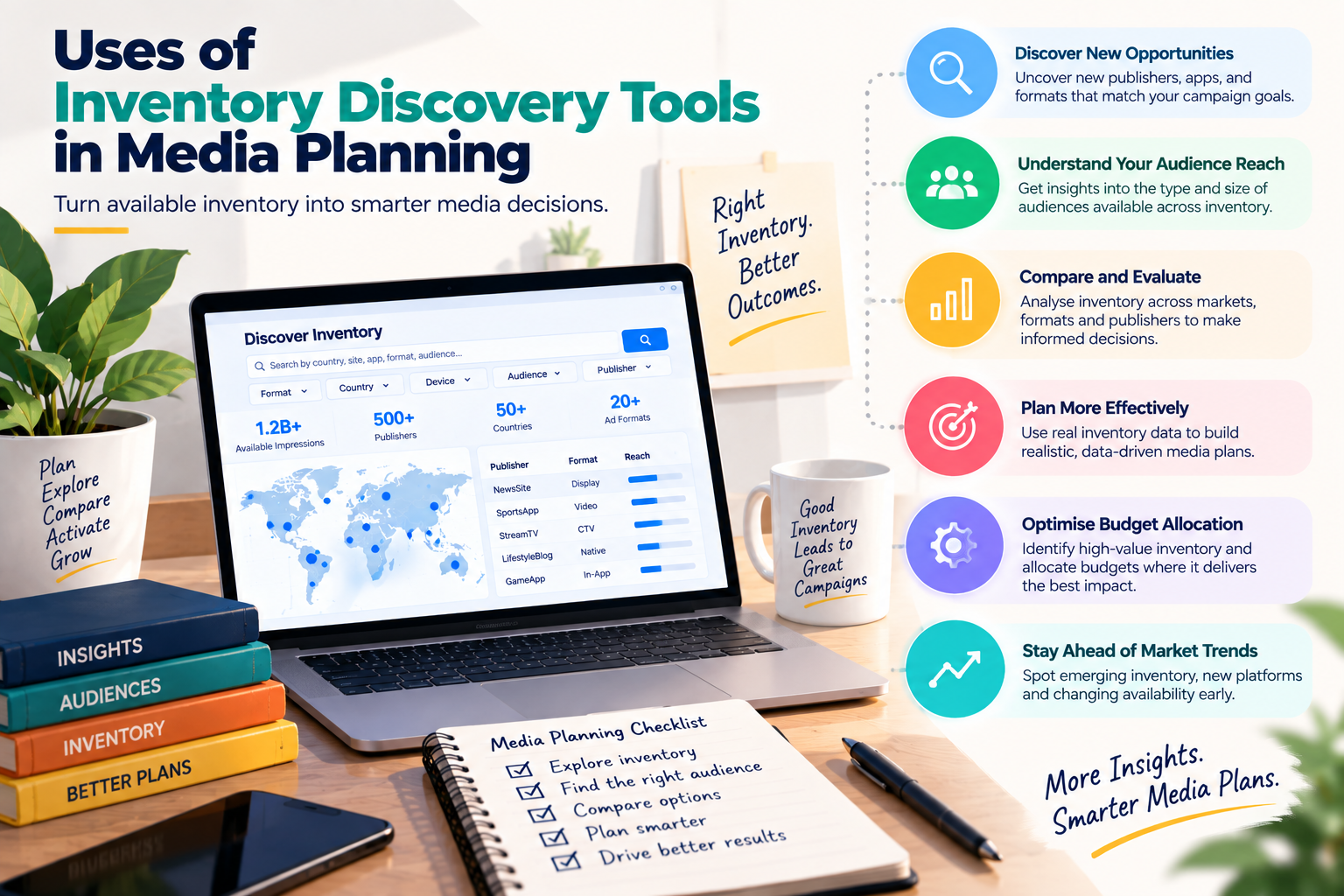
Uses of Inventory Discovery Tools in Media Planning

Media planning is becoming increasingly challenging with growing ad inventory in various digital platforms such as websites, mobile applications, CTV, DOOH, audio ads and many others, in this case, there is a need to have a proper means through which one will discover available advertising inventory and determine whether it can suit their needs. In this case and inventory discovery tool comes in handy as it will assist media planners to explore various inventory opportunities.

What is an Inventory Discovery Tool?

It is an online tool through which media planners and advertisers can learn about available advertising inventories across various publishers, websites, applications, devices, fomrats, geographic locations and media channels.

Instead of carrying out manual research of hundreds of websites or publishers, planners can use the tool to find inventory on the basis of following criteria:

  • Ad format & size
  • Website or application
  • Type of device
  • Geographic location
  • Content category
  • Available impressions
  • Reach
  • Media channel
  • Characteristics of audience

They can make a better decision about where they should allocate their advertising budget by using the information.

  1. Discover Available Ad Inventory Finding available advertising inventory is one of the purposes of using an inventory discovery tool by media planners. A planner might require display advertising inventory for campaign targeting certain types of publishers.
  2. Understand availability of inventory It is not sufficient just to know if the publisher or website exists. Media planners should also understand if there is sufficient inventory available to launch a campaign. An inventory discovery tool provides valuable information like estimated impressions, volume of inventory, available formats, etc. This will help a planner to understand if certain inventory source has potential to cover the necessary scale for a campaign.
  3. Compare Different Sources of Inventory In many cases media planners have several options how to reach their target audience. An inventory discovery tool allows comparing various websites, apps, publishers or media channels on the basis of available data. A planner can compare: Website inventory vs app inventory, Desktop vs mobile inventory, Display vs video inventory, publisher categories, geographic markets, etc.
  4. Plan Campaign more effectively Media planning is process of researching, analysing, forecasting and making decisions. Doing manual inventory research takes quite some time, particularly if there is need for multi-channel or multi-market campaigns.Inventory discovery tools bring all relevant inventory data together in one place. Planners can use filter and search capabilities to select the most relevant options from a huge number of possibilities. Thus, they will be able to devote less time to searching and more time to the development of media strategy.
  5. Facilitate Audience and Targeting Choices Analyse of inventory could also help with targeting choices. Depending on which tool is used, the planner would have the ability to analyse inventory according to different aspects, such as geography, content categories, devices, environments, or audience related parameters. It should be noted that the tool does not replace audience analysis but provides helpful data at the inventory level.
  6. Enhance Budget Distribution Strategy The task of media planner is not only to discover the inventory but to decide how to use money efficiently on advertising in order to generate potential value. With the help of comparing of inventory volumes, formats, channels and other parameters, the planner will be able to build more intelligent distribution of budget.
  7. Assistance in Campaign Forecasting The information about the inventory can also be useful for the process of campaign forecasting. When planning the launch of a campaign, it is necessary to estimate whether there is sufficient inventory might change over time, early information can assist in creating more realistic expectations of campaigns and the availability of inventory.

Conclusion

The inventory discovery tool can be considered an important aid for modern media planners. With the help of this tool, media planners can investigate, analyse, compare and evaluate the available advertising inventory before media buying. From searching for the new sources of inventory and the amount of available impressions to comparison of different media channels and budget distribution, this tool allows streamlining the process of planning.

Above all, the inventory discovery provides media planners with important information about the advertising environment. With this information at hand, media planners are able to develop more effective media plans.

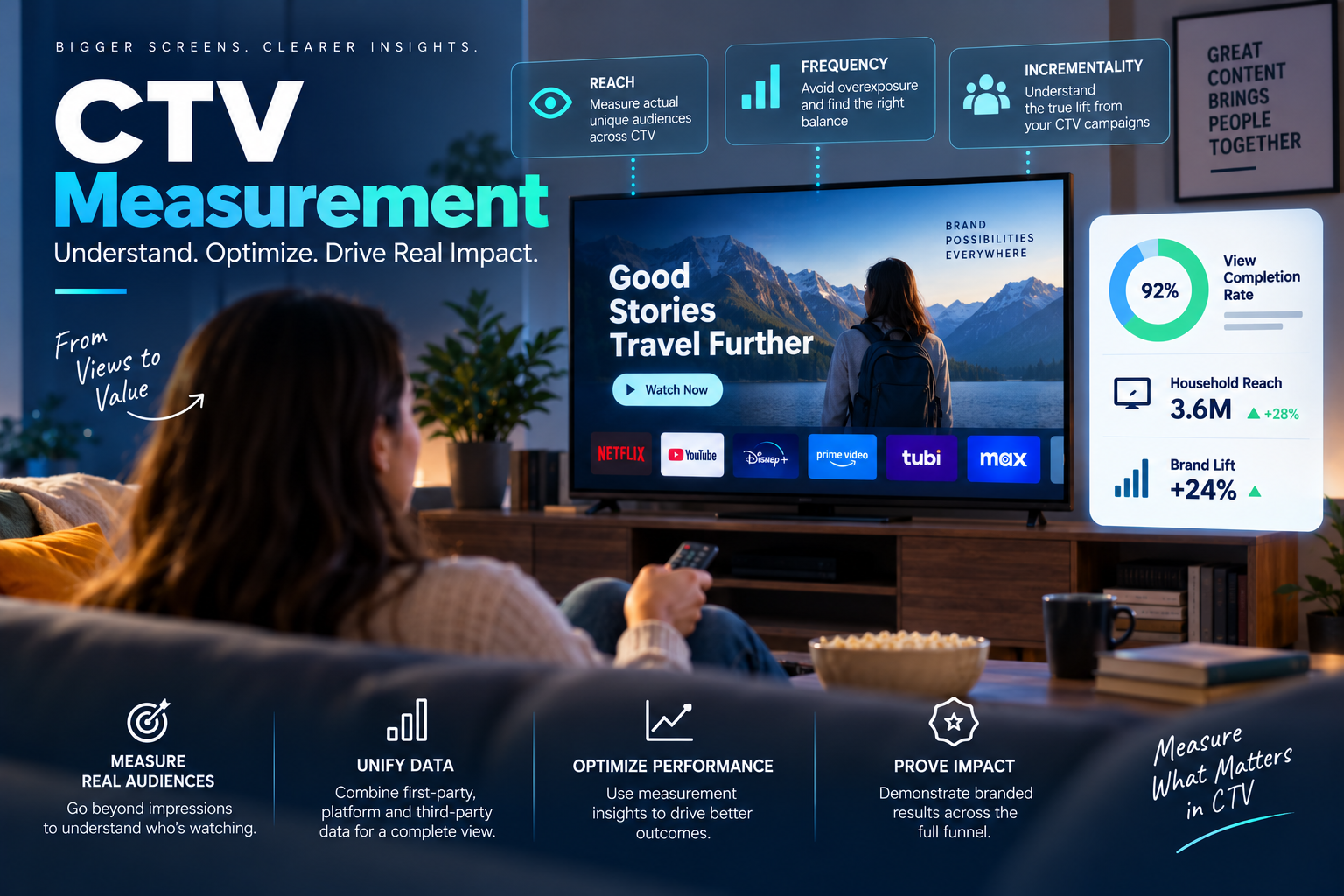
CTV Measurement: 9 Metrics You Should Track to Prove Impact

Since many years advertisers have used conventional TV as one of the best ways to reach a massive audience and build brand awareness. Unfortunately, measuring the performance of any TV advertisement has never been easy. Typically, advertisers have relied on estimates of viewers or changes in the number of visitors to websites and stores after airing a TV commercial.

CTV advertising is revolutionizing how TV campaigns are measured by advertisers. Through connected TV, advertisers will be able to collect a lot more information about their TV ads delivery and the interaction of viewers with commercials. The marketers will be able to know the exact number of people who viewed the ad, and whether the ad helped contribute to the conversion process. With these metrics and key performance indicators, it means that CTV is more than just a brand awareness channel.

What is CTV Measurement?

CTV measurement is the practice of measuring and analysing the success of connected TV advertising campaigns. It allows advertisers to measure things like:

  • How many viewers have seen my ad?
  • How many households were reached?
  • How often have they seen the ad?
  • Have they watched the ad in its entirety?
  • Have they visited my website following viewing?
  • Have they completed the desired action?

How Does CTV Measurement Work?

Specific actions or events are recorded through use of tracking pixel or other measurement technology. The choice of the actions to be measured is made between the advertiser and the CTV advertising platform.

Example, one individual can be viewing an ad from the CTV and later visit the site of the company advertising its products and complete the purchase. This action would be considered view through conversion in case it happens during the period of your campaign’s measurement.

Important CTV metrics

  1. Impression Impressions refers to number of times the ad was seen. If your ad received 50,000 impressions during your campaign, it means that the ad was shown 50,000 times.Impressions are great in determining how much delivery was achieved, however, it does not tell you how many unique people saw the ad. That is why impressions should be considered together with other metrics like reach or frequency.
  2. Frequency Frequency shows how many times your target viewer or household has been reached by your advertisement. Frequency is critical since advertisers must reach that balance, which means when the number of exposures is too low, there won’t be any recollection of brand and when the exposure is too high, ad fatigue may happen. Advertisers can use frequency caps that will allow them to limit how many times the same audience can see the same advertisement.
  3. Cost Per Mille (CPM) Cost per mille (CPM) is the price of reaching to 1,000 impressions. Formula for CPM is as below: CPM = (Campaign cost ÷ Impressions) x 1,000If an advertiser pays $10,000 and receives 500,000 impressions, then CPM will be $20. CPM allows advertisers to evaluate the price of the media and compare the CTV inventory or campaign strategy.
  4. Unique Households CTV differs from other digital channels in terms of the fact that the advertisement in the screen is seen by multiple viewers at once. Consider, four different people of come household can be watching the CTV advertisement simultaneously.Unique household helps the advertisers calculate how many unique households saw the ad instead of calculating impressions.
  5. Completion rate Completion rate measures how many times the viewers complete watching and advertisement to its end. Example, if out of 100,000 started ad views 95,000 people complete the process, the completion rate is 95%.It shows that people stay with the ad and get its brand message completely. In addition, it may assist in comparing the effectiveness of different creatives.
  6. Cost Per Completed View (CPCV) CPCV measures the average price per one completed video view. If the price of campaign is $5,000 and there are 100,000 completed views, then CPCV is $0,05. CPCV is effective if the goal of the campaign is to make the viewers watch the whole ad.
  7. Return On Ad Spend (ROAS) ROAS is used to measure the revenue against the price spent on advertising. The formula is as follows: ROAS = Revenue ÷ Advertising CostIf you are spending $10,000 for ads and the revenue is $40,000, ROAS would be 4. It means you are gaining $4 for each $1 invested. ROAS is especially effective for performance-driven campaigns aimed at linking CTV ads and their outcomes.
  8. View Through Conversions Many CTV ads lack a typical click-through format, which means that the user can watch an ad on TV and then proceed to visit the advertiser’s website from their mobile device or desktop computer. A view through conversion is a metric that reflects a conversion resulting form the exposure to an ad during the measurement period.
  9. Conversion rate Conversion rate is the metric that represents the share of the users who performed the desired action. It may be a purchase, registration, form fill-out, visiting of the website, etc. For example, if 1,000 measured users come to the website and 50 buy something, the conversion rate is 5%.

Using CTV Measurement for Brand Lift Studies

There are CTV campaigns which don’t necessarily aim to get instant conversions from the audience. In most cases, brands utilise CTV ads to improve brand awareness, brand recall and perception.

Brand lift studies consist in comparison of the group which saw the advertisement with another group which didn’t see the campaign. Advertisers can compare the following aspects between the groups:

  • Brand awareness
  • Brand recall
  • Brand favourability
  • Consumer perception
  • Brand consideration

Such type of measurement is especially important for campaigns that are designed to raise brand awareness.

Conclusion

The simplest wat to grasp CTV metrics is to consider hoe each metric answers the question “What is the performance of our CTV ad?”: Impressions, frequency, COM, Unique households and completion rate show how your ad was served and consumed by your audience. Whereas CPCV, view-through conversions, conversion rate and ROAS give insight into whether the campaign helped drive measurable action or outcomes.

CTV is also becoming increasingly performance driven. Retailers and streaming services are now looking into leveraging shoppable ads to measure performance against TV advertising exposure. Overall, the future of CTV measurement is heading toward a better and more accurate measurement, as well as cross-device and privacy conscious measurement.

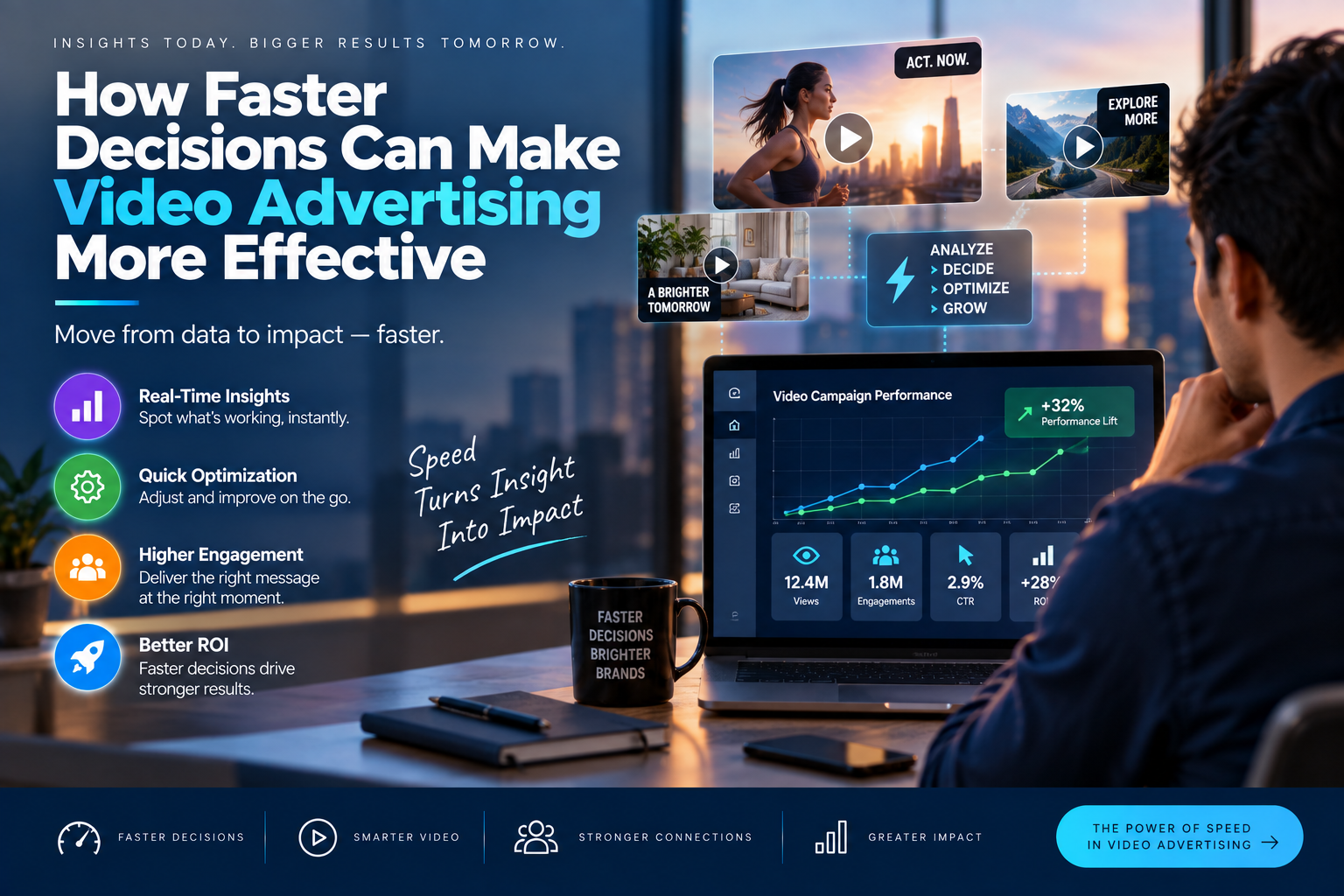
How Faster Decisions Can Make Video Advertising More Effective

Speed That Makes the Difference

How Faster Decisions Can Make Video Advertising More Effective

Video advertising is one of the most engaging ways for a brand to tell its story. But in today’s digital advertising environment, simply having a good video is not enough. Advertisers also need to reach the right audience, make decisions quickly, and respond to opportunities as they appear.

Why Speed Matters in Digital Advertising

Digital advertising moves quickly. Audience behavior can change, inventory becomes available and disappears, and advertisers may need to adjust campaigns based on performance. A platform that helps marketers work efficiently can make campaign management easier and more responsive.

The idea behind “Speed That Makes the Difference” is simple: speed is not only about how fast technology works. It is also about helping marketers make informed decisions faster and keeping campaigns moving.

From a Simple Idea to a Video Campaign

The original campaign began with a clear goal: to communicate the value of the platform in a way that customers could easily understand. Instead of only describing product benefits, the team chose video to show the experience.

The campaign was built around customer feedback. After gathering opinions from users, the team identified speed as one of the qualities customers valued. That insight became the central message of the campaign.

Why Video Works for Brand Awareness

Video can combine visuals, sound, storytelling, and branding in one format. This makes it useful for introducing a brand or explaining an idea in a memorable way.

  • It can communicate messages quickly.
  • It can make complex ideas easier to understand.
  • It gives a brand a stronger storytelling format.
  • It can help create awareness before a customer is ready to take action.

Building a Simple Video Campaign Strategy

A successful video campaign starts with a clear purpose. Before launching, advertisers should decide what they want the audience to remember or do after seeing the video.

  1. Define the goal: Choose one main objective, such as brand awareness, product education, website visits, or lead generation.
  2. Understand the audience: Identify who the campaign is intended to reach and what matters to them.
  3. Create a clear message: Keep the main idea simple. Viewers should understand the value of the product or service quickly.
  4. Use strong creative: Build a video that is easy to follow, visually engaging, and consistent with the brand.
  5. Reach the right people: Use relevant audience and contextual signals to improve the chances of reaching interested viewers.
  6. Measure performance: Track useful metrics and use the results to understand what is working and where improvements are needed.

The Role of Data and Technology

Technology can help advertisers manage campaigns on a scale. In programmatic advertising, automated systems can help marketers evaluate available opportunities and make buying decisions efficiently.

For video campaigns, this means marketers can focus not only on creative ideas but also on how, where, and when the video is delivered. Better technology can reduce unnecessary manual work and give teams more time to focus on strategy.

Speed Should Not Mean Rushing

Fast execution is valuable, but speed should always be supported by good information. The goal is not to make decisions without thinking. The goal is to make informed decisions without unnecessary delays.

A strong campaign therefore combines three things: a clear message, useful data, and technology that helps marketers act efficiently.

What Marketers Can Learn from the Campaign

  • Listen to customers: Customer feedback can reveal the strongest benefit to communicating.
  • Keep the message simple: A focused message is easier for audiences to understand and remember.
  • Show don’t just tell: Video can demonstrate a product experience instead of relying only on written claims.
  • Connect creativity with strategy: Good creative works best when it supports a clear campaign objective.
  • Use technology wisely: Automation and data can help marketers respond efficiently while maintaining control of the campaign.

A Practical Framework for Your Next Video Campaign

For brands planning their next video campaign, a simple framework can make the process easier:

  1. Start with the business objective.
  2. Identify the audience and their needs.
  3. Find one strong idea that connects the audience with the brand.
  4. Create short, clear, and engaging video content.
  5. Plan where the video should appear and who should see it.
  6. Launch, monitor, learn, and optimize.
  7. Use campaign insights to improve future creative and media decisions.

Conclusion: Speed Can Create an Advantage

The “Speed That Makes the Difference” campaign shows how a simple customer insight can become a clear and engaging brand story. In modern digital advertising, speed can help marketers respond to opportunities, improve efficiency, and stay competitive.

But the real advantage comes from combining speed with strategy. When a strong creative idea is supported by customer insight, data, and efficient technology, video advertising can become more than an ad, it can become a clear way to communicate what makes a brand different.

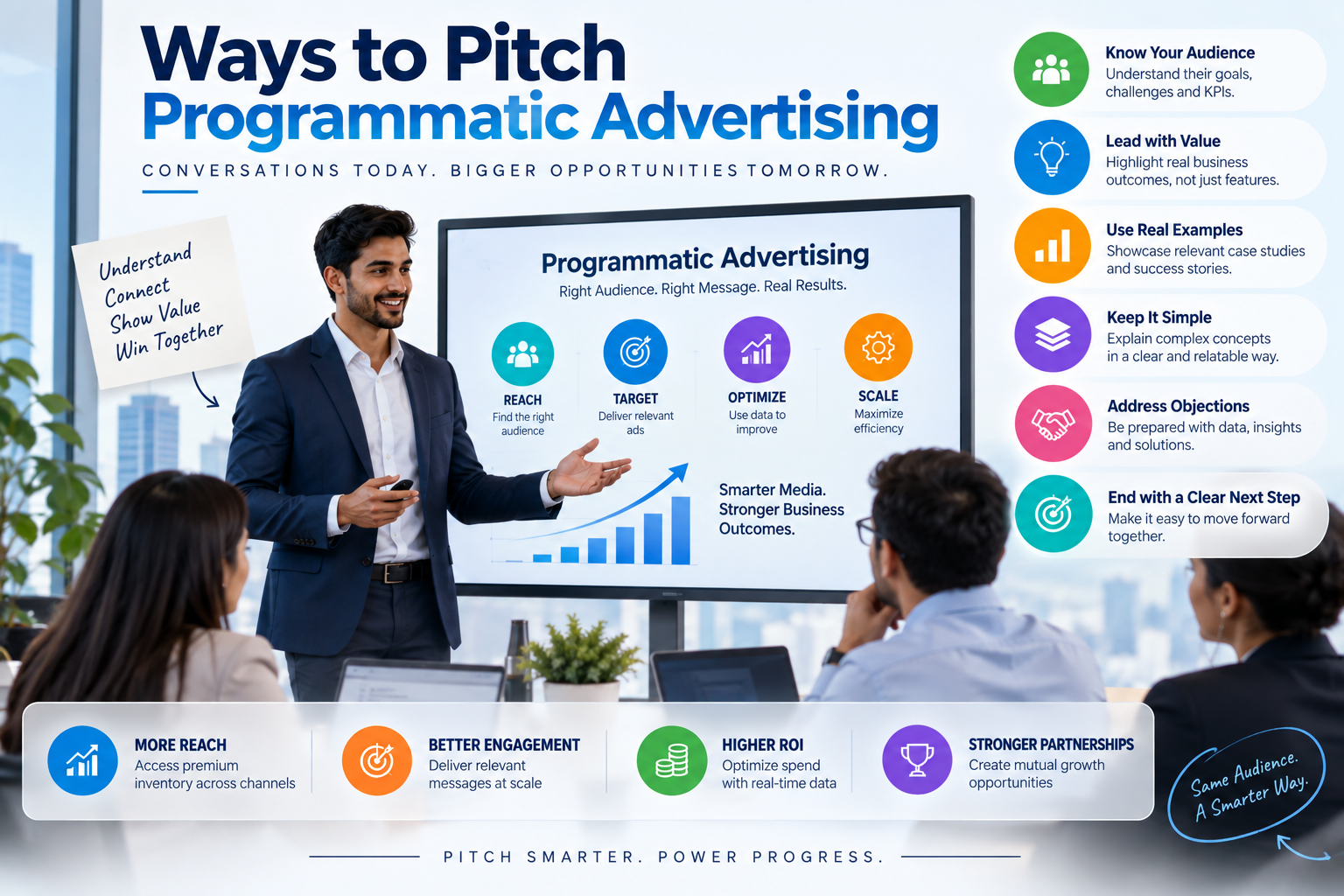
Ways to Pitch Programmatic Advertising

Before Pitching, Understand the Advertising Goals

Most of the time, people make the same mistake of not trying to understand the advertisement requirements, client’s expectations, KPIs, etc., and straightaway pitching what services or products they have.

You need to sit with clients to understand what their objectives are and what products or services they are offering before you pitch the advertising strategy to them.

If the client or agency is expecting “brand awareness,” you can recommend high-impact display, CTV/OTT, online video/in-stream, etc. If they are expecting “engagement,” then you can pitch rich media and interactive ads, playable ads, rewarded video, native, and branded content. You should be very familiar with the client’s expectations even before giving them advertising plans.

Always lead with strategy, not the list of products you offer. Let’s understand the basics here. You have to act as a strategist. Instead of telling them what you offer, sit with the client to understand what their advertisement goals are. Are they looking for top-of-the-funnel (TOFU) or bottom-of-the-funnel (BOFU) advertising?

Match the format to the goal—recommend display for brand awareness and brand uplift, carousels to tell stories, and rich media for user engagement.

Addressing Common Misunderstandings

Myth: Programmatic is too complex and complicated.

A lot of clients think programmatic is way too complex. The first step towards solving this misunderstanding is by simplifying things and explaining to them that today’s DSPs are built for transparency and clarity. You can show them how easy the campaign set-up is, how precise the audience targeting can be, and how seamless the reporting is.

Myth: Programmatic is only for big brands and is too expensive.

We at Digital East GmbH have proved this wrong time and again. Programmatic advertising once used to be expensive, and only giants were using it. Now, we have made it so simple that you can start campaigns even with just a $1,000 budget. Anyone can launch a pilot campaign, test it, learn, and scale. In today’s era, most programmatic platforms support small brands and agencies with lower minimal spends.

Myth: Brands lose control due to automation.

Many brands and agencies think that they might lose complete control because of automation. The answer to this confusion is that automation enacts your strategy. New-age platforms offer real-time data, reporting, and performance dashboards that put oversight back in your hands. You have the control panel to manage budgets, pacing, frequency cap tightening, targeting, creative swaps, etc. Programmatic platforms are built on transparency.

Position Programmatic as High Reward and Minimal Risk

You need to guide with the promise of programmatic as transparent, fast, controllable, and reliable.

  1. Start Small and Scale: Brands don’t want to commit big budgets to something they haven’t seen work. Programmatic lets them start small, see results as they happen, and change course whenever they are ready and whenever they need to.
  2. Total Agility: Audiences change their minds mid-campaign. With programmatic, so can you! Move the budget, adjust the bids, or put up fresh creative without pausing anything. Programmatic has got everything.

Explain Why Multi-Channel Reach Matters

Trace the path across channels right from display – video – audio – CTV/OTT – pDOOH – In-Game.

Here is what this looks like in practice:

  • Start with native: Place the brand inside content the audience already trusts, in a format that doesn’t interrupt the read.
  • Follow with display: Keep the brand in view for anyone who has already come across the native placement.
  • Bring in CTV: A short, well-made spot on the big screen turns passing awareness into something the audience actually remembers.
  • Layer in audio: Reach the same set of people while they are driving their automobile, walking, jogging, or working—the moments a screen can’t reach.
  • Add pDOOH: Show up in high-footfall places such as malls, concerts, bus stations, airports, etc., so the brand appears in the physical world too.
  • Finish with in-game: Catch the audiences during long, attentive sessions where there’s little else competing for their focus.

A campaign might run like this: Native to introduce, display to keep the brand visible, CTV/OTT to make it memorable, audio to catch people on the move, pDOOH to plant it in the real world, and in-game to reach them where attention runs deepest.

Address Targeting and Measurement Without the Detail

Talk about smarter insights, not spreadsheets. The point of programmatic isn’t the numbers it produces. It’s what those numbers tell you about your business.

Start with what a client already owns—their own customer data. Because it’s collected with permission and comes straight from their own customers, it’s accurate; it tells them who those customers are and how they behave. That means they can group their audience sensibly, reach the right people, and run ads that actually land. The same data lets them find new people who look and behave like their best customers, or reconnect with people who have bought before without depending on third-party tracking.

Live dashboards then show what’s working while the campaign is still running, not days or weeks later.

When pitching, skip the industry vocabulary. Frame it around three things instead:

  • Knowing your audience: Who responded, and what they did next.
  • Making smarter moves: Changes based on evidence, not hunches.
  • Spending better: Every rupee reaching someone worth reaching.

Framed this way, targeting and measurement stop being a box to tick and start being something you work on together. The best programmatic pitches don’t sell the technology. They sell control—over who sees the brand, how often, and what happens next. Get that across in plain language, and the platform details take care of themselves.

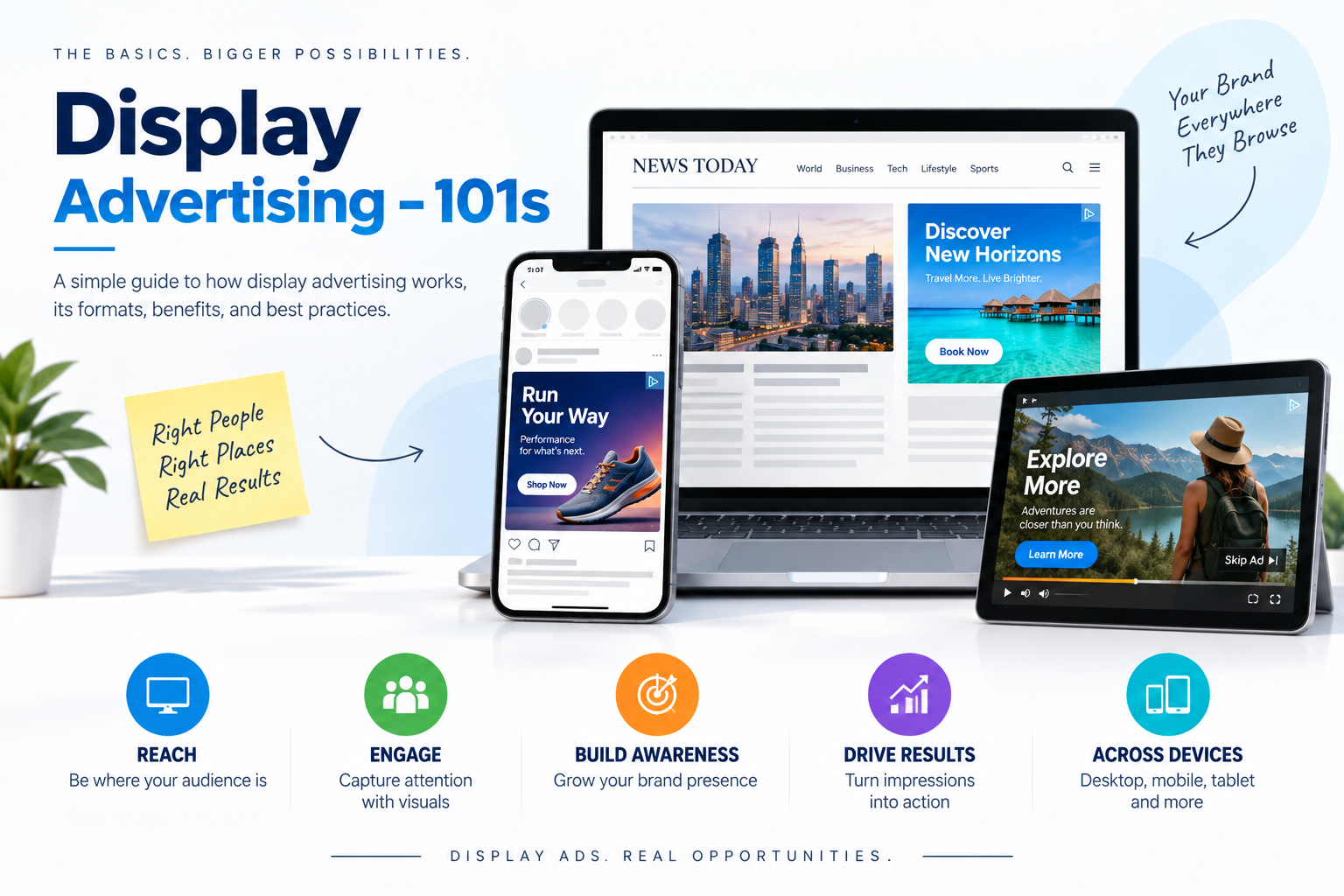
Display Advertising – 101s

First Things First – What is Display Advertising?

Display Advertising is a form of advertising which uses images, animations, and text in the form of an ad to convey the message of brands to the end user. When a user clicks on these ads, it will take them to the landing page where they can get to know more about the product or services the brand is offering, make a purchase, sign-up, or subscribe to the newsletter.

Display advertising is one of the strongest forms of advertising and it is widely used across the globe. Global advertising spends reached $992 Billion in 2025, up 4.9% year on year, according to Dentsu’s Global Ad Spend Forecasts. Digital accounted for $678.7 billion of that – a 7.9% increase and 68.4% of all ads spends worldwide.

What is Display Advertising in the Programmatic Ecosystem?

Programmatic display advertising is an automated process of buying and selling display ads across apps and websites using real-time bidding (RTB) technology, artificial intelligence (AI), and machine learning (ML). It helps brands, agencies, and advertisers reach the right audience at the right time more effectively and efficiently than traditional methods.

The entire bidding process happens within the blink of an eye! This has resulted in programmatic buying becoming the default way to purchase display ad inventory.

Fun Fact: Did you know that close to 90% of Display Advertising worldwide happened via Programmatic channels in the year 2025 and it is expected to grow even more.

Wondering Where Exactly Display Ads are Shown?

In simple terms, Display Ads can be shown across a wide range of digital channels such as Desktop, Mobile, Tablets, Connected TVs, and Digital Out of The House devices, allowing advertisers and brands to reach their audiences wherever possible.

The most common placements are:

  • Websites: Such as News, Articles, Celebrity gossips, Blogposts, etc.
  • Mobile Apps: Such as News applications, Gaming applications, Streaming services like YouTube Music, Spotify, JioSaavn, etc.
  • E-Commerce Marketplaces: Have you ever noticed while browsing through a product catalogue in Amazon, Myntra, Nykaa, etc., a similar product appears in the catalogue but has got the badge “Sponsored”? That’s exactly what these ads are; they appear alongside product listings or search results.

Display ads can show up as banner placements at the Top, Sides (Right or Left side), Mid-section, or bottom of the page. This can be in Rectangle, Leaderboard, Halfpage, etc.

How Does This Work?

Display Advertising works by placing advertisements across websites and applications to reach people with the right message as they browse content online.

In many cases, this happens programmatically with the ad inventory bought and sold in real time. In the backend, all these will be processed within milliseconds. When a user visits a website—let’s say you are browsing forbes.com—there will be multiple ad slots on the website. As soon as you load the page, an auction takes place in which advertisers and brands compete with each other via bidding to show their ads.

Here, a lot of factors come into play as to which ads will be shown to the user, such as targeting parameters set in the campaign, context, and the bid amount (CPM). If the targeting matches, then the highest bidder will win the slot and that ad will be displayed to the user.

Different Types of Display Advertising

There are many types of display advertising from standard static banners to rich media and video. Let’s deep dive into different types of ads:

  • Static ads: This is a fixed digital ad that uses a single unchanging image, graphic, or text. Every viewer sees the exact same visual content, regardless of their location or browsing history. Example: JPG, PNG, etc.
  • Animated ads: These use motion graphics and moving texts. They grab user attention faster than static images, making them very popular. Example: Gifs, HTML5, etc.
  • In-banner video ads: In-banner video ads are digital advertisements that place a moving video player inside a standard display banner slot on a web page. Unlike regular video ads that play before or during a video stream, these standalone units sit quietly on the top, sides, or bottom of a normal website.
  • Carousel ads: It is an interactive digital ad format that features multiple swipeable or clickable images or videos called “cards” within a single advertisement. Each individual card can have its own headline, description, and landing page URLs making it a flexible tool for storytelling.
  • Interactive ads: In this ad, instead of just watching or reading passively, users tap, swipe, play, or answer questions directly inside the ad unit.
  • Interstitial ads: Interstitial ads are full-screen advertisements that cover the entire interface of an app or website. They appear at natural transition points in the user flow, such as between game levels or after completing a task.
  • Dynamic display ads: Dynamic display ads are online banner advertisements that automatically change their image, text, CTA button, and price in real time. They adjust content to match the specific interests, browsing history, or device data of each user.

Common Display Ad Sizes

Display ads come in a range of different sizes, most of which are defined and standardized by the Interactive Advertising Bureau (IAB).

Common Desktop Sizes:

  • 300×250 – Medium rectangle
  • 300×600 – Half page
  • 728×90 – Leaderboard
  • 160×600 – Skyscraper
  • 970×250 – Billboard

Common Mobile Sizes:

  • 300×50 and 320×50 – Mobile leaderboard
  • 300×250 – Medium rectangle
  • 480×320 – Mobile landscape interstitial
  • 320×480 – Mobile interstitial
  • 1080×1920 – Vertical fullscreen

Who Can Use Display Advertising?

Any business or individual wanting to build brand awareness, retarget previous website visitors, or promote products and services online can use display advertising. It is accessible through DSPs and can be used by everyone from small businesses to large enterprises.

Benefits of Display Advertising

Display advertising is a very powerful component of a marketing strategy, enabling superior engagement and measurable outcomes.

  • Increased brand value: Display advertising contributes significantly to long-term brand building and firm value.
  • Target customers with audience segmentation: This allows brands to reach their audience with precision. By activating custom audience segments built from first-party data, brands can target users based on real-time behaviours and intent, ensuring ads are seen by the most relevant users.
  • Reach and frequency you can actually control: Buying programmatically across thousands of sites and apps lets you cap frequency at the user level and manage precise reach, which is something you can’t do stitching together direct site/app buys individually via traditional methods.
  • Speed and flexibility: You can take a campaign live in a few hours, do creative swaps mid-flight, and shift budget between campaigns/line items with ease. Perfect for special product launches, seasonal pushes, limited-time deals, reactive campaigns, survey campaigns, and many more!
  • Measurable against the right KPI: Be it eCPM, viewability, CPC, CTR, brand lift studies, or geo-attribution, all are available.

Display advertising isn’t just about chasing clicks or actions—it’s about being present, consistently and visibly, wherever your audience already spends their attention. Done well with the right inventory, sensible frequency caps, and creatives that actually tell the story, combined all, this builds the kind of familiarity that pays off long before anyone reaches a check-out page.

The brands that win at display are the ones that stop measuring it like performance marketing and start treating it as what it is: reach, scale, quality, and control.

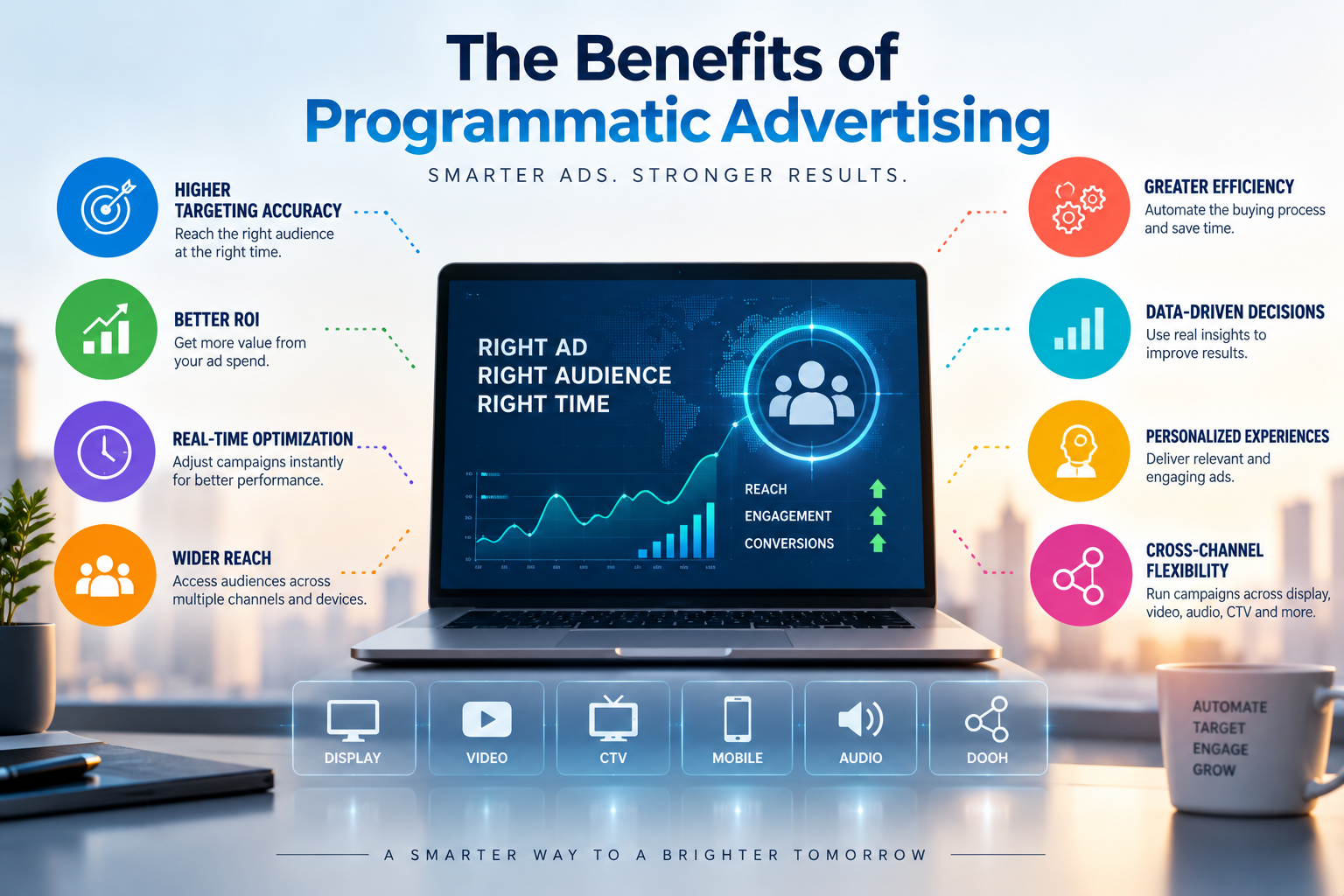
Benefits of Programmatic Advertising

Even though digital advertising has been there since the early 1990s, programmatic advertising began in 2013 with the introduction of Google’s AdSense platform.

In the earlier days, the options were very limited, with brands and agencies primarily depending on just display advertising and very basic keyword targeting to reach audiences and enhance campaign performance.

Within a few years, a few other programmatic platforms entered the mix, allowing brands, agencies, and publishers to buy and sell inventory across multiple channels—including video, native, CTV, audio, in-game, and programmatic digital out-of-home (pDOOH)—revolutionizing programmatic advertising from a niche solution to the preferred method marketers use for delivering targeted multi-channel campaigns across digital and offline touchpoints like direct mail.

How Does Programmatic Advertising Fit Your Needs?

Let’s deep dive into how programmatic advertising fits into the modern marketing strategy.

In today’s world, marketers depend on an increasing number of strategies and channels, from SEO and content marketing to social media and email marketing, to engage their audiences and drive better results. But doing it efficiently and at scale has never been more demanding.

This is exactly where programmatic advertising enters.

Programmatic advertising provides supreme accuracy, flexibility, and efficacy, allowing marketers to target the right audiences on the right platform at the perfect time while supplementing and enhancing other marketing efforts they already have in place.

The Core Benefits of Programmatic Advertising

FeatureThe Old WayThe Programmatic Way
EfficiencyManual calls, price negotiations, contract signing, and uploading creatives to multiple publisher platforms individually.Login to a single DSP, launch across thousands of sites, apps, and smart TVs instantly with a few clicks.
Cost & ScaleProhibitive entry barriers; only multi-million dollar corporations could afford major TV networks or popular websites.Group buying power via single ad slots; local startups and giants can bid on the exact same premium inventories.
FlexibilityStatic print ads, billboards, or magazines. Zero room for edits once printed or published.Total real-time control; update imagery, rewrite copy, or pause campaigns mid-broadcast instantly.
ReachFragmented and siloed to one specific physical location, website, or single TV channel.Omnichannel presence everywhere your audience goes—news portals, mobile games, or streaming apps simultaneously.
TransparencyBlind trust metrics; hard to prove billboard impressions or exact conversion attribution.Real-time dashboards displaying precise site lists, view-ability duration, click-throughs, and purchase conversions.

1. Targeting

In simple terms, programmatic advertising is like hiring a digital matchmaker that instantly finds the perfect customers for your business. Instead of paying for a massive billboard on a highway hoping the right person sees it, you use a smart computer system to show your digital ad only to the exact people who care about your product or service.

Targeting parameters include:

  • Demographics: Showing ads based on age, gender, or location (e.g., targeting only 30-year-olds in Mumbai).
  • Behaviour: Targeting people based on actions, such as frequent online shoppers or frequent travelers.
  • Interests: Targeting people based on affinity categories like cooking, scuba diving, gym workouts, or yoga.

2. Efficiency – Done in a Flash

Eliminate the friction of old-school media buying. Instead of juggling multiple publisher contracts, a single login to a Demand-Side Platform (DSP) automates placement across the entire web ecosystem instantly.

3. Cost-Effective: Group Buying Power

Because programmatic systems allow purchasing on a granular, single-slot basis, barriers to entry vanish. A local bakery can compete for consumer attention on the exact same high-value properties as a multi-national enterprise.

4. Flexibility: Change Your Mind Instantly

If live performance data shows creative fatigue or a pricing typo, you don’t have to wait for new prints. Adjustments happen mid-flight with the click of a button, giving you total dynamic control every second.

5. Reach: Be Everywhere, at Once

Break free from single-channel constraints. Your target accounts encounter your brand messaging dynamically whether they are reading digital newspapers, playing mobile titles, or streaming connected TV content.

6. Transparency and Optimization

With programmatic advertising, there are no secrets. You can log into your DSP dashboard at any time to review granular performance metrics:

  • Exact lists of serving sites, apps, and TV channels.
  • Impressions delivered and video watch durations.
  • Click-through rates (CTR) and landing page conversions.

Why this matters: Because you have access to continuous data streams, you can optimize campaigns on the fly. If performance lags on gaming apps while thriving on news platforms, you can dynamically shift budgets instantly, ensuring capital works as hard as possible.

What Is Brand Safety and Why Is It Important?

In digital advertising, where an ad appears is just as important as the ad itself. A brand can have a great advertisement, but if it appears next to inappropriate, offensive, or harmful content, it can negatively affect how people perceive the brand. This is where brand safety comes in.

What Is Brand Safety?

Brand safety refers to the practices and technologies used to ensure that a brand’s advertisements do not appear alongside content or in environments that could damage its reputation.

In programmatic advertising ads are automatically bought and placed across millions of websites, apps, videos, and other digital platforms. Because these placements happen at a very large scale and within milliseconds, advertisers need automated controls to help determine where their ads should and should not appear. For example, a family oriented brand may not want its ad displayed next to violent or adult content. Brand safety helps prevent such situations.

Simply put, brand safety ensures that advertising appears in an environment that is appropriate for the brand.

Why Is Brand Safety Important?

A brand’s reputation and customer trust are valuable assets. An inappropriate ad placement can create a negative association, even when the brand has no connection to the content. A strong brand safety strategy helps advertisers,

  • Protect their brand reputation
  • Maintain customer trust
  • Avoid inappropriate or harmful content
  • Reduce negative brand associations
  • Improve the quality of advertising placements
  • Use advertising budgets more effectively

For example, a children’s products company would likely want to avoid advertising alongside adult or graphic content. Similarly, a financial brand may want to avoid websites promoting scams or misleading financial information.

Common Brand Safety Risks

Some of the most common environments advertisers try to avoid include,

  • Hate speech and extremist content: Content promoting discrimination, hatred, or extremist views can seriously damage a brand’s image.
  • Violence and graphic content: Ads appearing next to disturbing or graphic material can create an unwanted association.
  • Adult content: Most mainstream brands avoid environments containing explicit or adult-oriented material.
  • Misinformation: False or misleading content can be particularly risky for brands in industries such as finance, healthcare, and technology.
  • Illegal or harmful activities: Content related to illegal drugs, criminal activity, or other harmful activities may be excluded from campaigns.
  • Unsafe websites and apps: Websites or apps containing malware, deceptive content, or very low-quality material can pose both brand and advertising risks.

Brand Safety in Programmatic Advertising

Programmatic advertising allows advertisers to buy ad impressions automatically through platforms such as DSPs, ad exchanges, and SSPs. Brand safety controls can be applied during this automated buying process. Advertisers can use,

  • Blocklists – Websites, apps, or environments that should be avoided.
  • Allowlists – Approved websites, apps, or publishers where ads can run.
  • Content categories – Controls to avoid specific types of content.
  • Keyword and topic exclusions – Prevent ads from appearing around certain sensitive subjects.
  • Third-party brand safety solutions – Technology that evaluates content and advertising environments.

These controls help advertisers reduce the risk of their ads appearing in unsuitable environments before an impression is purchased.

Brand Safety vs. Brand Suitability

Brand safety and brand suitability are often used together, but there is an important difference.

Brand safety focuses on avoiding environments that are generally considered harmful or inappropriate for advertising.

Brand suitability is more specific to an individual brand. It considers the brand’s values, audience, industry, and tolerance for different types of content. For example, a news article about a natural disaster may not be unsafe for every advertiser. However, a family-focused brand may choose to avoid advertising next to it, while a news organization may consider it suitable.

Therefore, the right approach depends on the individual brand and its objectives.

The Role of Technology

Technology has become an important part of modern brand safety. AI and machine learning can analyze large amounts of content and identify potentially unsuitable environments at scale. Modern systems can look beyond individual keywords and consider the context and meaning of content.

For example, an article may mention violence while reporting on a news event. Blocking every page containing the word “violence” could unnecessarily remove legitimate content. Contextual analysis helps advertisers make more informed decisions.

However, technology alone is not enough. Advertisers should combine automated solutions with clear brand guidelines and regular campaign monitoring.

How Advertisers Can Maintain Brand Safety

A few practical steps can make brand safety more effective

  1. Define clear guidelines – Decide what content is acceptable and what should be avoided.
  2. Use allowlists and blocklists – Control where campaigns can and cannot run.
  3. Monitor placements regularly – Review where ads are being delivered and identify unexpected placements.
  4. Avoid over blocking – Blocking too much content can reduce campaign reach and eliminate valuable audiences.
  5. Adapt to each channel – Brand safety requirements can differ across websites, mobile apps, video, CTV, audio, and DOOH.

Final Thoughts

Brand safety is an essential part of modern advertising. With programmatic technology allowing brands to reach audiences across a huge number of digital environments, advertisers need to pay close attention to where their ads appear.

The goal is not to avoid every potentially sensitive piece of content. Instead, brands should identify the environments that create a genuine risk and use the right combination of technology, targeting controls, clear guidelines, and monitoring.

When done correctly, brand safety helps advertisers protect their reputation, maintain customer trust, and ensure their advertising appears in environments that support their brand.

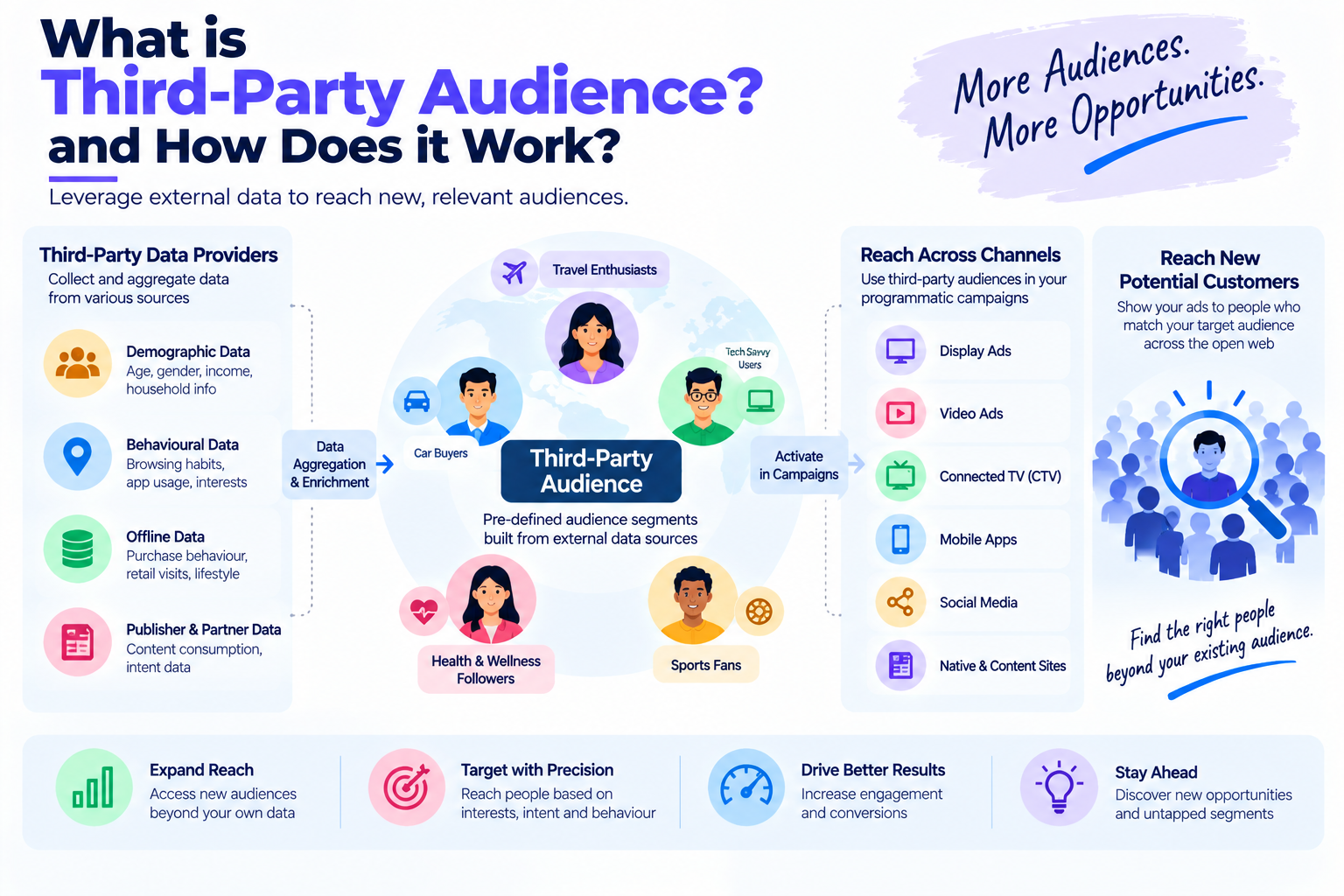
Third-party Audience: What Is It and How It Works

Third-party Audience is a group of users identified using data collected by a company or source other than the business running the marketing campaign.

How does a Third-Party Audience Work?

Let’s understand with the simple example. Suppose a new company sells running shoes. The company has just launched its website, so it does not have much customer data yet.

  1. An external company collects data A third-party data provider collects the information from various sources and uses it to create audience segments to applicable laws and permissions.
  2. The data is organized into audience groups The external provider may create different audience segments. Based on their interest and people who frequently shop online.
  3. The Business Select a Relevant Audience The company is trying to reach people who may have an interest in its products, even though those people may not have previously visited its website.
  4. The Audience Is Used in Marketing The goal is to make the campaign more relevant than simply showing the advertisement to a completely random audience.
  5. People See the Advertisement Potential customers may see advertisements for running shoes while browsing websites, apps or other digital platforms.

Third-Party Audience vs First-Party Audience

The information collected directly from this customer can be used to create first-party audience, subject to appropriate permissions and privacy requirements.

Now the company wants to reach people who have never visited its website. It may use an available third-party audience from an external source, where permitted

So:

  • First Party Audience: Data comes directly from your own interactions with customers or users.
  • Third Party Audience: Audience information comes from an external company or source

Why Do Marketers Use Third Party Audience?

Third Party audience have traditionally been useful for business that want to reach new potential customers.

  • Reaching New users: A business can potentially reach people who have never interacted with its website or app
  • Finding Relevant Audience: External audiences provide may offer segments based on interest, behaviors or other characteristics
  • Supporting Customer Acquisition: A business launching a new product may use external audience segments to help introduce the product to potential customers
  • Expanding Marketing Campaigns: If a company has a relatively small first-party audience, external audience sources may historically have helped expand its reach.
  • Data Quality: The accuracy and freshness of audience information can vary depending on the source.

Conclusion

A third-party audience is essentially an audience sourced from an external company or data source rather than collected directly by the business using it. It has traditionally helped marketers reach new potential customers based on interests, behaviors and other audience factors. It has traditionally helped you reach people you don’t directly know.

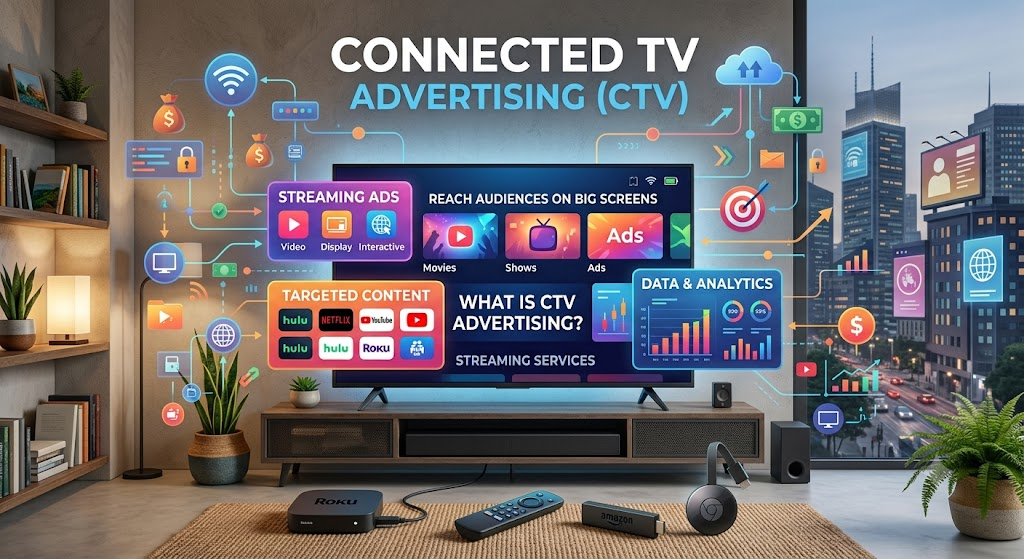
What is Connected TV Advertising

What is Connected TV advertising, and why is everyone using it?

What is Connected TV (CTV):

Connected TV means a television that can connect to the internet and stream content.

If you’re watching something on the internet through your TV Screen, you’re using CTV simple as that.

Simply:

CTV: Watching internet-based video on a TV screen.

CategoryExample
Smart TVsSamsung, LG – TVs with streaming apps built in
Streaming DevicesAmazon Fire Stick, Roku,Apple TV, Google Chromecast
Gaming ConsolePlayStation,Xbox

What Is CTV Advertising?

Showing ads to people while they watch shows on their internet-connected TV.

Those short ads you see when you’re streaming show on Netflix YouTube on your TV or in a free app.

CTV ads can appear:

  • Before a video – Called a pre-roll ad
  • During a video – Called a mid-roll ad
  • After a video – Called a post-roll ad
  • On top of the content – through banners, overlays, or other interactive formats

Some CTV ads are also interactive. For example, an advertisement might show a QR code that you can scan with your phone to visit a website or buy a product.

How Is This Different From Regular TV Ads?

Let’s say there’s a company that sells running shoes. Instead of showing the advertisement to everyone watching TV, the company can use digital advertising technology to find views who match its target audience.

On regular TV: Advertisements are displayed during the program and shown to everyone watching, regardless of their interests or purchasing intent

On CTV: They say, “Show my ad only a people aged 15-30 who watch sports content and live in XXX place”. Now, only the right people see the ad.

Result: The Shoe company spends less money and gets better results.

How Does CTV Advertising Work?

The process usually works like this:

  1. Someone starts watching contentA viewer opens a streaming service and start watching a movie, show, or live sport event.
  2. An advertising opportunity becomes available.The streaming platform has an available advertising space during the content.
  3. Advertisers compete for that space.Advertisers can use automated advertising systems to decide whether they want to show their advertisement to that viewer.
  4. The winning advertisement is shown.The selected advertisement is delivered to the viewer’s TV.
  5. The advertiser measures the result.The advertiser can then see information such as how many people watched the advertisement, how many people watched it completely, and whether people took action forward.

Why Is CTV Advertising Becoming So Popular?

The biggest reason is simple:

People are changing the way they watch TV.

Instead of sitting down at a fixed time to watch a program on cable television, people now prefer streaming.

They can watch what they want, whenever they want.

More viewers are also cancelling traditional cable subscription and moving towards streaming services.

Why Do People Like CTV?

One reason is that CTV fits the way people watch content today.

Viewers don’t always want to follow a fixed TV schedule.

They want to choose:

  • What they watch
  • When they watch it
  • Where they watch it

Streaming gives viewers this flexibility.

CTV advertising also tends to appear on large screens, which can create a more engaging viewing experience than advertisements shown on smaller devices.

Conclusion:

CTV advertising is changing the way business connect with TV viewers. Unlike traditional TV ads, CTV allows advertiser to reach more specific audiences, measure results, and adjust campaigns more easily. As more people choose streaming over traditional cable, CTV is becoming an important part of modern advertising.