Programmatic advertising allows brands to reach large audiences across websites, apps, video platforms, CTV, and other digital channels. However, with millions of ad impressions being processed automatically, it can be difficult to manually check every environment where an ad may appear.
This is where Artificial Intelligence (AI) plays an important role in brand safety.
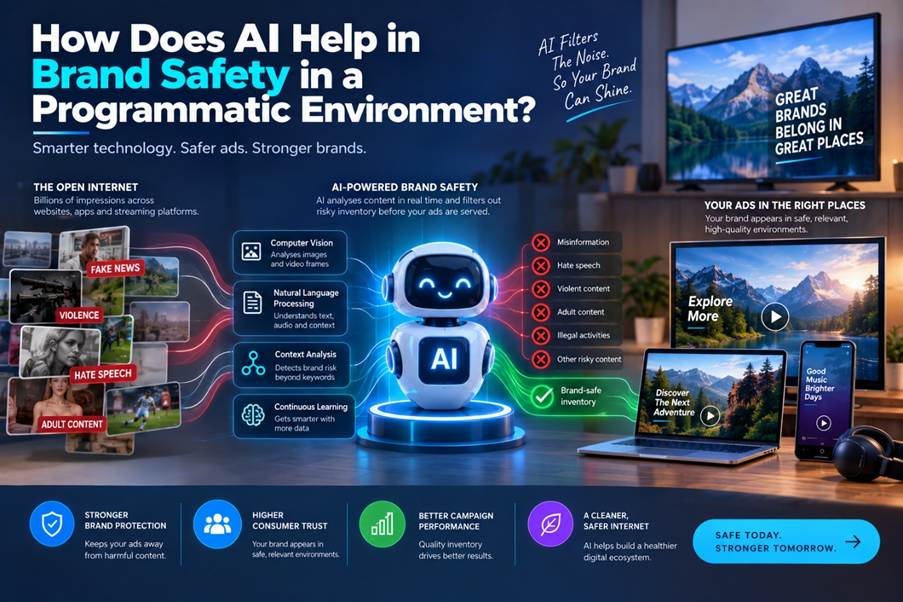
AI can analyse large volumes of content in real time, identify potential risks, and help advertisers decide whether an ad placement is appropriate before the impression is purchased.
How Does AI Support Brand Safety?
In a programmatic environment, AI can analyse different signals associated with an ad opportunity and determine whether the placement meets the advertiser’s brand safety requirements. A simplified process looks like this Content à AI Analysis à Risk Assessment à Brand Safety Decision à Ad Auction
If the environment is considered suitable, the impression can continue through the buying process. If it presents a significant brand safety risk, it can be excluded. Because programmatic auctions happen within milliseconds, AI helps perform these checks at a scale and speed that would not be possible through manual review.
1. Understanding Content Context
One of the biggest advantages of AI is its ability to understand the context of content. Traditional keyword-based systems may block a page simply because it contains a sensitive word. AI-based systems can look at the surrounding content and determine what the topic actually means. For example, an article may contain the word “violence” while reporting on a news event.
That does not necessarily mean the content is promoting violence or is unsuitable for every advertiser. AI can analyse the broader context and make a more informed assessment. This helps advertisers avoid both unsafe placements and unnecessary blocking.
2. Detecting Sensitive Content
AI can identify content related to categories that advertisers may want to avoid, such as
Hate speech
Violence
Adult content
Extremist content
Illegal activities
Misinformation
Sensitive news events
Instead of manually reviewing individual pages, AI can classify content automatically and apply the advertiser’s predefined safety rules. This is particularly useful for campaigns running across a large number of websites and apps.
3. Analysing Images and Video
Brand safety is no longer limited to written content. Advertising campaigns increasingly run across online video, CTV, social platforms, and image-heavy environments. AI can analyse visual and video content to identify potentially unsuitable material. For example, AI-powered systems can examine frames, scenes, objects, and other visual signals to identify content that may not be appropriate for a particular brand. This provides an additional layer of protection beyond analysing page text alone.
4. Detecting Changes in Content
Digital content can change quickly. A website that was considered suitable earlier may later publish sensitive or controversial material. AI can continuously analyse content and identify these changes. This is particularly valuable for,
Breaking news
User-generated content
Live content
Video platforms
Frequently updated websites
Instead of depending only on an old classification, AI can help provide a more current assessment of the environment.
5. Identifying Low-Quality and Risky Environments
AI can also help identify patterns associated with low-quality or potentially risky inventory. It can analyse signals such as
Website and app behaviour
Content quality
Unusual traffic patterns
Publisher characteristics
Historical signals
Other contextual information
This can help advertisers reduce exposure to environments that may create brand or media-quality concerns. However, brand safety and ad fraud or invalid traffic detection are separate areas, even though they can complement each other within a broader advertising quality strategy.
6. Improving Brand Suitability
AI can help advertisers move beyond a simple “safe” or “unsafe” decision. Different brands have different levels of tolerance for sensitive content. A news publisher may be comfortable advertising around certain topics, while a children’s brand may want to avoid them completely. AI can help classify content based on different levels of suitability, allowing advertisers to create rules that better match their brand values and audience. This gives advertisers more control without unnecessarily limiting campaign reach.
Why AI Is Important in Programmatic Advertising
The scale of programmatic advertising makes AI particularly useful. An advertiser may have thousands of websites, apps, videos, and other environments available for a campaign. Reviewing each one manually is not practical. AI can process these environments automatically and help make decisions at the speed required for programmatic buying. Its key advantages include
Speed: Analyses content within the programmatic buying process.
Scale: Can evaluate large volumes of impressions.
Context: Looks beyond individual keywords.
Adaptability: Can respond to changing content.
Precision: Helps reduce unnecessary exclusions.
Is AI Enough for Brand Safety?
AI is a powerful tool, but it should not be the only layer of protection. Advertisers should combine AI with
Clear brand safety guidelines
Blocklists and allowlists
Content and category exclusions
Trusted publishers and inventory sources
Regular campaign monitoring
Human oversight where necessary
AI can make the process faster and more scalable, but the final brand safety strategy should still be based on the advertiser’s specific requirements.
Final Thoughts
AI is making brand safety more intelligent and scalable in programmatic advertising. Instead of relying only on basic keyword blocking, AI can analyse context, text, images, video, and other signals to determine whether an advertising environment is appropriate. This helps advertisers reduce the risk of harmful placements while also avoiding unnecessary restrictions that can limit campaign reach.
As programmatic advertising continues to expand across video, CTV, apps, audio, and other digital environments, AI will become an increasingly important layer in helping brands protect their reputation while reaching the right audiences at scale.
Media planning has become even more data-intensive than ever before. Advertisers are purchasing media inventories on websites, applications, connected television, out-of-home media, and other media formats. Therefore, the task of searching for media inventory is not easy. Media planners must know where and how they can place their ads, what audience they can reach via such placement, and if the inventory source meets their campaign requirements. Here comes the role of the inventory discovery tools. Not all such tools provide enough transparency and usability. The DESSY’s Inventory Discovery Tool is meant to change it.
What Is an Inventory Discovery Tool?
Inventory discovery tool is designed to assist media planners to discover and assess the available inventory prior to running their campaigns.
Depending on the particular tool used, planners will have access to various pieces of information on available inventory like: inventory type, publisher, ad formats, device, geography, demographic information, etc. The main objective here is to allow media planners to make more informed decisions regarding their inventory choice before investing money in a specific campaign.
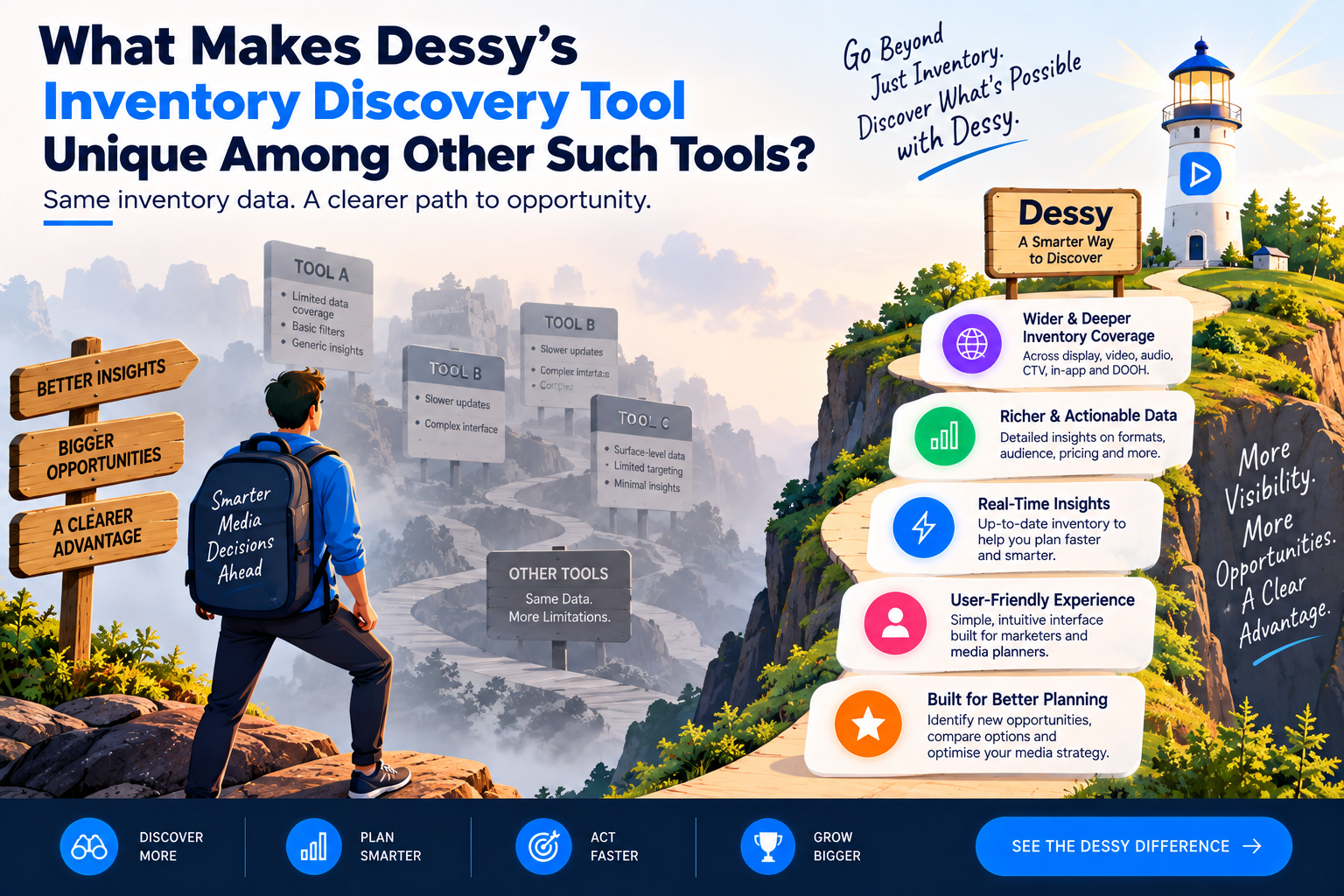
How Is DESSY’s Inventory Discovery Tool Unique?
1. More Structured Inventory Research With the help of DESSY’s Inventory Discovery Tool, one gets access to the structured inventory data, enabling media planners to filter out possible opportunities using certain criteria. In this way, it is not necessary to manually go through all the spreadsheets, websites, and sources while researching inventory.
2. Improved Visibility Before Campaign Activation One of the problems that media planners might face is a lack of visibility with regard to the available inventory before finalizing the campaign plan. The inventory discovery tool allows one to have insight into the potential placements and inventory properties before activation of the campaign. For instance, if a planner is building up a mobile campaign, the media planner would like to know something about the mobile inventory, its formats, the list of the publishers and other properties.
3. Facilitates Comparison of Opportunities for Media Planners Having discovered one suitable source of inventory is good but finding out which among several inventory sources would fit better is what media planning is all about. DESSY’s data would help in this by enabling planners to examine several opportunities for inventory using inventory attributes related to those opportunities. This is done without having to consider every opportunity individually since all necessary data will be available. It will come in handy if a campaign has different requirements such as particular devices, ads, geographies or media environments.
4. Saves Manual Labor Inventory research is known to require much labour on the part of media planners. A planner has to go through different websites, collect data, put it into spreadsheets and then make comparisons. That is time-consuming and may lead to inconsistencies. Incorporation of inventory discovery process into the tool allows for saving some time.
5. Enables Informed Decisions About Media The good discovery tool should be able to answer the following questions:
What inventory exists?
Where will the campaign run?
What type of ads is supported?
What devices/environments are available?
What inventory options fit campaign’s needs?
How can those opportunities be compared?
It is in such a context that the Inventory Discovery Tool by DESSY was designed, to bring those questions into the planning process so that users could make their decisions based on available inventory information.
Importance of Inventory Discovery for Modern Media Planning
Since digital marketing has become more fragmented, media planners have increased options when choosing an inventory. Although multiple choices could be an advantage, such a situation complicates the planning process. With the help of inventory discovery tools, media planners get an opportunity to facilitate the inventory exploration process.
The goal of DESSY’s Inventory Discovery Tool is to make inventory exploration process more manageable for media planners discovering, exploring, comparing, and understanding inventory prior to campaign execution.
Conclusion
Inventory discovery has become an integral component of modern media planning. Whereas many tools can provide information on inventory, the actual value of the tool is its applicability in the context of planning.
DESSY’s Inventory Discovery Tool is developed based on the needs of media planners helping them with structured inventory exploration, increased visibility, comparison, and minimized manual research efforts. In other words, for media planners, inventory research will be not only a search through different information sources but also discovery of opportunities for a campaign and their efficient evaluation.
Digital out-of-home (DOOH) advertising is changing the way brands connect with consumers in the physical world.
Instead of relying only on traditional billboards, advertisers can now use digital screens across locations such as city streets, airports, shopping centers, subway stations, retail stores, and other high-traffic environments.
The growth of programmatic DOOH has made this even more flexible. Advertisers can use programmatic technology to buy digital screen inventory, manage campaigns across multiple locations, and make adjustments based on available data and campaign performance.
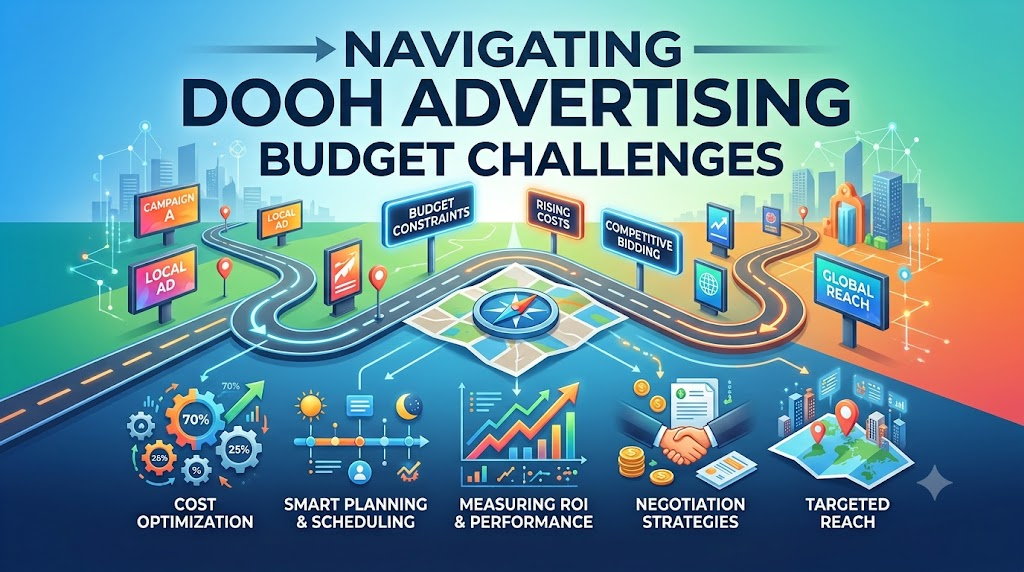
However, budget is still one of the biggest concerns for advertisers considering DOOH.
Premium locations can be expensive, measurement can be more complex than digital channels, and advertisers may not always know which screens will provide the best value.
The good news is that DOOH doesn’t always require a large budget.
By choosing the right locations, pricing model, campaign timing, and buying strategy, advertisers can make their DOOH investment more efficient.
What Factors Affect DOOH Advertising Costs?
There isn’t one fixed price for DOOH advertising. The cost of a campaign can vary significantly depending on several factors, including:
Location
Audience and traffic volume
Screen size and type
Campaign duration
Time of day
Seasonality
Demand for the inventory
Buying method
Understanding these factors can help advertisers make better decisions when planning their DOOH budgets.
Location and Traffic Volume
Location is one of the biggest factors affecting DOOH pricing. Screens in busy city centers, major highways, airports, train stations, and other high-traffic locations generally cost more because they can provide greater exposure.
For example, a large digital billboard in a major city center will typically cost more than a smaller screen inside a suburban retail location. However, the most expensive location isn’t necessarily the best option for every campaign.
A smaller screen in a highly relevant location may deliver better value if it reaches the right audience.
Audience and Demographics
The audience associated with a location can also influence its value. Screens located in business districts, shopping areas, affluent neighborhoods, or other areas with a desirable audience may command higher prices.
Advertisers should therefore look beyond the number of people who may see an advertisement.
The more important question is – Are the people seeing the advertisement relevant to the campaign?
A lower-cost placement that reaches the right audience can sometimes provide better value than an expensive placement with a much larger but less relevant audience.
Screen Size and Type
The type and size of the screen also affect pricing. Large digital billboards and high-impact displays usually cost more than smaller screens in places such as,
Subway stations
Retail stores
Gas stations
Shopping centers
Office buildings
Large-format screens can provide strong visual impact, while smaller screens can offer more targeted exposure in specific environments. The right choice depends on the campaign objective.
Campaign Duration and Timing
How long a campaign runs can also affect its overall cost. Longer campaigns may provide better efficiency depending on the inventory and pricing arrangement.
Timing matters as well. For example, advertising during:
Morning and evening commuting hours
Major sporting events
Holidays
Shopping seasons
Large local events
may cost more because demand for advertising inventory can increase during these periods.
Seasonality
DOOH pricing can also change depending on the time of year. Demand may increase around major shopping periods, holidays, sporting events, festivals, and other important events.
Seasonality can also vary by industry. For example, travel-related advertising may have stronger demand during popular travel periods, while retail advertising may become more competitive during major shopping seasons.
Planning campaigns in advance can help advertisers manage these fluctuations.
DOOH Advertising Pricing Models
Advertisers can purchase DOOH inventory using different pricing models. Three common approaches are:
CPM-based pricing
Flat-rate pricing
Auction-based pricing
The right model depends on the campaign’s goals, budget, inventory, and buying method.
1. CPM-Based Pricing
With CPM (cost per thousand impressions) pricing, advertisers pay based on the number of impressions delivered.
For example, if the CPM is $10, the advertiser pays $10 for every 1,000 impressions.
CPM pricing can make it easier to compare inventory and manage campaigns based on expected exposure.
Pros and Cons of CPM Pricing
Pros
Cons
Costs are connected to the number of impressions delivered.
The number of impressions does not automatically mean the audience is highly relevant.
Can work for both smaller and larger campaigns.
Final costs can vary if impression delivery changes.
Makes it easier to compare different inventory options.
Impression estimates and measurement methods can vary between providers.
Can provide a scalable approach to campaign planning.
A low CPM does not always mean better campaign performance.
2. Flat-Rate Pricing
With flat-rate pricing, an advertiser pays a fixed amount to display an advertisement for a specific period. This approach is common for premium or high-visibility placements where advertisers want guaranteed access to a particular location or screen.
For example, an advertiser may pay a fixed amount to run an advertisement on a specific digital billboard for a defined period.
Pros and Cons of Flat-Rate Pricing
Pros
Cons
Advertisers know the cost before the campaign begins.
The advertiser pays the agreed rate even if actual exposure varies.
Makes budgeting easier.
Premium locations can be expensive.
Useful when a specific screen or location is important to the campaign.
It can be less flexible than impression-based buying.
Straightforward for advertisers who want a fixed placement.
Comparing value across different placements can be more difficult.
3. Auction-Based Pricing
Auction-based pricing allows advertisers to compete for available advertising opportunities through a bidding process. This approach is commonly associated with programmatic DOOH.
Instead of paying a fixed amount for a particular placement, advertisers can bid based on campaign requirements, available inventory, and market demand.
Pros and Cons of Auction-Based Pricing
Pros
Cons
Can provide more flexibility in how budgets are allocated.
Prices can increase when demand is high.
Advertisers can adjust campaigns based on available performance data and inventory.
Final costs can be less predictable.
Can provide access to a wider range of inventory.
Smaller budgets may have difficulty competing for highly sought-after inventory.
Can support more data-driven campaign buying.
Buying and optimization can require a better understanding of programmatic technology.
Which DOOH Pricing Model Is Best?
There isn’t a single pricing model that works for every campaign.
CPM pricing may be suitable when:
You want to manage spending based on impressions.
You need a scalable campaign.
You want to compare inventory using a common cost metric.
Flat-rate pricing may be suitable when:
A particular location is strategically important.
You want predictable upfront costs.
You want guaranteed access to a specific placement.
Auction-based pricing may be suitable when:
You want greater flexibility.
You are using programmatic DOOH.
You want to adjust buying based on demand and available inventory.
The most important thing is to compare value, not just price. A cheaper screen isn’t necessarily better if it reaches fewer relevant people.
How Much Does DOOH Advertising Cost?
DOOH pricing can vary significantly by market, inventory type, location, audience, campaign timing, and buying model. Because of this, there is no universal DOOH rate that applies to every campaign.
CPM can be useful as a benchmark when comparing different inventory options, but advertisers should also consider:
Estimated reach
Audience relevance
Location quality
Screen visibility
Frequency
Campaign duration
Time of day
Inventory availability
Measurement capabilities
For example, a premium digital billboard may have a higher CPM but provide exceptional visibility. A smaller screen in a retail environment may have a lower CPM but reach consumers closer to the point of purchase.
The best investment depends on what the campaign is trying to achieve.
Common Budget Challenges in DOOH Advertising
Although DOOH offers flexibility, advertisers can still face several budget challenges.
1. The Perception That DOOH Is Expensive
Large digital billboards in premium locations can create the impression that DOOH is only suitable for brands with large advertising budgets. That’s not necessarily the case.
DOOH inventory is available across different screen sizes, locations, and price points. Advertisers can start with smaller or more targeted placements and expand the campaign based on results.
The key is to select inventory based on audience relevance and campaign objectives, rather than choosing the most expensive screen available.
2. Measuring ROI Can Be More Complex
Measuring the impact of OOH advertising has traditionally been more difficult than measuring digital channels.
A display or search campaign can often be connected directly to online actions. OOH happens in the physical world, so connecting an advertisement to a specific consumer action can be more challenging.
However, measurement capabilities have improved significantly. Depending on the campaign and available data, advertisers can now evaluate:
Reach
Frequency
Foot traffic
Brand lift
Sales lift
Online activity
Other attribution measures
Advertisers should define their measurement approach before launching the campaign so they know what success looks like.
3. Competition With Other Marketing Channels
Marketing budgets are often divided across many channels. Advertisers may need to decide how much to invest in:
Search
Social
Display
Video
CTV
Audio
OOH
DOOH
Channels with direct conversion tracking can sometimes appear more attractive because their results are easier to measure.
However, DOOH can play an important role in building awareness and reaching audiences in the physical world.
The right approach is to evaluate DOOH based on how it contributes to the overall marketing strategy, rather than expecting every channel to deliver the same type of result.
4. Seasonal Budget Changes
DOOH costs can increase when demand for inventory is high. This can happen around:
Holidays
Major sporting events
Festivals
Large conferences
Shopping seasons
Local events
Advertisers should account for these periods when planning their annual media budgets. Booking early and being flexible about locations and timing can help manage costs.
5. Limited Flexibility in Traditional Buying
Traditional OOH buying can involve fixed placements and longer commitments. Once a static advertisement is installed, changing the creative requires a physical replacement.
Programmatic DOOH provides more flexibility because digital inventory can be managed through technology and, where supported, campaigns can be adjusted based on available data and inventory.
This makes programmatic DOOH particularly useful for advertisers who want to change budgets, timing, locations, or creative during a campaign.
Strategies to Overcome DOOH Budget Constraints
A limited budget doesn’t necessarily mean DOOH is out of reach. Here are some practical ways advertisers can make their budget work harder.
1. Educate Stakeholders
Before asking for more budget, explain what DOOH can actually deliver. Show stakeholders how different screen types and locations provide different levels of reach, relevance, and cost.
Instead of focusing only on premium billboards, demonstrate the range of available inventory. This can make it easier to create a realistic test budget.
2. Focus on Relevant Placements
Don’t choose a location simply because it has a large number of impressions. Consider whether the people passing through that location match your target audience.
For example, a B2B company may benefit more from screens near business districts or conference venues than from a high-traffic location with little relevance to its audience.
Likewise, a retail brand may prioritize screens near stores or shopping areas. Relevance can be more valuable than scale alone.
3. Use Programmatic DOOH to Improve Budget Efficiency
Programmatic DOOH can make campaign management more flexible. Depending on the platform and inventory, advertisers can manage multiple placements through a centralized buying process and adjust campaign parameters based on available data.
This can help reduce manual work and make it easier to manage budgets across different locations.
Programmatic buying can also make it easier to test different placements before committing more budget to the strongest-performing areas.
4. Combine Traditional OOH and DOOH
Advertisers don’t have to choose between traditional OOH and digital OOH. A hybrid strategy can use both. For example:
Traditional OOH: Provide consistent visibility through static billboards.
DOOH: Add dynamic messaging and flexible digital placements.
This approach can help balance reach, creative flexibility, and budget.
5. Use Day-Parting
Day-parting means showing advertisements during specific times of the day. For example, a brand targeting commuters could concentrate its budget around:
Morning commute
Evening commute
A restaurant could focus on lunch and dinner periods. This allows advertisers to prioritize the times when their target audience is most likely to be present.
Rather than running continuously throughout the day, advertisers can focus their budget on the most relevant time periods where the inventory supports this type of scheduling.
6. Negotiate With Media Owners
For direct OOH purchases, advertisers may be able to negotiate pricing with media owners, especially when planning larger or longer campaigns.
Depending on the media owner, advertisers may be able to negotiate:
Volume discounts
Longer-term rates
Added-value placements
Flexible campaign terms
Additional inventory
This approach is particularly useful when an advertiser has a clear long-term plan or intends to purchase multiple placements.
How Agencies Can Pitch DOOH Advertising to Clients
Agencies introducing DOOH to clients should focus on the business value, rather than presenting it simply as another advertising format.
Clients may have questions about cost, measurement, and whether DOOH can deliver meaningful results.
A clear pitch should address these concerns.
1. Explain What Makes DOOH Different
Start by explaining where DOOH can reach consumers. People see OOH advertising while they are:
Commuting
Shopping
Traveling
Working
Attending events
Visiting public spaces
This allows brands to reach consumers in real-world environments that digital advertising alone cannot fully replicate.
2. Address Cost and ROI Questions
Don’t position DOOH as an expensive premium channel. Instead, explain that there are different types of inventory available at different price points.
Show clients how they can start with a focused campaign and expand based on the results. Where measurement is available, use metrics such as:
Reach
Frequency
Brand lift
Foot traffic
Website activity
Sales lift
This gives clients a clearer way to evaluate the investment.
3. Create Campaigns Around Specific Objectives
A DOOH proposal becomes stronger when it solves a specific marketing problem.
For example:
Product launch: Use high-visibility screens in key markets.
Retail campaign: Use screens near stores to reach consumers closer to purchase.
Event promotion: Advertise around venues and transportation hubs.
B2B campaign: Target locations around business districts and industry events.
The campaign should start with the objective and then determine the appropriate locations and inventory.
4. Use Data and Programmatic Technology
Programmatic DOOH can make campaigns more flexible and data-driven. Depending on the platform, advertisers can use available information to select inventory, manage budgets, adjust campaigns, and evaluate performance.
This can make DOOH easier to integrate into broader programmatic strategies.
5. Position DOOH as Part of an Omnichannel Strategy
DOOH works best when it is not treated as an isolated channel. It can complement:
CTV
Display
Video
Mobile
Audio
Social
Search
For example, a brand could use DOOH to build awareness in a particular location and then use digital channels to continue communicating with the audience.
This creates a more connected experience between physical and digital advertising.
6. Start With a Small Test
If a client is unsure about DOOH, a smaller campaign can be a practical starting point. Instead of immediately investing in premium, high-cost screens, consider testing:
A limited geographic area
A smaller number of screens
A specific audience
A short campaign period
A particular time of day
The goal is to learn what works before increasing the investment. This reduces risk and gives the client real campaign data to use when deciding whether to scale.
Programmatic DOOH: Benefits and Scalability
Programmatic DOOH gives advertisers more flexibility in how they use their budgets. Campaigns can potentially run across different environments, from premium digital billboards to smaller screens in retail locations, transportation hubs, and other high-traffic spaces.
This means advertisers don’t have to put their entire budget into one expensive placement.
They can distribute spending across multiple locations and adjust the campaign based on the available inventory and campaign objectives.
Programmatic technology can also make campaign management more efficient by bringing buying, optimization, and reporting into a more centralized workflow.
The result is a DOOH strategy that can start small and scale as advertisers gain confidence in the channel.
Final Thoughts
DOOH advertising doesn’t have to be an expensive, one-size-fits-all investment. The cost depends on factors such as location, audience, screen type, timing, seasonality, inventory demand, and buying model.
The most important thing is to focus on the value of the placement rather than simply looking for the lowest price.
A premium billboard may be the right choice for a major product launch, while a network of smaller screens may be more effective for a targeted local campaign.
Programmatic DOOH adds another layer of flexibility by helping advertisers manage digital screen inventory, adjust campaigns, and integrate OOH into broader digital strategies.
For advertisers working with limited budgets, the best approach is to start with a clear objective, choose relevant locations, test different inventory, measure what matters, and scale what works.
DOOH is no longer just about buying a billboard.
It is becoming a flexible part of the modern media mix, connecting brands with consumers in the real world while bringing more of the data, automation, and flexibility associated with digital advertising.
Digital-Out-of-Home (DOOH) advertising uses digital screens in places such as streets, shopping malls, airports, and transit stations.
With Artificial Intelligence (AI), DOOH campaign can become smarter and more responsive, AI helps advertisers use data to decide when, where, and what message to show.
What is AI in DOOH?
AI in DOOH uses artificial intelligence to make digital outdoors advertising smarter and more effective.
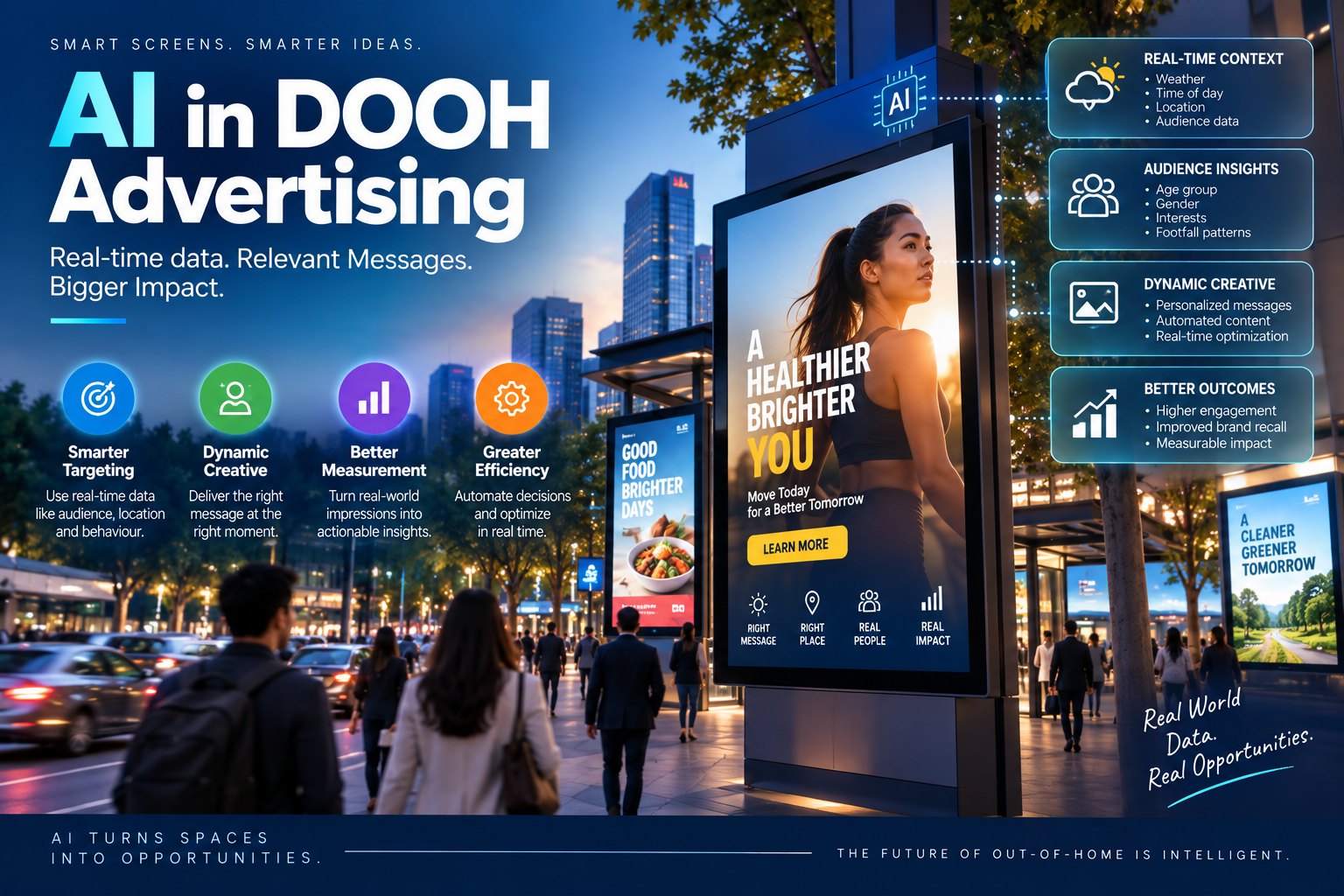
It analyses real – time data such as location, weather, traffic, time, and audience behaviour. AI can automatically change ad content based on the surrounding environment and audience.
It helps advertisers optimize targeting, budget, frequency, and campaign performance. Overall, AI makes DOOH advertising more dynamic, personalized, efficient, and measurable.
How AI Helps DOOH?
AI can analyse different signals and helps advertisers make better campaign decisions.
Key benefits:
Smarter targeting: Reach relevant audience and locations
Real time optimization: Adjust campaign based on changing conditions.
Better creative: show message that much the situation.
Efficient budget: Focus spending on better opportunities.
Faster decisions: Analyse large amounts of data quickly.
Making DOOH More Dynamic
Using contextual data
AI can use signals such as:
Time of day
Locations
Weather
Traffic
Events
Audience patterns
These signals allow advertisers to change their message based on the environment.
AI + Programmatic DOOH
Programmatic DOOH allows advertisers to buy digital screen inventory using technology. AI can help identify relevant opportunities and optimize campaign based on data.
Set a clear goal Decide whether the campaign is focused on awareness, reach.
Use Relevant Data Use reliable data such as location, time, weather, and audience signals.
Keep creative simple DOOH ads are viewed quickly, use clear visuals, short messages, strong branding, and a simple call to action.
Test and optimize Test diffident locations, creative, message, and time periods to understand what works best.
Measure Performance Important matrices are included
Impression
Reach
Frequency
The Future of AI in DOOH
AI is helping DOOH move from static advertising to dynamic, data – driven advertising.
By combining AI, data, programmatic buying, creative, and measurement, advertisers can deliver more relevant messages and make better use of their media budgets.
Final Takeaway
AI makes DOOH smarter, More flexible, and more relevant, helping brands deliver the right message at the right place and time.
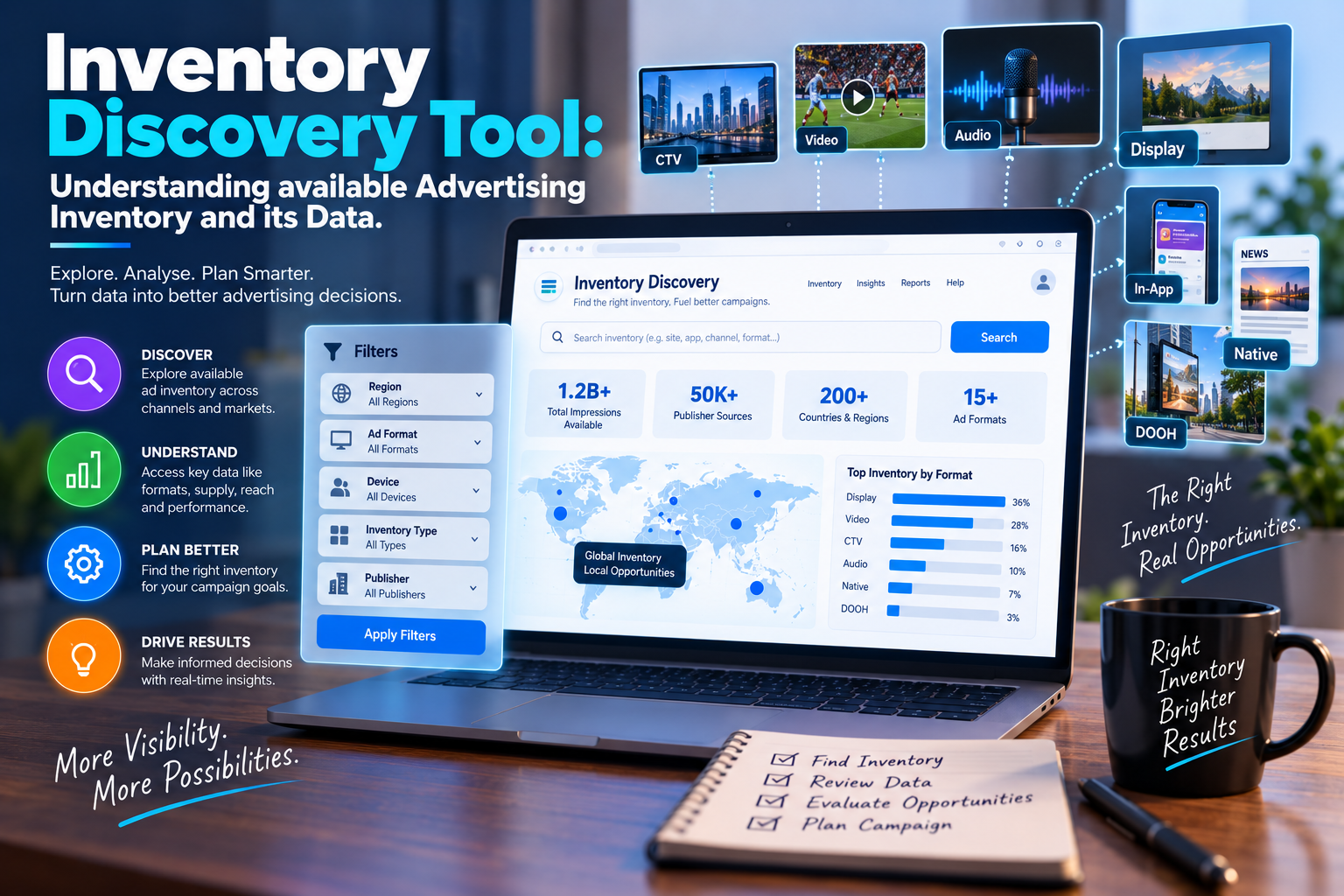
Inventory Discovery Tool: Understanding available Advertising Inventory and its Data
In programmatic advertising, there are a lot of digital advertising inventory that includes web pages, mobile apps, connected TV (CTV), videos, audio and other types of digital platforms that advertisers can work with. Nevertheless, simply having inventory is not enough. Advertisers also need to know how it is possible to reach users through these platforms and what advertising opportunities they may provide.
That is where a tool for inventory discovery comes in handy. It is used by advertisers and media buyers in order to analyse available advertising inventory and get valuable information about it.
What is an Inventory Discovery Tool?
An inventory discovery tool is an advertising system or feature that enables advertisers to search through and analyse the advertising inventory that is currently available. It can be explained simply as a search engine for advertising. Rather than looking through thousands of websites and applications manually, the advertiser is able to use this feature to discover the inventory in accordance with certain criteria.
Depending on the platform used, the inventory discovery tool may enable the user to browse through inventory that is available via the following criteria:
Website or application
Country or location
Device type
Ad format and size
Content Category
Audience
Publisher
Supply Source
Impressions Estimate
The list of criteria will differ depending in the platform, but the core purpose of the tool remains the same.
Why is inventory Discovery Important?
The programmatic ads world has millions of advertising opportunities. Without an inventory discovery tool, it is hard for advertisers to get acquainted with the actual possibilities. Before starting a campaign, an advertiser may want to know
What applications provide this kind of inventory?
What amount of inventory is there?
What locations can be covered?
On which devices and OS is it possible to reach the target audience?
What kind of content is available?
This will help them conduct their media planning process more thoughtfully. Inventory discovery may also allow buyers to learn about some new publishers and sources of supply that they were unaware of before.
What type of Data Could One Obtain from Inventory Discovery?
Publisher inventory Data
Some tools could provide information about the websites where advertising inventory is being offered. The information includes:
Website domain
Name of the mobile app
Publisher’s name
Category of publisher
Supply source
Inventory type
Geographical Information
Geography plays an important role in the planning of campaigns. The discovery of inventory reveals the geographical areas from which inventory comes. Based on the platform, the following geographical data can be obtained:
Country
State/region
City
Market
Language
This makes it easier to find the matching supply to the geographical criteria of the campaign.
Device and Entertainment
Advertising inventory can be found in various devices and environments. The inventory discovery process helps the advertisers learn about the availability of their ads. The following information can be obtained from inventory discovery process:
Desktop
Mobile web
Mobile app
Tablet
Connected TV
Operating system
Browser
Device type
Ad Format and Creative Sizes
It is important for advertisers to know if their creatives can be placed within available inventories. It lists ad formats like:
Display (sizes like: 300×250, 300×600, etc)
Video
Native
Audio
CTV
Rich media
This enables advertisers to know whether their current creatives can be placed, or additional creative sizes will be needed.
Estimated Impression and Inventory Volume
It includes information like
Estimated impressions
Available impressions
Daily inventory volume
Traffic estimates
Historical supply information
It enables buyers to see if there is enough volume. Actual number of impressions may vary depending on such factors as targeting, competition, bidding, budget and frequency.
Content and category details
Common categories in discovery tools are News, sports, entertainment, finance, technology, travel, automotive, gaming, lifestyle. This allows advertisers to identify relevant environments for their campaigns and whether the inventory suits their brans needs.
Audience Details
In addition, some inventory discovery platforms also give the audience details. They can include:
Demographic details
Interests
Affinity categories
Behavioural segments
Reach of the audience
The estimates of the audience do not guarantee that every impression will be delivered to the same audience. This is dependent on the platform, data availability and campaign settings.
Conclusion
Inventory discovery tool assists advertisers in having an enhanced understanding of the programmatic advertising ecosystem. This tool assists advertisers in knowing the source of inventory, what kind of formats and devices the inventory is compatible with. Location and content categories and the total amount of potential inventory that might be available.
With the use of such information prior to initiating a campaign, advertisers will be able to make sound decisions regarding their choices of supply, targeting, creatives and media planning. In the highly complicated programmatic ecosystem, inventory discovery tool offers visibility to convert huge opportunities for advertisements into media planning.
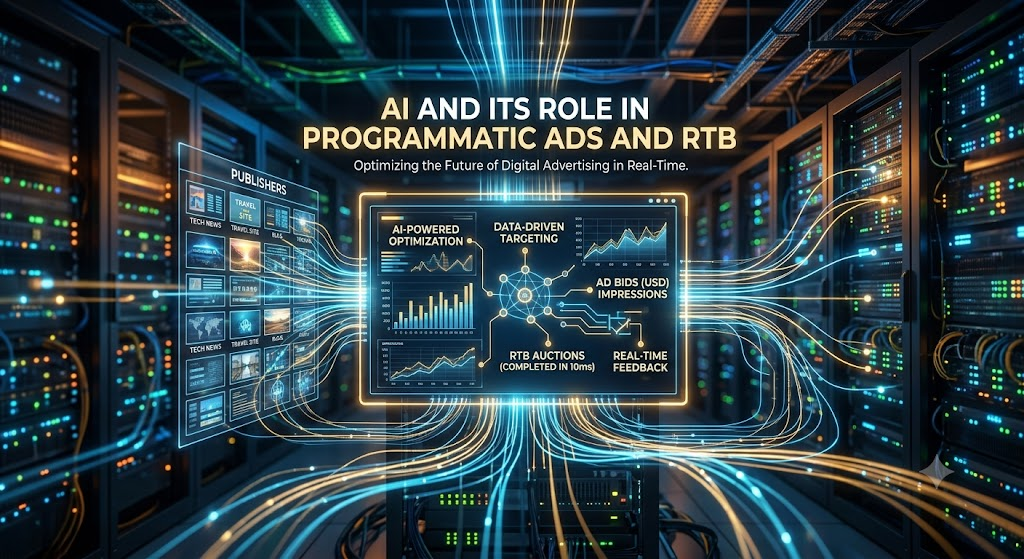
AI and its Role in Programmatic Advertising and RTB
The evolution of programmatic advertising brought a revolution in brand digital advertisement purchases. Now, instead of doing everything manually and trying to choose right places and times for advertising, one may employ different technologies to automatically purchase ad spaces and reach the needed audience. There is one particular aspect of programmatic advertising that is especially important. This is the aspect of real-time bidding (RTB).
So what is RTB? Whenever someone visits the website or opens the application, there is an ad opportunity that triggers an immediate auction. Advertisers use certain algorithms and bidding techniques to determine how much are they ready to pay in order to place their ad on the screen. The whole process occurs in the course of loading the website or application and lasts not longer than a few milliseconds.
As programmatic advertising grows, artificial intelligence starts playing a crucial role in the bidding process as it allows analysing large amounts of data instantly, thus identifying the opportunities and making better bids.
Programmatic Advertising and Real Time Bidding: A Strategic Opportunity
The significance of real-time bidding lies in the ability of the advertiser to understand which impressions they should buy and at what price. Each auction provides the possibility to target a potential consumer. At the same time, the same approach to all auctions can result in the wasted budget, increased costs and inefficient campaign performance.
For instance, one ad impression is more likely to result in the conversion than another. Thus, if the advertiser uses the same approach for both impressions, he or she spends money on consumers who are unlikely to convert. However, AI is capable of handling huge quantities of data and making bidding decisions much faster than any human team. Unlike humans who only react to the changes taking place, AI can use past and current data to anticipate which impressions will perform better.
Such technology can be beneficial to advertisers for optimising budget spending and increasing campaign efficiency.
Why is AI a Game Changer in Programmatic Bidding?
Programmatic buying includes hundreds of thousands or millions of auctions contains different data about the user, the device, the site, location, time, ad placement, etc. The main difference between AI and manual processing of the signals is that AI not only takes into account different criteria but can also predict which of the impressions will help you reach the goals of your campaign – purchases, registrations, visits, etc. AI can respond right away to any changes in the circumstances – if the cost of the inventory goes up or some audiences shoe themselves to be more effective.
Some of the benefits of using AI in programmatic bidding are:
Improved optimisation: AI will be able to recognise which impressions have higher potential for delivering quality outcomes.
Decision making in Real-Time: The AI system will be able to change bids based on user behaviour and competitive activity.
Optimised budget spend: the budget could be allocated more efficiently to the successful target audience, media types or creative formats.
High speed and efficiency: AI is capable of making decisions in real-time, involving thousands of auctions simultaneously.
In case of advertiser, all these advantages mean that there would be lower wastage and improved ROAS and CAC performance.
How AI Helps Improve the Outcomes of Real-Time Bidding
Optimal programmatic bidding is achieved through finding the perfect balance between winning the impression and bidding for it at an affordable price. If the price is too low, then the advertiser loses some of the impressions. If it is too high, then although the advertiser wins the impression, money is wasted.
With the use of AI, it is possible to find the perfect balance due to the analysis of numerous factors before placing the bid. Here are the areas where AI can make difference:
Improved budget utilisation: With the use of AI, advertisers can analyse their previous and current auctions can enter the competition without spending more than necessary.
Better target audiences: AI can analyse factors like user behaviour, device used, geographical location, time of the day and more in order to find more responsive users.
Improved cross channel utilisation: AI can help advertisers control their campaigns on various channels such as display, video, CTV, audio and DOOH, thus optimising the budget on more effective ones.
It becomes possible to use data-based techniques for advertising. In addition to using certain fixed principles or decision-making, it will become possible to learn from campaigns and modify one’s strategy.
Future-Proofing your Bidding Strategy in a Post-Cookie Era
The digital marketing industry has been shifting towards a more privacy-oriented landscape. The use of third-party cookies in such an industry becomes limited or obsolete in some cases, which requires advertisers to develop other strategies to understand the audience and perform effective bidding. AI can assist advertisers in working with alternative sources of information and minimizing reliance on personal identifiers.
One of such strategies is contextual targeting. Advertisers may not target an individual on the basis of their browsing activity but rather analyse the web page they are currently visiting. To put it into practice, the ad for running shoes could be shown in conjunction with an article on fitness or running. Using AI, it is possible to analyse the contents and context of the page to see if it relates to the message of the ad. In addition, AI can assist advertisers in leveraging first party data. First-party data can mean the data that a company itself collects through its websites, customer databases or mobile applications. When such data is combined with machine learning, advertisers are better aware of their audience and bid intelligently.
However, while using audience data, advertisers have to take into account the issues related to privacy and consent. Thus, the development of programmatic ad is likely to depend on striking a proper balance between personalisation, performance and privacy concerns.
Preparing a Future Ready Programmatic Marketing Team
While AI revolutionizes the technology underlying programmatic advertising, people continue to play an important role in the process. Marketing teams should be trained on how the AI functions and how the findings of AI can be leveraged in the process of making the marketing campaign decisions. It means that collaboration of media planner, data analysts, marketers and creatives can become an even more important aspect.
In addition, AI does not have to take the place of human decision-making. On the contrary, AI can assist marketers more efficiently by process large amount of data and spotting patterns that can be hard to detect manually. For example, AI might identify some audience or time slot that shows a better performance. The marketer will be able to leverage that information to make large-scale strategy decisions.
The choice of appropriate technology also matters. Marketers should select appropriate programmatic platforms and data solutions that guarantee transparency, flexibility and insights into performance. Lastly, advertisers must develop a feedback loop. The information gathered through conversations. Engagement and customer lifetime value will help them in their future decision-making process. The more effective use of campaign data, the better understanding of their campaigns advertisers will have.
AI vs Humans: Is AI Taking over Advertising?
Advertising is becoming more advanced due to AI usage, but that doesn’t mean people are no longer needed. AI is great at analysing data, spotting patterns and making quick decisions. People are still needed to think strategically, be creative, understand customers, develop a message and make critical decisions. The most efficient advertising strategy will probably involve both of these things.
Next Era of Programmatic Advertising
With AI in play, programmatic advertising and real-time bidding are getting smarter and faster then ever before. Form choosing what to bid on impressions to selecting target audiences, AI can assist advertisers in optimising their budgets and improving their campaigns. Meanwhile, the industry is shifting towards being more privacy friendly. For this reason, it is becoming important for advertisers to have strategies that work well with less of the usual identifiers but still enable them to deliver effectives advertising. Programmatic advertising of the future will not only be about automated ad buying. It will be about making smart use of technology combined with human expertise.
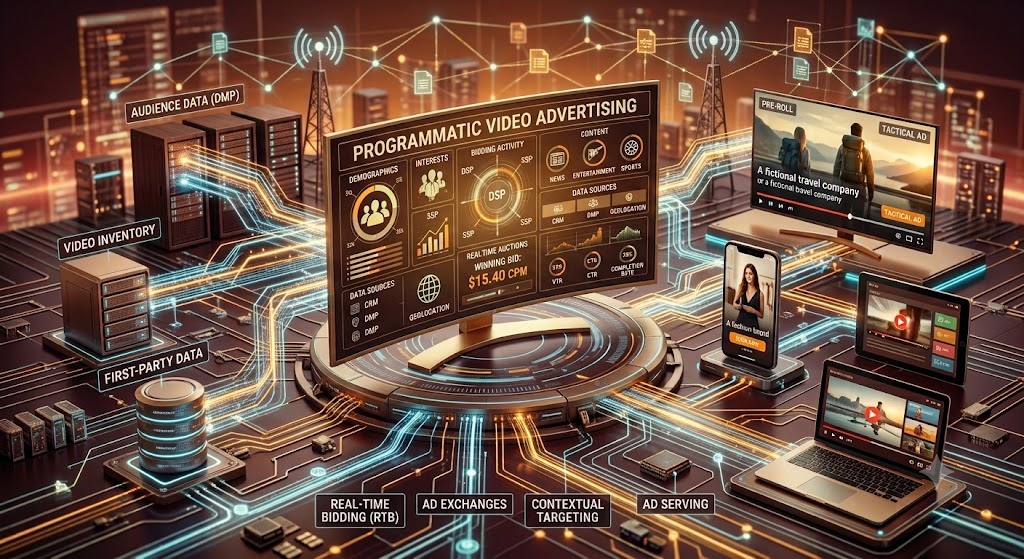
Programmatic Video Advertising uses technology and data to automatically find the right audience and show them the right video advertisement. It is becoming an important part of digital advertising because people spend a large amount of time watching videos on smartphones, websites, streaming services, apps and other digital platforms.
How It Is Different from Traditional Advertising?
In traditional advertising, a company might contact a publisher or media company and purchase advertising space directly. In programmatic advertising automatically evaluates available advertising opportunities and decides where an advertisement should appear based on the advertiser goal and targeting settings. Video is powerful because people can see and hear a message instead of simply reading it.
Benefits of Programmatic Video Advertising
Reach the Right Audience. One of the biggest advantages is targeting Businesses do not necessarily want to advertise to everyone. They want to reach people who are more likely to become customers. Depending on factors such as:
Age group
Location
Interests
Online behavior
Device
Content preferences
Save Time Traditional advertising can involve a lot of manual work Advertisers may need to communicate with different publishers, negotiate advertising space, arrange campaigns, and manage placements. In programmatic, Advertiser can set their campaigns goals, budget, audience, and other requirements through a platform, and the technology handles much of the buying process.
Make Better Use of Your Budget Programmatic advertising can help advertisers control how much they spend. System can use that budget according to the campaign settings and available advertising opportunity.
Measure Results Another important advantage is measurement. They can look the things such as:
How many people saw the advertisement
How many people watched the video
How many watched the entire video
How many clicked on the advertisement
How many people completed the desired actions
This information helps marketers understand what is working and what needs to be improved
Use the Same Video in Different Places A company may create one video and use it across several advertising channels. For Example, the same video could potentially be adapted for:
Websites/ applications
Connected TV
Online video platforms
Digital billboards
Display advertising
Types of Programmatic Video Ads
In-stream Video Ads These are the video ads you commonly see before, during, and after another video.
Advertisements that appear before a video are called pre-roll ad
Advertisements that appear during a video are called Mid-roll ad
Advertisements that appear after a video are called post-roll ad
Native ads Native ads are designed to fit naturally into the website or app where they appear. Instead of looking like a large, separate advertisement, they are designed to match the surrounding content.
Interstitial ads Interstitial ads are usually full-screen advertisements.
Outstream Video Ads Video advertisements that play automatically in non-video environment, such as within written articles, social media feeds or standard banner spaces.
Conclusion
Programmatic video advertising helps businesses connect with the right audience at the right time with the right message, making it a valuable part of a modern advertising strategy.
Video advertising is considered to be one of the most efficient ways of communication between brands and their target audience. Contrary to banners, which contain no visuals, sound, story telling and any other way to attract customer’s attention, explain his product, make him familiar with it and engage emotionally.
Through programmatic advertising, a brand can reach its potential client through video ads, displayed on multiple sites, applications or even other platforms. According to the type of video ad, a customer may come across the brand’s commercial before he watches the online video clip pr when he is reading an article.
There are three main types of video ads: In-stream, Interstitial & Native Outstream. In-stream video ads are shown to users before, during and after video clips, selected by them. Interstitial video ads cover the whole screen, especially mobile and appear between two clips or at some transition point. Native outstream video ads appear along with the written content, between the paragrah’s of an article or a blog. The video starts playing when it becomes visible and stops if the user scrolls down from it. Since native outstream are ads are meant to be natural to the page, it will be possible to deliver advertisements in a less disruptive way.
What is Native Outstream Video?
Native outstream video refers to a type of video ads that appear in the content of the page and not within a video. The term “native” refers to the fact that this type of ad is naturally part of the content. Unlike other video ads, native outstream video ads do not appear as disruptive ads since users are watching something else. The “outstream” refers to the fact that this type of video does not require pre-existing videos on the page. Rather, it appears in between text content.
Generally, the video plays automatically once the ad is in the viewing range of the user and pauses once the user scrolls past it.
Outstream vs. In-stream video Ads: What’s the difference?
The most straightforward way of distinguishing between these types of ads is by asking where the ad is placed. The in-stream video ad plays withing video content. If while watching YouTube, for instance, an advertisement pops up before or along with the video, this is the in-stream video advertisement.
Outstream video ads do not require video context to play. These ads can play within an article or any other content in the webpage. The video will start playing once it comes into view and pauses once it is out of the view.
To put it simply:
In-stream video ad: The ad plays withing the video.
Outstream video ad: The ad plays independently within the webpage.
Benefits of Native Outstream Video Ad
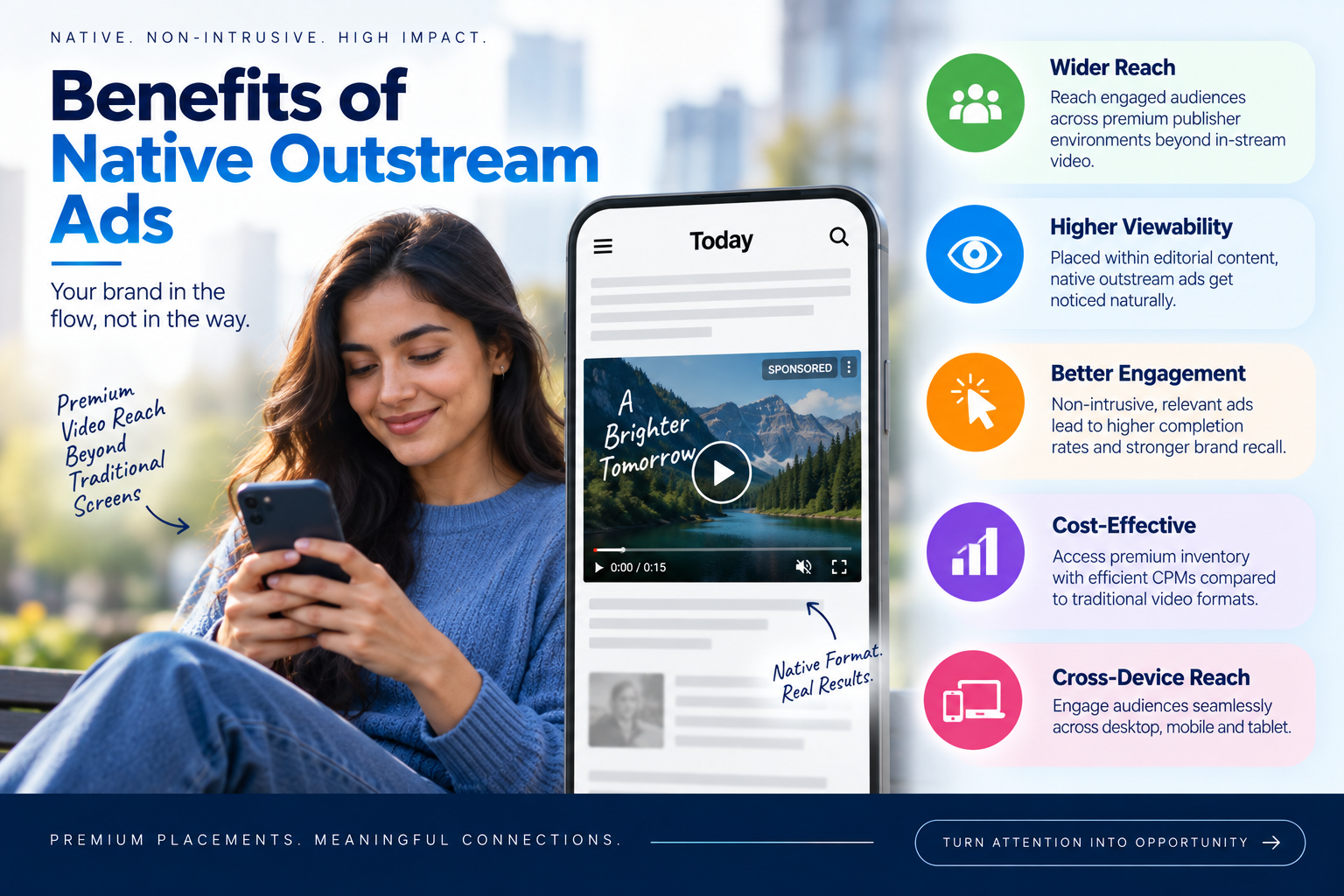
There are many benefits of using Native Outstream video ads. Let us mention five of them.
1. Native Outstream Video Plays for viewability
One of the major benefits of native outstream video is that it is developed to play only when the ad is in view of the user. Outstream video will usually begin playing once the user has scrolled to the ad and will pause the user scrolls away from it.
The reason it is beneficial is that advertiser wants the video to be viewed. Outstream video addresses the issue of viewability by playing when the ad becomes visible. This could provide advertisers with valuable information on how users interact with their advertisements by watching videos.
2. Native Outstream May Provide Better Quality Video Completion
Quality of video completions is another crucial aspect. The video completion refers to the user watching a video until its end. In some traditional video advertisement formats, the video might still be playing even if the user is not watching it anymore.
Unlike in case of the native outstream, the video will most likely be paused whenever it goes out of out of view. Thus the video will be playing only for the time that the ad is in the user’s view. Therefore the video completion may better demonstrate whether the user watched the video from start to finish.
3. Access to inventory
The first benefit of native outstream is the ability for the advertiser to reach Tier 1 publishers, which are usually considered quality websites. Premium websites might not provide enough traditional video inventory to allow the campaign to be run at a needed scale through pre-roll or in-stream placement of the video ad.
That is why native outstream gives an additional option. As native outstream ads are being embedded into editorial content, the publisher can provide inventory even if there is no traditional video on the page. It allows advertisers to gain success to a larger pool of premium inventory.
4. Suits Longer Video Content
Most advertisers are acquainted with short form video ads, for example, 15 second and 30 second advertisements. However, nowadays brands are producing longer videos meant to teach, entertain or deliver an in-depth story.
Longer videos are not the best fit for traditional ore-roll advertising as the user would have to endure watching a long commercial in order to see the content he or she really wants to see. One alternative would be to use native outstream. Because video appears within the actual content, advertisers can utilize the format for distribution of longer branded content.
5. Native outstream can aid performance
At the end of the day, advertisers want their campaigns to be effective. The performance driven nature of viewability, user driven control, and availability of a lot of inventory. The video will play when in view. Thus the advertisers can find out whether the users were exposed to their videos.
Also native outstream may be useful format for advertisers, who measure metrics such as Cost Per Completed View (CPCV). CPCV informs the advertisers of the price they pay for each completed video view.
Conclusion
Native outstream video offers advertisers the possibility of using video content to engage audiences through use of different channel from instream video advertising. The capacity of native outstream video to play when the ad is in view, operate on editorial content, and incorporate long videos provides a number of benefits to programmatic advertising campaigns.
Native outstream video can be used by advertisers who seek to go beyond in-stream and pre roll video ads and increase their reach with the help of videos. The right metrics should be tracked, and it is crucial to understand how users behave and measure results to see whether they align with the goals of the campaign.
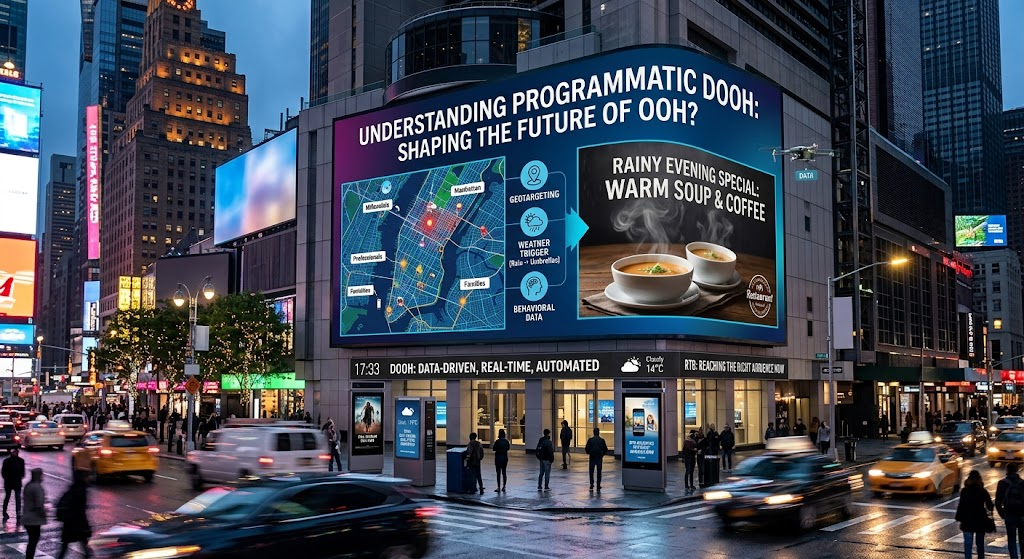
Understanding Programmatic DOOH: How is it Shaping the Future of OOH?
Digital Out-Of-Home (DOOH) Advertising
Programmatic digital out of home (DOOH) brings traditional outdoor advertising into the digital world. It uses software, data, and automation into the digital billboards and screen in public places.
As technology has developed, outdoor advertising has changed too. Traditional printed billboards have been joined by digital screens, creating what we now call digital out of home advertising or DOOH.
What is Programmatic DOOH?
Programmatic DOOH is the automated buying and deliver of digital outdoor advertising. In traditional OOH advertising, an advertiser usually works directly with a media owner to book a billboard or other physical advertising space. The advertiser chooses allocation, agrees on a schedule and price and then the creative is produced and installed.
Programmatic DOOH changes this process by using advertising technology to automate much of the busying and campaign management. Advertisers can use programmatic platforms such as a demand side platform, to choose digital screens, locations, audiences, schedules & budgets. They can also use data such as location, time of day, weather, traffic or nearby events to decide when an ad should appear.
The main idea is simple: instead od showing the same advertisement all the time, programmatic DOOH allows brands to make outdoor advertising more relevant and flexible.
What are the differences between traditional OOH, DOOH and Programmatic DOOH?
Traditional OOH & DOOH both help brands reach people in public spaces. The biggest difference is how the advertising is delivered and managed. Traditional OOH normally uses printed formats such as posters, billboards and building wraps. Once the creative is installed, changing it usually requires producing and installing a new physical advertisement.
DOOH uses digital screens, so advertisers can show videos, animations, multiple creatives and changing messages without physically replacing the advertisement. Programmatic DOOH adds another layer: automation and data. Advertiser can use software to decide which screens to use, when ads should run and what type of audience or situation they want to reach.
Feature
Traditional OOH
Programmatic DOOH
Creative
Printed posters, billboards, wraps
Digital, dynamic and video
Buying method
Mostly manual and booked in advanced
Automated, real-time or guaranteed deals
Targeting
Mainly based on location and estimated traffic
Location, audience and contextual signals
Speed
Slower because production and installation are required
Faster because creatives can be uploaded digitally
Optimization
Limited once the ad is installed
Campaigns can be adjusted while running
Measurement
Mainly estimated impressions
Reach, visits, lift and other performance measures
Flexibility
Lower
Higher
Benefits of Programmatic DOOH
Programmatic DOOH combines the broad reach of outdoor advertising with the flexibility of digital advertising. Some of the biggest advantages are below:
More Precise Targeting
Traditional billboards are mainly selected based on where they are located. Programmatic DOOH allows advertisers to go further. Advertisers can use information about audiences, locations, movement patterns and context to decide where and when and ad should appear.
For example, a sports brand could target areas where fitness-focused audiences are likely to be present. A travel company could focus on airports and other locations where travellers spend time. Advertisers can also combine targeting with signals such as weather and time of the day to make their messages more relevant.
Greater Campaign Flexibility
One of the biggest advantages of digital advertising is that campaigns can be changed quickly. Programmatic DOOH brings these advantages to outdoor advertising. Advertisers can launch, pause, change or adjust campaigns without physically replacing a billboard. For example, a clothing brand could promote rain jackets when the weather changes or increase advertising during a particular shopping period. This flexibility is especially useful for brands running campaigns across several cities or markets.
High Visibility and Consumer Impact
One major advantage of outdoor advertising is visibility. Unlike online ads, DOOH ads cannot simply be locked with an ad blocker. Digital screens are also much larger than most online advertising formats, making then difficult to overlook. Because DOOH appears in real-world environments, it can create strong brand awareness while people are travelling, shopping, commuting or spending time at public venues.
Measurable Foot Traffic and Sales Impact
Outdoor advertising is not limited to awareness. It can also encourage people to visit physical locations. This type of measurement is often called football attribution. It helps advertisers understand whether their outdoor campaigns are actually influencing real-world behaviour, such as store visits, restaurant visits, or attendance at an event.
Privacy Friendly Precision
Programmatic DOOH can provide relevant targeting without needing to identify individual people in the same way that some digital advertising channels do, instead, campaigns can often reply on information such as location, context, audience patterns, traffic, weather and time of the day. This makes DOOH an interesting option for advertisers looking for useful targeting while keeping privacy considerations in mind.
Expanded Inventory Across New Environments
Digital screens are no longer limited to large roadside billboards. Today. Advertisers can find DOOH screen in many different environments like shopping malls, airports, gyms, gas stations, transit locations, etc. This gives advertisers more opportunity to reach consumers at different points during their day.
Interactive Engagement
DOOH can also encourage people to action. An advertisement can include QR code that send the viewers to a website, product page, app or special offer. Touchscreens and other interactive formats can also turn a simple outdoor advertisement into a more engaging experience.
Better Budget Allocation
Programmatic buying can help advertisers make better use of their budgets. Instead of committing all their money to fixed placements, advertisers can adjust spending based in campaign performance and availability. If certain screens, locations or environments are performing better, advertisers can put more of their budget toward those opportunities. This can help reduce wasted spend and improve campaign efficiency.
Flexible Buying Options
Programmatic DOOH can give advertisers access to multiple screen networks and media owners though one platform. This can make the buying process easier because advertisers do not necessarily have to negotiate separately with every media owner. At the same time, programmatic DOOH can support different types of deals, including automated buying and guaranteed inventory.
Improved Measurements and Insights
Traditionally, one of the more challenging aspects of outdoor advertising was measurement. That’s now changing, thanks to programmatic DOOH providing advertisers with advanced reporting capabilities. Depending on the platform and partners involved, advertisers can analyse metrics including reach, frequency, impressions, foot traffic, conversions and brand lift.
Enhanced Omnichannel Capabilities
There’s no reason why programmatic DOOH needs to be utilized as a standalone medium. Instead, DOOH can be complemented by other digital advertising formats such as display, native, video, CTV and audio.
One might view a DOOH ad while traveling around a city and later receive a follow-up ad on another device or channel. This creates a seamless customer experience allowing DOOH to play a role in omnichannel marketing strategies,
How Programmatic DOOH Works?
To get the concept of programmatic DOOH, one should start with the technology behind it. Advertisers use programmatic platforms to identify available digital screens, set campaign parameters and send targeted advertising campaigns automatically.
The Role of DSPs in Programmatic DOOH
Demand-side Platform (DSP) is one of the key platforms that advertisers use for buying programmatic advertising. If you are not familiar with programmatic advertising, then you may regard the DSP as a single platform for managing media buying campaigns.
With the help of DSP advertisers can:
Set campaign objectives
Select locations
Choose types of screens
Set budgets
Upload creatives
Set targeting criteria
Select campaign dates and times
Manage campaign performance
DSPs connect the supply side of the advertising ecosystem that includes such entities as SSPs, ad exchanges, media owners and other supply partners. Modern DSPs make the process of discovering the available DOH inventory much easier than before. Advertisers can use maps and filters to browse screens by different attributes such as location, type of venue, media owner, etc.
Programmatic DOOH Formats
Programmatic DOOH can take various screen types. Popular formats are:
Large formats: Large outdoor digital boards placed along highways, urban centres, airports and other highly trafficked locations. Mostly intended to serve as a mass awareness tool.
Place based: Screens located either inside or near places like gym, shopping malls, gas stations, sports stadiums and even medical offices. These allow advertisers to target people in specific places.
Transit: Screens located in airports, subway stations, bus shelters, taxis and other fomrs of transit locations. Effective for targeting commuters and travellers.
Point of purchase: Screens located near retail locations, checkouts, store entrances and products displays. Influential in impacting people during the buying process.
High Impact: Extremely large screens meant to create brand experience through their size.
Targeting in Programmatic DOOH
One of the reasons why advertisers get excited about programmatic DOOH is targeting. Rather than simply selecting an ad placement and relying on chance, advertisers may consider various signals for reaching a proper time.
Some targeting techniques include the following:
Location targeting: Advertisers can select countries, regions, cities or even postcodes where their ads should show up.
Contextual Targeting: Advertisers can select certain environments such as airports, gyms, shopping centres, gas stations depending in where their target audience is most likely to be located.
Dynamic Targeting: Ads can be changed dynamically depending on weather, time of the day, sports results, traffic or local events.
Media owner targeting: advertisers can select certain media owners or screen networks.
Audience Targeting: Using audience and mobility data, advertisers may reach certain screens that are more likely to serve a proper audience.
Retargeting: Individuals who were exposed to the DOOH advertising campaign might also be targeted via other digital platforms such as display, CTV or audio.
How is Programmatic DOOH measured?
While with digital advertising one can measure clicks and conversions immediately, when it comes to outdoor advertising, it can be hard to make connections between seeing a billboard and entering the store later. However, new measurement solutions help to solve the problem.
Footfall Attribution
Footfall Attribution tries to establish a correlation between people who saw a DOOH ad and their visit to a physical location afterwards. For instance, if a person saw an ad in a certain place near a shopping centre and visited the store later, then this connection can be established by the measurement partner through location-based signals.
Brand lift research
Brand lift studies help determine whether a marketing effort has resulted in changes In consumers’ awareness, consideration, recall and intent to buy. Usually, in such a research, it is compared whether those who saw the ad have different attitudes towards a brand compared to a similar audience that did not see the ad.
Sales Lift
The sales lift research goes even further and helps understand whether there is a connection between the ad exposure and purchases made. Thus, sales lift helps determine whether DOOH marketing campaign has helped increase sales and not just views or awareness.
The Future of DOOH Advertising Is Programmatic
OOH advertising has always been highly effective due to the fact that brands have had the opportunity to address a large audience in the physical world through this medium. DOOH advertising has enhanced the format even more by substituting static ads with screens.
Programmatic DOOH technology goes even further than that. With the use of automation, data, targeting, dynamic creative and measurement, programmatic DOOH provides advertisers with greater level of control over their outdoor campaigns’ planning and delivery. It is also possible to integrate DOOH into other digital advertising channels like display, video, audio and CTV advertising.
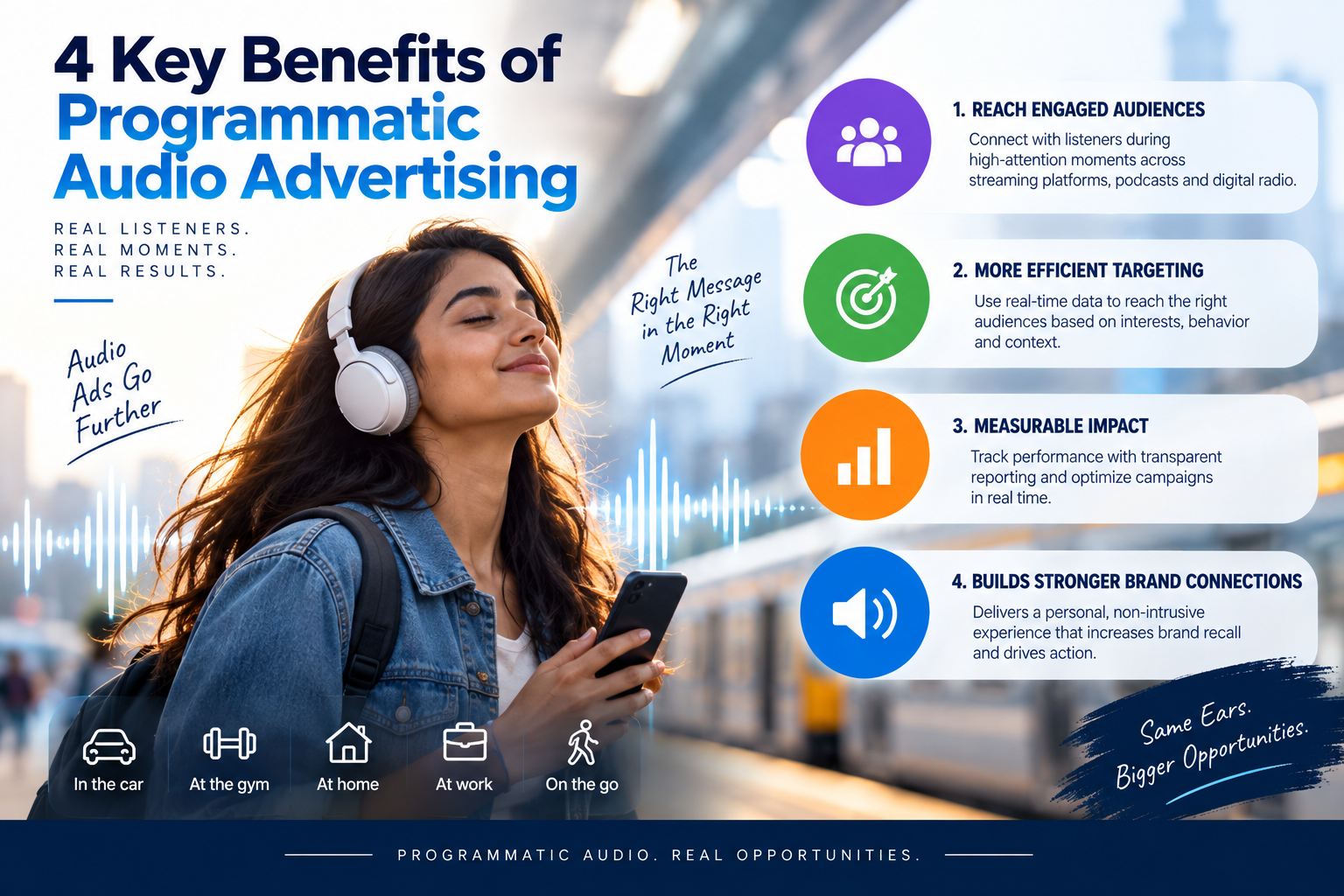
Audio has become an essential medium for digital content consumption. Music streaming, podcasts, internet radio, audiobooks, and other audio platforms give people opportunities to listen throughout the day.
Unlike display, video, or social advertising, audio does not require the user to look at a screen. People listen while commuting, exercising, cooking, working, or relaxing.
Programmatic audio advertising allows advertisers to automatically purchase audio ad placements using technology-driven bidding and targeting. Instead of manually selecting individual placements, advertisers use audience, contextual, geographic, device, and behavioural signals to reach listeners at scale.
1. Audio Creates a Strong Emotional Connection
Sound has a unique ability to influence how people feel. A familiar voice, piece of music, sound effect, or intentional tone can evoke an emotional response within seconds. This gives audio advertising an advantage when making a brand feel personal and memorable.
For example, a travel company can use calming music and an inspiring voiceover to create a feeling of relaxation and adventure. Similarly, a food delivery brand can use energetic sound design and conversational delivery to generate excitement.
A well-crafted audio ad coordinates five foundational elements:
Voice: The persona and pacing representing the brand.
Music: The melodic backing track setting the mood.
Sound Effects: Environmental cues that build immersive context.
Tone & Emotion: The feeling conveyed to the listener.
Brand Messaging: The core proposition and call to action.
Why this matters: Visual banners are frequently scrolled past or ignored, but a distinctive voice, sound signature, or sonic logo stays with the listener long after the audio stream finishes.
2. Reaching Audiences During Screen-Free Moments
Digital audio does not require visual attention. Listeners engage with audio in scenarios where looking at a screen is impossible or unsafe:
During morning and evening commutes
While driving
During gym workouts and runs
While cooking or preparing meals
During household chores
While working, designing, or studying
During leisure and relaxation time
These screen-free moments allow advertisers to maintain continuity outside conventional visual environments. Someone jogging cannot browse social feeds, but they remain engaged with a podcast or streaming playlist.
Complementing Existing Channels
Programmatic audio works alongside your multi-channel digital mix:
Display Advertising: Reinforces brand recall through visual impressions.
Video Advertising: Delivers high-impact initial product showcases.
Connected TV (CTV): Anchors living room awareness on big screens.
Modern programmatic audio platforms leverage rich data signals to reach relevant audiences without relying on visual real estate:
Demographics: Age, gender, and household metrics.
Geographic Location: Country, region, city, zip code, and radial geofencing.
Device Profiles: Mobile handsets, smart speakers, desktop apps, and in-car systems.
Interests & Affinities: Content categories, genres, and recreational preferences.
Contextual Alignment: Matching ad copy to specific genres (e.g., placing finance ads next to business podcasts, or athletic apparel next to workout playlists).
A recognizable voice talent, a tailored sonic signature, or recurring musical motifs enable listeners to identify a company instantly—even with their phone tucked away in a pocket.
Through audio storytelling, a 30-second spot can introduce a friction point, deliver an emotional hook, and resolve it with the brand’s solution. Voice delivery can shape brand perception across various dimensions:
Friendly and approachable
Authoritative and professional
Energetic and urgent
Inspirational and narrative-driven
Lighthearted and humorous
Final Thoughts
Programmatic audio provides access to consumers when they are listening rather than looking. The four foundational pillars are:
Emotional Engagement: Sound and voice cultivate deeper psychological resonance.
Screen-Free Reach: Brands maintain presence in moments visual media cannot penetrate.
Flexible Targeting: Real-time data ensures placement alongside relevant content and audiences.
Sonic Identity: Recurring audio motifs build durable brand recall.
Audio delivers the highest return when creative assets are written and produced specifically for listening rather than retrofitted from existing video voice tracks.