Why You Need Video Ads in Your Advertising Strategy

Today, Videos are everywhere. We watch them on YouTube, Instagram, Facebook, website, mobile apps and even while shopping online. Because people naturally enjoy watching and listening to stories, video ads can be a powerful way for businesses to introduce their products and connect with customers.

What Are Video Ads?

Video ads are advertisement that use moving images, text, sound, animations or a combination of these to promote a product, service or brand.

Why Are Video Ads Important?

Video can combine picture, movements, words music, and storytelling in one advertisement. This makes them more interesting and easier to remember. A good video ad can help your business:

  • Get people attention
  • Make your brand memorable
  • Explain a product or service quickly
  • Build trust with potential customers
  • Encourage people to visit your website
  • Generate leads and sales
  • Connect with customers emotionally

How to Create a Great Video Ad.

Creating a good video does not necessarily mean spending a lot of money. Here are some important things to remember.

  1. Keep Your Video Short People have limited attention spans, especially when they are scrolling through social media. A long advertisement may cause people to skip or ignore it. Short videos are especially useful when you want to quickly introduce a product, highlight a benefit or encourage someone to take action.
  2. Grab attention in the First Few Seconds. The beginning of your video extremely important. People can scroll away from your advertisement within seconds. So do not spend the first 5-10 mins slowly introducing your company
  3. Use Captions Many people watch videos with the sound turned off, especially when they are in public places or scrolling through social media so closed captions and on-screen text are important.
  4. Do not forget the Call to Action A video advertisement should usually tell viewers what to do next. This is called Call to Action (CTA) Examples:
    • Shop Now
    • Book Now
    • Order Today
    • Learn More
    • Sign UP

What If You Do not have a Video

You do not always need professional video footage to create a video advertisement. If you already have images, product photos, banners or graphics you can turn those assets into a video.

Establish the Right Goal for your Video Ad

Before creating a video ad, you need to decide what you want the advertisement to achieve Your goal could be:

  • Making more people aware of your brand
  • Introducing a new product
  • Getting people to visit your website
  • Getting more app downloads
  • Increasing product sale
  • Encouraging people to sign up for a service

Conclusion

Video advertising is a powerful way for businesses to connect with their audience build brand awareness and increase customer engagement. Unlike traditional ads, video can combine svisuals, text, sound and storytelling to communicate a message quickly and effective.

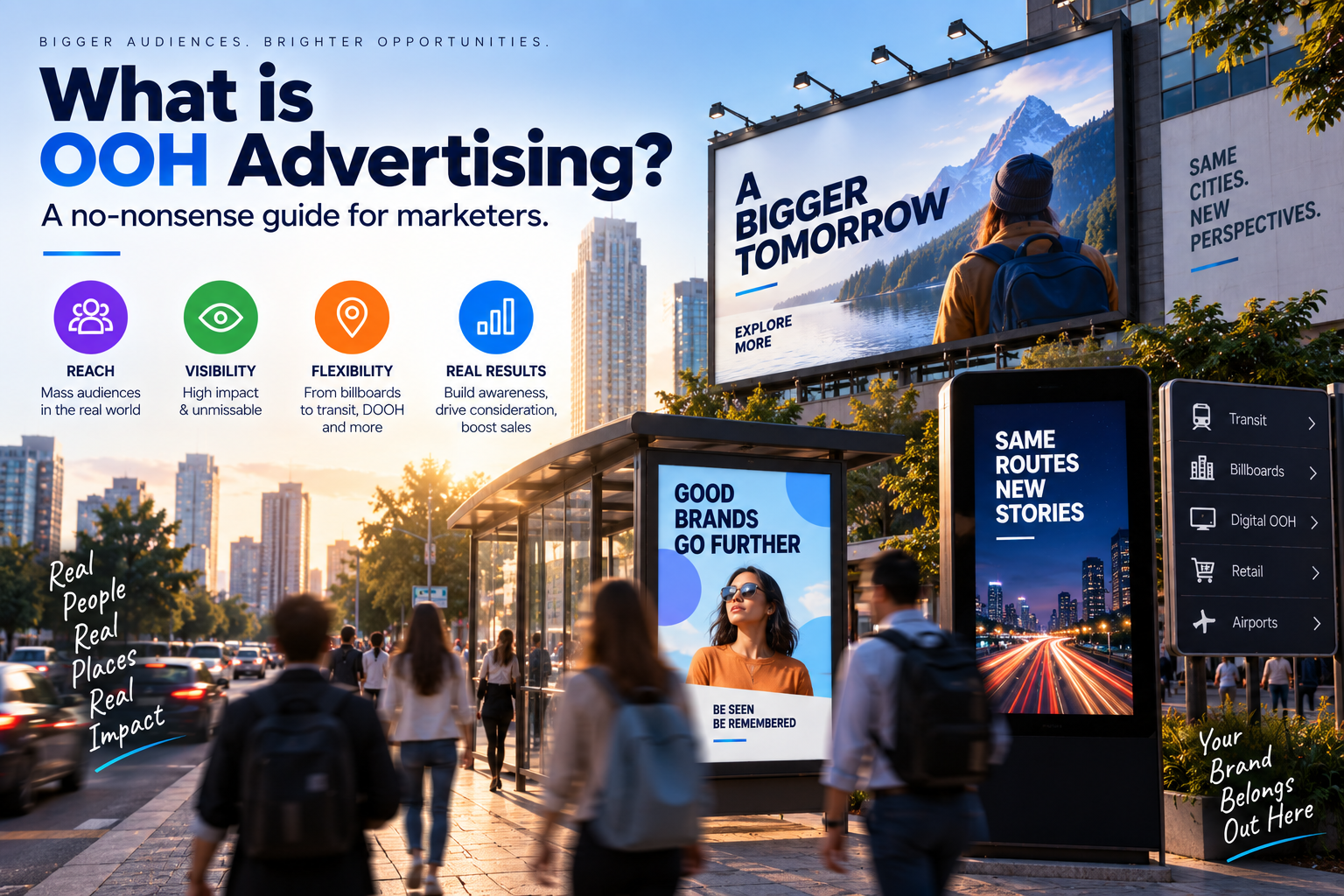
What is OOH advertising? A no-nonsense guide for marketers

What Is Out-of-Home Advertising?

Out-of-home (OOH) advertising is advertising that reaches people while they are outside their homes.

Think about the advertisements you see while traveling to work, walking through a shopping area, waiting for public transportation, or visiting a mall. Billboards, bus shelter posters, digital screens, and transit advertisements are all examples of OOH advertising.

OOH has been around for a long time. Traditional advertising formats such as posters, painted signs, and billboards have been used to communicate messages to people in public spaces for generations. What has changed is the technology behind it.

Today, OOH is no longer limited to static posters and billboards. Digital out-of-home (DOOH) uses digital screens that can display videos, animations, and changing messages.

Programmatic technology has taken this one step further by allowing advertisers to buy and manage digital OOH inventory using automated advertising platforms.

This means OOH can now be part of a broader digital and omnichannel advertising strategy.

Traditional OOH vs. DOOH Advertising

OOH is the broader category of advertising that reaches audiences in public spaces. It includes both traditional OOH and digital OOH (DOOH).

Traditional OOH

Traditional OOH uses physical, non-digital advertisements such as,

  • Static billboards
  • Posters
  • Bus shelter advertisements
  • Transit wraps
  • Street-level signage
  • Printed displays

Once a traditional OOH advertisement is installed, changing the creative usually requires a physical replacement. This can make traditional OOH highly visible and consistent, but it can also make campaigns less flexible.

Digital OOH

DOOH uses digital screens to display advertisements. These can include

  • Digital billboards
  • Digital screens in malls
  • Transit screens
  • Airport displays
  • Retail screens
  • Place-based digital screens

The biggest difference is flexibility. Digital screens can display different advertisements at different times and can support dynamic creative. For example, an advertiser could show one message during the morning commute and another during the evening.

What Is Programmatic DOOH?

Programmatic DOOH brings programmatic advertising technology into digital out-of-home advertising. Instead of manually arranging individual screen placements, advertisers can use programmatic platforms to access available digital OOH inventory and automate parts of the buying process.

Depending on the platform and inventory, advertisers may be able to use signals such as,

  • Location
  • Time of day
  • Audience characteristics
  • Traffic conditions
  • Weather
  • Events
  • Content or environment

For example, a food delivery brand could display a different message during lunchtime, while a retail brand could increase advertising around locations close to its stores. Programmatic DOOH also makes it easier to manage campaigns across multiple screens and locations.

The exact buying methods and targeting capabilities vary by market, media owner, and platform.

Types of OOH Advertising

OOH advertising can appear in many different environments. The main types include billboards, street furniture, transit, and place-based advertising.

1. Billboards

Billboards are one of the most recognizable forms of OOH advertising. They are typically placed in high-traffic locations such as

  • Highways
  • Major roads
  • City centers
  • Commuter routes
  • Commercial areas

Because of their size and visibility, billboards are particularly useful for building awareness and increasing brand visibility. For example, a brand launching a new product could use large billboards across a city to create awareness among a broad audience.

Digital billboards can also add movement, video, and dynamic messaging to the traditional billboard format.

2. Street Furniture

Street furniture advertising places ads at the pedestrian level, often where people walk, wait, or shop. Common examples include,

  • Bus shelters
  • Benches
  • Kiosks
  • Newsstands
  • Bicycle racks
  • Pedestrian information panels

These placements can be useful for reaching people in busy urban areas. They can also work well for local and location-based campaigns.

For example, a restaurant could promote a nearby offer on a bus shelter or street-level display close to its location.

3. Transit Advertising

Transit advertising reaches people while they are traveling. It can appear on or around

  • Buses
  • Taxis
  • Trains
  • Subway systems
  • Airports
  • Transit stations
  • Other transportation hubs

Transit advertising can provide repeated exposure because commuters may travel through the same routes regularly. It can be particularly useful for,

  • Tourism brands
  • Entertainment companies
  • Retailers
  • Local businesses
  • Consumer brands

For example, a travel company could advertise in an airport to reach people who are already in a travel-related environment.

4. Place-Based Advertising

Place-based OOH reaches people in specific environments where they spend time.

Examples include

  • Shopping malls
  • Retail stores
  • Gyms
  • Stadiums
  • Movie theatres
  • Offices
  • College campuses
  • Gas stations
  • Convenience stores
  • Healthcare facilities

The biggest advantage of place-based advertising is context. The environment itself can provide information about the audience.

For example, a sports brand can advertise inside a gym, while a retail brand can reach consumers inside or near a shopping environment.

This can make the advertising message more relevant to the situation in which the audience sees it.

Benefits of OOH Advertising

OOH advertising offers several advantages that make it useful for both brand-building and broader marketing campaigns.

1. High Visibility

OOH advertising is designed to stand out in physical environments. Large billboards and digital displays can attract attention in busy streets, transportation hubs, shopping centers, and other high-traffic locations.

Unlike an online advertisement that can disappear when a user closes a webpage, a physical OOH placement remains visible to people passing through the area.

2. Broad Audience Reach

OOH can reach large and diverse audiences. A single billboard placed along a busy highway, for example, can potentially be seen by many people throughout the day. Different OOH environments can also help brands reach different types of audiences.

A transit campaign may reach commuters, while a retail campaign may reach shoppers closer to a purchase decision.

3. Continuous Visibility

OOH advertisements generally cannot be skipped in the same way as many digital advertisements.

A billboard or digital screen is simply part of the environment people move through. This gives brands repeated opportunities to build recognition and reinforce their message.

However, the actual level of exposure depends on factors such as location, traffic, visibility, screen rotation, and dwell time.

4. Local and Contextual Targeting

One of OOH’s biggest strengths is its connection to location. Advertisers can choose placements based on where their target audience is likely to be.

  • A restaurant can advertise near its location.
  • A retailer can advertise around shopping areas.
  • A travel brand can advertise at airports.
  • An entertainment company can advertise near event venues.

DOOH can make this even more flexible by allowing messages to change based on factors such as time, weather, traffic, or events when those capabilities are supported.

5. Creative Flexibility

OOH gives brands a large physical canvas. Advertisers can use

  • Large visual designs
  • Video
  • Animation
  • 3D creative
  • Dynamic messaging
  • Interactive experiences
  • Large-scale installations

Digital OOH is particularly useful for dynamic creative because the message can be changed without physically replacing the display. This gives creative teams more opportunities to experiment with how a brand appears in the real world.

6. Greater Campaign Flexibility with Programmatic DOOH

Programmatic DOOH adds automation and flexibility to digital OOH campaigns. Depending on the platform, advertisers can adjust

  • Budgets
  • Creative
  • Timing
  • Locations
  • Audience strategies
  • Delivery

This can make DOOH easier to integrate into a broader digital advertising campaign. Instead of treating OOH as a completely separate channel, advertisers can use it alongside channels such as display, video, CTV, mobile, and social advertising.

7. Impact Near the Point of Purchase

OOH can be particularly valuable when an advertisement is placed close to where a consumer can take action.

For example,

  1. A retailer could display an advertisement near its store.
  2. A restaurant could promote an offer close to its location.
  3. A brand could advertise inside a shopping center where consumers are already browsing products.

This creates a natural connection between advertising exposure and potential action.

How Is OOH Advertising Measured?

Measurement has historically been one of the biggest challenges for OOH advertising. Traditional OOH measurement often relied on traffic counts and estimated audience numbers to understand how many people might have been exposed to a particular placement.

Technology has made measurement more sophisticated. Today, advertisers can use different methods to evaluate the effectiveness of OOH and DOOH campaigns.

The exact measurement capabilities depend on the campaign, market, data providers, and technology being used.

1. Footfall Attribution

Footfall attribution helps advertisers understand whether people who were potentially exposed to an OOH advertisement later visited a physical location.

For example, a retailer could compare store visits among audiences exposed to an OOH campaign with a relevant comparison group.

Privacy-safe, aggregated location data can be used to help estimate these visits. This can help connect an OOH campaign with real-world activity.

2. Brand Lift

Brand lift studies measure whether an advertising campaign changed how consumers perceive a brand. Depending on the study, advertisers may measure changes in

  • Brand awareness
  • Brand recall
  • Brand consideration
  • Purchase intent

This is particularly useful for campaigns focused on brand building rather than immediate conversions.

3. Sales Lift

Sales lift analysis looks at whether advertising exposure is associated with an increase in purchases.

For example, advertisers may compare sales activity before and after a campaign or compare exposed and non-exposed audiences where appropriate data is available.

Sales lift can help brands understand whether OOH advertising contributed to business outcomes.

How Brands Are Using OOH Advertising Today

OOH is increasingly being used as part of connected, multichannel campaigns rather than as a standalone awareness channel. For example, a brand might use DOOH to reach people in a specific location and then use digital channels to continue the conversation.

A campaign could combine DOOH → Mobile → Display → CTV → Website

The objective is to maintain a consistent message while adapting the creative to each channel. This approach can help brands connect the physical and digital parts of the customer journey.

For example, a retailer could use digital billboards near shopping locations, followed by online advertising that reinforces the same product message. The specific targeting and retargeting capabilities available will depend on the platforms and privacy frameworks involved.

Trends Shaping the Future of OOH Advertising

OOH is changing as advertising technology develops. Several trends are shaping how brands use the channel.

1. OOH and Digital Advertising Are Becoming More Connected

OOH is increasingly being integrated with digital advertising. Instead of running an OOH campaign independently, advertisers can use it as part of a broader media strategy.

For example, a brand could use DOOH to create awareness in a specific location and then continue communicating with audiences through digital channels. This makes OOH more relevant to advertisers looking for an omnichannel approach.

2. AI Is Making DOOH More Dynamic

Artificial intelligence is creating new opportunities for DOOH advertising. AI and automation can help advertisers process large amounts of information and make campaigns more responsive to changing conditions.

For example, a campaign could potentially adapt its creative based on

  • Weather
  • Traffic
  • Time of day
  • Local events
  • Audience patterns
  • Other contextual signals

AI can also support creative development, campaign analysis, and optimization. However, AI should be viewed as a tool that helps advertisers make better decisions-not as a replacement for strategy and creative thinking.

3. OOH Is Expanding into New Environments

OOH advertising is moving beyond traditional billboards and transit locations. Digital screens are increasingly appearing in environments such as

  • Retail stores
  • Shopping centers
  • Gyms
  • Healthcare locations
  • Entertainment venues
  • Electric vehicle charging stations
  • Other high-dwell environments

This expansion gives advertisers more opportunities to reach consumers in specific contexts. Retail environments are particularly interesting because advertisements can reach consumers closer to the point of purchase.

4. Programmatic DOOH Is Becoming More Accessible

Programmatic buying is making digital OOH easier to integrate into modern media plans. Instead of managing every screen placement individually, advertisers can use programmatic technology to access available inventory across multiple media owners and locations.

This can simplify campaign activation and provide more flexibility around

  • Planning
  • Buying
  • Budget allocation
  • Creative changes
  • Campaign management
  • Measurement

As DOOH inventory continues to become more connected to programmatic platforms, advertisers can increasingly treat it as part of the same broader media strategy as other digital channels.

Does OOH Belong in Your Media Strategy?

OOH has changed significantly. What was once primarily a static billboard or poster is now becoming a more dynamic advertising channel supported by digital screens, automation, data, and programmatic technology.

Traditional OOH remains valuable for large-scale visibility and brand awareness. DOOH adds flexibility, dynamic creative, and more data-driven campaign management.

Programmatic DOOH takes this further by making it easier to buy and manage digital OOH inventory alongside other digital advertising channels.

For brands looking to connect with audiences in the real world, OOH can therefore play an important role in a modern media strategy.

Final Thoughts

Out-of-home advertising has been around for generations, but the way brands use it is changing. The combination of OOH, DOOH, programmatic buying, data, and AI are creating new opportunities for advertisers to connect physical-world experiences with digital campaigns.

The biggest strengths of OOH remain its visibility, reach, location-based relevance, and creative impact. At the same time, digital technology is making the channel more flexible and measurable.

The future of OOH is therefore not simply about bigger billboards.

It is about making physical advertising more relevant, dynamic, measurable, and connected to the rest of the customer journey.


Linear TV vs. Connected TV Differences, Benefits, and Strategies

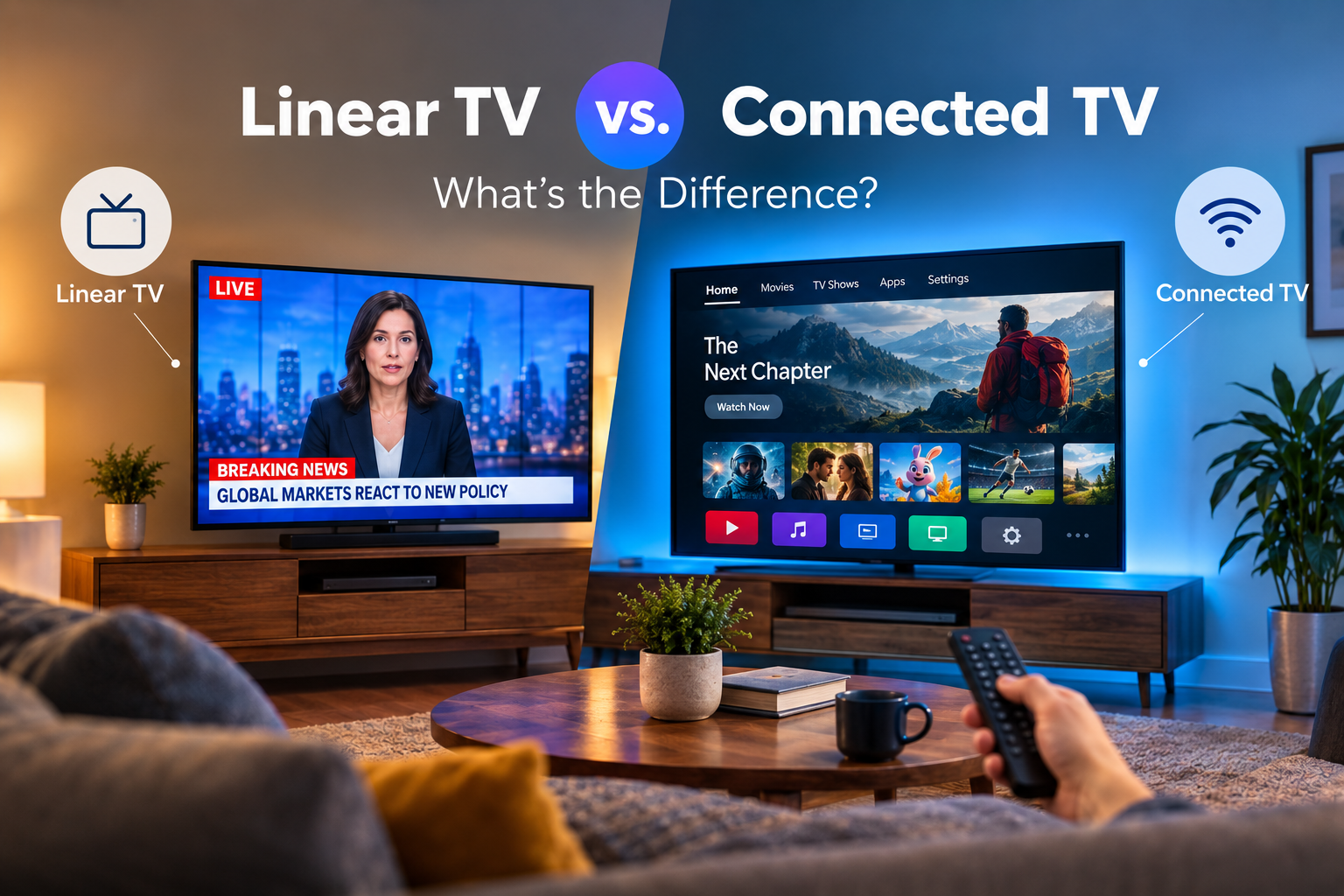
Linear TV vs. Connected TV: What’s the Difference?

Television advertising has changed significantly over the last few years.

For decades, linear TV was the primary way brands reached large audiences. People watched scheduled programs through cable, satellite, or broadcast television, and advertisers purchased commercial spots around those programs.

Today, viewers have many more choices. Instead of watching only scheduled programming, they can stream movies, TV shows, live events, news, and other content whenever they want. This has made Connected TV (CTV) an important part of modern advertising.

While linear TV and CTV both appear on television screens, the way audiences consume content-and the way advertisers buy and measure advertising-can be very different.

The simple way to think about it is

Linear TV = scheduled television programming.

CTV = television content delivered through an internet-connected device.

Both have their own advantages. The right choice depends on the campaign’s goals, audience, budget, and the type of reach an advertiser needs.

What Is Linear TV?

Linear TV refers to traditional television where viewers watch scheduled programming through broadcast, cable, or satellite services. The content follows a fixed schedule determined by the television network or channel.

For example, if a news program starts at 8:00 PM, viewers need to tune in at that time to watch it live.

The same principle applies to advertising. Advertisers purchase commercial spots within specific programs, channels, or time slots. The ads are then shown to the audience watching that programming.

Examples of linear TV environments include:

  • Broadcast television
  • Cable television
  • Satellite television
  • Scheduled news programming
  • Live sports
  • Live events
  • Traditional TV channels

Linear TV is still relevant, particularly for campaigns that require large-scale reach, live programming, and broad audience exposure.

Benefits of Linear TV Advertising

1. Reach Large Audiences Through Live Programming

One of the biggest strengths of linear TV is its ability to deliver large audiences around live and highly anticipated programming. Examples include:

  • Live sports
  • Breaking news
  • Awards shows
  • Major entertainment events
  • Political events
  • Special broadcasts

Live programming remains valuable because viewers often want to watch events as they happen rather than wait for them to become available on demand.

For advertisers, these environments can create opportunities to reach a large number of viewers at the same time.

However, live content is no longer exclusive to traditional television. Many major events are now distributed across both traditional and streaming platforms.

This means advertisers increasingly need to consider both linear TV and CTV when planning campaigns around major live events.

2. Reach Audiences That Still Prefer Traditional TV

Although streaming continues to grow, not every viewer has moved completely away from traditional television.

Some audiences-particularly older demographics-continue to spend significant time watching broadcast and cable television.

This makes linear TV useful for brands that want to reach audiences who are more likely to consume traditional TV content.

For example, a brand targeting an older consumer segment may find linear TV valuable because those viewers may have stronger traditional-TV viewing habits.

At the same time, audience behavior is changing across generations. Younger audiences are also watching television content, but they are increasingly doing so through streaming services.

Therefore, advertisers should avoid treating age as the only deciding factor. Actual audience behavior and campaign objectives should guide the media strategy.

3. Plan Campaigns Around Channels and Time Slots

Linear TV provides advertisers with a relatively predictable way to plan campaigns. Advertisers can select:

  • Specific channels
  • Programs
  • Time slots
  • Dayparts
  • Live events
  • Geographic markets

Different programs attract different types of viewers.

For example, a brand targeting families may choose programming that is popular among family audiences. A financial services company may prefer news or business-related programming.

Prime-time programming can also provide broad exposure and help brands build awareness.

The key advantage is that advertisers can plan around where and when their desired audience is likely to be watching.

What Is Connected TV?

Connected TV, or CTV, refers to television content that is delivered through an internet-connected TV or device. This can include:

  • Smart TVs
  • Streaming devices
  • Gaming consoles
  • Connected set-top boxes
  • Other internet-connected television devices

CTV allows viewers to watch content through streaming services instead of relying exclusively on traditional cable or satellite television.

Examples of CTV environments include streaming movies, TV shows, live channels, news, sports, and other digital content.

CTV advertising can appear before, during, or after video content. Depending on the publisher and platform, advertisers may also have access to different interactive or advanced video ad formats.

The major difference from traditional TV is the technology behind the advertising.

Instead of relying primarily on broad program or channel-based audiences, CTV advertising can use digital audience and contextual signals to make targeting more precise.

Benefits of Connected TV Advertising

1. More Precise Audience Targeting

One of the biggest advantages of CTV is its ability to bring digital-style targeting to the television environment.

Depending on the platform, publisher, and available data, advertisers may be able to target audiences using signals such as:

  • Demographics
  • Geographic location
  • Interests
  • Content preferences
  • First-party data
  • Audience segments
  • Contextual signals
  • Device information
  • Behavioral signals

For example, instead of showing an advertisement to everyone watching a particular TV channel, an advertiser may be able to focus on a specific audience segment within CTV inventory.

This can help advertisers reduce wasted impressions and make their campaigns more relevant.

Contextual targeting is also important: CTV doesn’t have to rely only on information about the viewer. Advertisers can also consider the content being watched.

For example:

  • A sports brand can advertise around sports content.
  • A travel company can advertise around travel-related programming.
  • A financial company can advertise around business or financial content.
  • A food brand can advertise around cooking or lifestyle content.

This combination of audience and contextual targeting gives CTV advertisers more flexibility than traditional TV buying.

2. Better Measurement and Optimization

Measurement is another major difference between traditional TV and CTV. Traditional TV campaigns often depend on estimated audience data and post-campaign reporting. CTV works more like other digital advertising channels.

Depending on the platform and measurement setup, advertisers can receive detailed campaign metrics such as:

  • Impressions
  • Video completion rate
  • Completed views
  • Reach
  • Frequency
  • Cost metrics
  • Conversion metrics
  • Audience performance

This allows advertisers to understand how campaigns are performing and identify opportunities for optimization.

For example, if one audience segment is performing better than another, an advertiser can adjust the campaign strategy based on available data.

Similarly, advertisers can compare different creatives, audiences, publishers, or inventory sources. This creates a more data-driven approach to TV advertising.

It’s important to remember that measurement capabilities are not identical across every CTV platform. Available metrics depend on the publisher, device, measurement partner, and campaign setup.

3. Engaging Digital Viewing Experience

CTV combines the large-screen viewing experience of television with the technology of digital advertising.

Viewers can watch content on a large screen, often in high-quality video, while advertisers can use digital buying and targeting capabilities.

CTV is particularly useful for video storytelling because advertisers can use:

  • Full-screen video
  • Sound
  • Motion
  • Brand visuals
  • Strong calls to action
  • Interactive experiences where supported

Because the ad appears within a television viewing environment, CTV can be particularly effective for brand awareness and consideration campaigns.

However, CTV is not only an awareness channel. With the right measurement and audience strategy, it can also support consideration and performance-focused campaigns.

Linear TV vs. CTV: Key Differences

FactorLinear TVConnected TV
Content deliveryBroadcast, cable, or satelliteInternet-based streaming
Viewing modelMostly scheduled programmingOn-demand and live streaming
TargetingPrimarily channel, program, time, and demographic basedAudience, contextual, geographic, and other digital signals
ReachStrong broad reach, especially through traditional TVGrowing reach across streaming audiences
Live contentStrong for traditional live broadcastsIncreasingly important as live sports and events move to streaming
MeasurementOften based on estimated audience dataMore granular digital-style measurement, depending on setup
OptimizationLimited once the media buy is placedMore flexible during a campaign
CreativePrimarily traditional TV commercialsVideo ads and other supported digital TV formats
Buying approachTraditionally planned and purchased in advanceCan be purchased through direct, programmatic, or hybrid approaches
Best suited forBroad awareness and large-scale reachTargeted reach, measurable campaigns, and incremental audiences

The important point is that linear TV and CTV are not competing formats in every situation. They can complement each other.

How to Use Linear TV and CTV Together

Instead of asking, “Should I use linear TV or CTV?”, advertisers can often ask, “How can I use both to reach more of the right audience?”

A combined strategy can help brands take advantage of the strengths of both channels.

Here are three approaches.

1. Extend Existing TV Campaigns to CTV

If a brand already has a TV commercial, the same core creative can often be adapted for CTV. This can make it easier to extend an existing campaign into streaming environments.

For example, a brand running a 30-second commercial on traditional television could also use an appropriate version of that creative in CTV inventory. However, simply copying the same creative isn’t always the best approach.

CTV is a digital environment, so advertisers should also consider:

  • Mobile and TV screen differences
  • Clear branding
  • Strong opening seconds
  • Captions where appropriate
  • Simple messaging
  • Clear calls to action
  • Different viewing environments

The goal is to make the creative work well on a large screen in a streaming environment, not simply reuse an asset without considering the context.

2. Use Linear TV and CTV to Increase Overall Reach

Using only one TV channel can limit the audiences a campaign reaches. A combined strategy can help advertisers reach people who still watch traditional television as well as audiences who primarily stream content.

For example: Linear TV can help reach traditional TV viewers and large audiences around scheduled programming.

CTV can help reach streaming audiences, including people who have reduced or completely stopped using traditional cable TV. Together, they can provide broader coverage across different viewing habits.

This is particularly useful as audiences become increasingly fragmented across broadcast channels, cable networks, streaming services, and digital platforms.

3. Build Cross-Channel Campaigns

CTV can also work as part of a broader digital advertising strategy. For example, a brand could:

  • Show a CTV video ad to introduce the brand.
  • Reach exposed audiences through display or native advertising.
  • Retarget eligible audiences where the platform and privacy framework support it.
  • Measure downstream actions such as website visits or conversions.

This creates a connected customer journey instead of treating every advertising channel as a separate campaign.

However, cross-device and cross-channel targeting should always follow the privacy, consent, identity, and measurement rules supported by the relevant platforms and markets.

Which One Should Advertisers Choose?

There isn’t one universal answer. The right choice depends on several factors, including:

Choose Linear TV when:

  • You need broad traditional TV reach.
  • Your audience strongly watches broadcast or cable TV.
  • You want to advertise around major live programming.
  • Your campaign is focused heavily on mass awareness.
  • Channel and program selection are important to your strategy.

Consider CTV when:

  • You need more precise audience targeting.
  • Your audience spends significant time streaming.
  • You want more detailed campaign measurement.
  • You want greater flexibility in campaign optimization.
  • You want to reach cord-cutters and streaming-first audiences.
  • You want to integrate TV advertising with your broader digital strategy.

Consider using both when:

  • You want broad reach and precise targeting.
  • Your audience is spread across traditional TV and streaming.
  • You want to increase incremental reach.
  • You want to connect TV exposure with digital campaigns.
  • You want to build a more complete video advertising strategy.

Final Thoughts

The television advertising landscape is no longer simply about choosing between traditional TV and streaming.

Viewers now move between broadcast television, cable, smart TVs, streaming services, connected devices, and live digital content depending on what they want to watch and when they want to watch it.

Linear TV continues to provide value through broad reach, scheduled programming, and live events. CTV brings many digital advertising capabilities to the television screen, including more flexible targeting, measurement, and optimization.

For many advertisers, the strongest strategy is therefore not linear TV vs. CTV, but linear TV + CTV.

By understanding where their audience watches content and matching each channel to the campaign objective, advertisers can build a more effective and flexible TV advertising strategy.

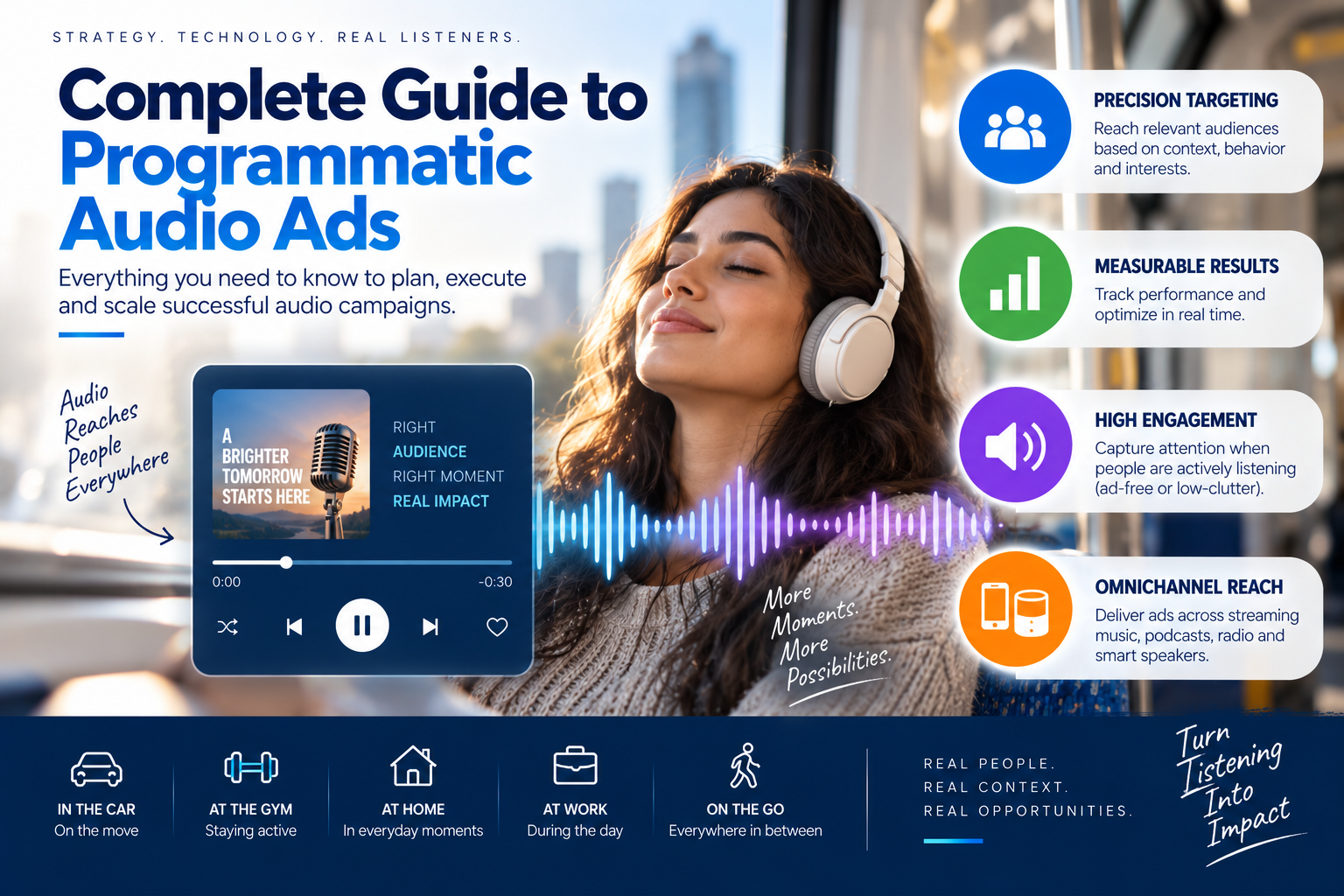
Complete Guide to Programmatic Audio Ads

Audio has become an important part of the digital media experience.

People listen to music, podcasts, digital radio, audiobooks, and other audio content throughout the day. Unlike many digital formats, audio doesn’t always require someone’s eyes to be on a screen.

This creates a valuable opportunity for advertisers.

Programmatic audio advertising allows brands to use automated advertising technology to buy audio ad inventory and reach relevant audiences across digital listening environments.

Instead of manually purchasing individual audio placements, advertisers can use programmatic technology to automate the buying process and apply available audience, contextual, geographic, and other targeting signals.

This guide explains how programmatic audio works, where audio ads appear, their key benefits, and the best practices advertisers should follow when building an audio campaign.

What Is Programmatic Audio Advertising?

Programmatic audio advertising is the automated buying and delivery of advertising within digital audio content. It works in a similar way to other programmatic advertising channels such as display, video, and CTV.

An advertiser defines the campaign requirements, such as

  • Target audience
  • Budget
  • Location
  • Campaign dates
  • Bidding strategy
  • Creative
  • Frequency controls
  • Campaign objective

When an eligible audio advertising opportunity becomes available, programmatic technology evaluates the impression against the campaign requirements.

If the impression matches the campaign and the advertiser wins the available auction, the audio advertisement is delivered to the listener.

This entire process can happen in milliseconds.

How Does Programmatic Audio Advertising Work?

At a simple level, the process looks like this:

Advertiser $\rightarrow$ Programmatic Platform $\rightarrow$ Audio Inventory $\rightarrow$ Listener

The advertiser creates a campaign and provides the required targeting and creative information. The programmatic platform then looks for audio impressions that match those requirements.

When a suitable opportunity becomes available, an automated auction determines which advertiser gets the impression. The winning ad is then delivered to the listener.

After delivery, advertisers can use available campaign data to evaluate performance and make adjustments.

This automation makes it easier to manage audio advertising at scale without having to negotiate every individual placement manually.

Where Can Programmatic Audio Ads Appear?

Programmatic audio advertising can appear across a variety of digital listening environments, depending on the inventory and platform. Common environments include:

  • Music streaming services
  • Podcasts
  • Digital radio
  • Online audio platforms
  • News and talk content
  • Other digital audio experiences

Audio can also be consumed through different devices, including:

  • Smartphones
  • Tablets
  • Desktops and laptops
  • Smart speakers
  • Connected devices
  • In-car systems

The exact inventory, targeting options, and creative formats available will depend on the publisher, platform, device, and market.

Why Is Programmatic Audio Becoming Important?

The way people consume audio has changed significantly. Audio is no longer limited to traditional radio. Listeners can now choose from a wide range of digital content and access it across multiple devices and situations.

This creates several important opportunities for advertisers.

Digital Audio Is Part of Everyday Media Consumption

People can access digital audio whenever and wherever they want. They may listen to:

  • A podcast during their commute
  • Music while exercising
  • Digital radio while working
  • An audiobook while traveling
  • News or talk content during household activities

This gives advertisers opportunities to connect with audiences throughout different parts of their day.

Audio Reaches Audiences Beyond the Screen

One of the biggest advantages of audio is that it doesn’t require visual attention. Someone can listen to an advertisement while:

  • Walking
  • Driving
  • Cooking
  • Exercising
  • Commuting
  • Working
  • Relaxing

This makes audio particularly useful for reaching consumers during screen-free moments. Instead of competing for attention on a busy screen, an audio advertisement can communicate its message directly through sound.

Mobile and Connected Devices Expand Listening

Smartphones have made audio highly accessible, while connected devices have expanded the number of places where people can listen.

Audio can now be consumed through smartphones, smart speakers, connected TVs, in-car systems, and other connected devices. This creates more opportunities for advertisers to reach listeners across different environments.

However, advertisers should remember that targeting and measurement capabilities can vary depending on the device and inventory.

Audio Advertising Can Include Visual Elements

Audio is primarily a sound-based advertising format, but some environments can support companion display advertising.

A companion ad can appear on the listener’s screen while the audio advertisement plays. This gives advertisers two ways to communicate. Audio can deliver the story, voice, and emotional message. Visuals can reinforce the brand, product, offer or call to action.

When available, combining these elements can create a stronger advertising experience.

Audio Works for Both B2C and B2B Brands

Programmatic audio isn’t limited to consumer brands. B2B advertisers can also use audio to reach professional and business audiences through relevant content.

For example, a technology company could advertise around technology or business podcasts, while a financial services company could use content related to finance, investing, or entrepreneurship.

Audio can also help B2B brands communicate their personality and explain their products in a more conversational way.

What Are the Benefits of Programmatic Audio Advertising?

Programmatic audio offers several advantages that make it a useful addition to a modern advertising strategy.

Reach Audiences in Screen-Free Moments

Audio allows advertisers to reach people when they aren’t actively looking at a screen. This gives brands additional opportunities to communicate with consumers outside traditional display and video environments.

Use Audience and Contextual Targeting

Depending on the platform and available data, advertisers can use targeting signals such as:

  • Demographics
  • Location
  • Interests
  • Audience segments
  • Content categories
  • Context
  • Device
  • First-party data
  • Behavioral signals

Contextual targeting can be especially useful.

For example, a fitness brand could advertise around fitness-related content, while a travel company could advertise around travel-related programming. This helps align the advertising message with the content the listener is already consuming.

Build Stronger Brand Awareness

Audio is a powerful storytelling format. Voice, music, sound effects, and tone can all contribute to how a listener experiences a brand.

A memorable voice or audio signature can help people recognize a brand even when they aren’t looking at a screen. This makes programmatic audio particularly useful for campaigns focused on:

  • Brand awareness
  • Brand recall
  • Product awareness
  • Consideration

Extend Your Multichannel Advertising Strategy

Programmatic audio can work alongside other advertising channels. For example, a brand could use:

  • CTV for visual storytelling
  • Display for product messaging
  • Audio for screen-free reach
  • Search for users actively looking for the product

Using multiple channels can help brands reach audiences at different stages and moments of the customer journey.

What Types of Programmatic Audio Ads Are Available?

Audio advertising can take several forms depending on the publisher and platform.

  • Pre-Roll Ads: These ads play before the main audio content begins.
  • Mid-Roll Ads: These ads appear during the main content, such as in the middle of a podcast episode.
  • Post-Roll Ads: These ads play after the main content has finished.
  • Companion Ads: These are visual ads that can appear alongside an audio advertisement when supported by the inventory.

The available formats, durations, and specifications can vary across publishers, so advertisers should always check the requirements before preparing creative assets.

How to Create Effective Programmatic Audio Ads

Creating an audio advertisement requires a different approach from creating a display or video ad. With audio, the listener may never see your brand while the advertisement is playing.

The message therefore needs to work through sound alone. A good audio advertisement should have:

  • A Strong Opening: Capture attention quickly and introduce the main idea early.
  • Clear Messaging: Focus on one key message rather than trying to explain everything about the product.
  • A Natural Voice: Use a voice that fits the brand and sounds clear and conversational.
  • Appropriate Sound Design: Music and sound effects should support the message rather than distract from it.
  • A Clear Call to Action: Tell the listener exactly what they should do next. For example:
    • Visit the website.
    • Download the app.
    • Learn more.
    • Sign up today.

Programmatic Audio Advertising Best Practices

If you’re planning your first programmatic audio campaign, keep these best practices in mind:

  • Keep the message short and focused.
  • Introduce the brand early.
  • Use a strong opening hook.
  • Choose a voice that matches your brand personality.
  • Make the call to action easy to understand.
  • Use music and sound effects carefully.
  • Create different versions of your creative for testing.
  • Monitor performance and refresh creative when necessary.
  • Avoid repeating the same message too frequently.
  • Make sure the creative meets the technical requirements of the target inventory.

The most important rule is simple: Write for the ear, not the screen. A display advertisement can rely on text and visuals. An audio advertisement has to communicate its message through sound.

How to Measure Programmatic Audio Campaigns

Measurement depends on the platform, publisher, and campaign setup, but advertisers may be able to evaluate metrics such as:

  • Impressions
  • Reach
  • Frequency
  • Audio completion rate
  • Click through activity where supported
  • Cost metrics
  • Conversion activity
  • Audience performance

These metrics can help advertisers understand whether the campaign is reaching the intended audience and whether the creative and targeting strategy are performing as expected.

  • For campaigns focused on awareness, metrics such as reach, frequency, and completion can be particularly useful.
  • For performance-focused campaigns, advertisers may also look at downstream actions and conversions where reliable measurement is available.

How Does Programmatic Audio Fit Into a Multichannel Strategy?

Programmatic audio is often most effective when it works together with other channels. For example, consider a consumer electronics brand launching a new product. The brand could use:

  • CTV: Show a video demonstrating the product.
  • Display: Highlight product features and offers.
  • Audio: Communicate the product’s key benefit while consumers are listening to music or podcasts.
  • Search: Reach consumers who actively search for the product.

Each channel serves a different purpose while contributing to the same overall campaign.

The creative doesn’t need to be identical across every channel. Instead, the core brand message should remain consistent while the execution is adapted to each format.

Final Thoughts

Programmatic audio has become a valuable part of modern digital advertising. It allows brands to reach people through digital listening environments while using many of the targeting and automation capabilities available in programmatic advertising.

Its biggest advantage is that it gives advertisers access to audiences during moments when they may not be looking at a screen.

With the right combination of targeting, creative, measurement, and frequency management, programmatic audio can support both awareness and broader marketing objectives.

Whether you’re a B2C brand trying to build awareness or a B2B company looking to reach a niche professional audience, audio can be a useful addition to your media strategy.

The key is to remember that successful audio advertising isn’t simply about getting an ad played. It’s about creating a message that people can hear, understand, and remember.